 Bellingham Roofing
 Siding Repair for Edgemoor's Bay-Facing Homes
Edgemoor sits along the bluffs and shoreline south of downtown Bellingham, where wooded lots look out over Bellingham Bay and take the weather straight off the water. It's one of the areas in Whatcom County where a home's siding does the most work, season after season, and where small damage left alone tends to turn into a bigger repair faster than it would on a more sheltered inland lot. If you own a home in Edgemoor and you're looking at a cracked panel, a soft spot near a trim board, or a patch of siding that's started staining and never quite dries out, this page is about what that repair actually involves and why the details matter more here than in a lot of other neighborhoods.
We install and repair one siding system: James Hardie fiber cement. That matters for a repair job as much as it does for a full re-side, because matching new material into existing siding, sealing it correctly, and understanding how fiber cement behaves against Bellingham's marine climate all depend on working with a product we know thoroughly, on homes we already know.
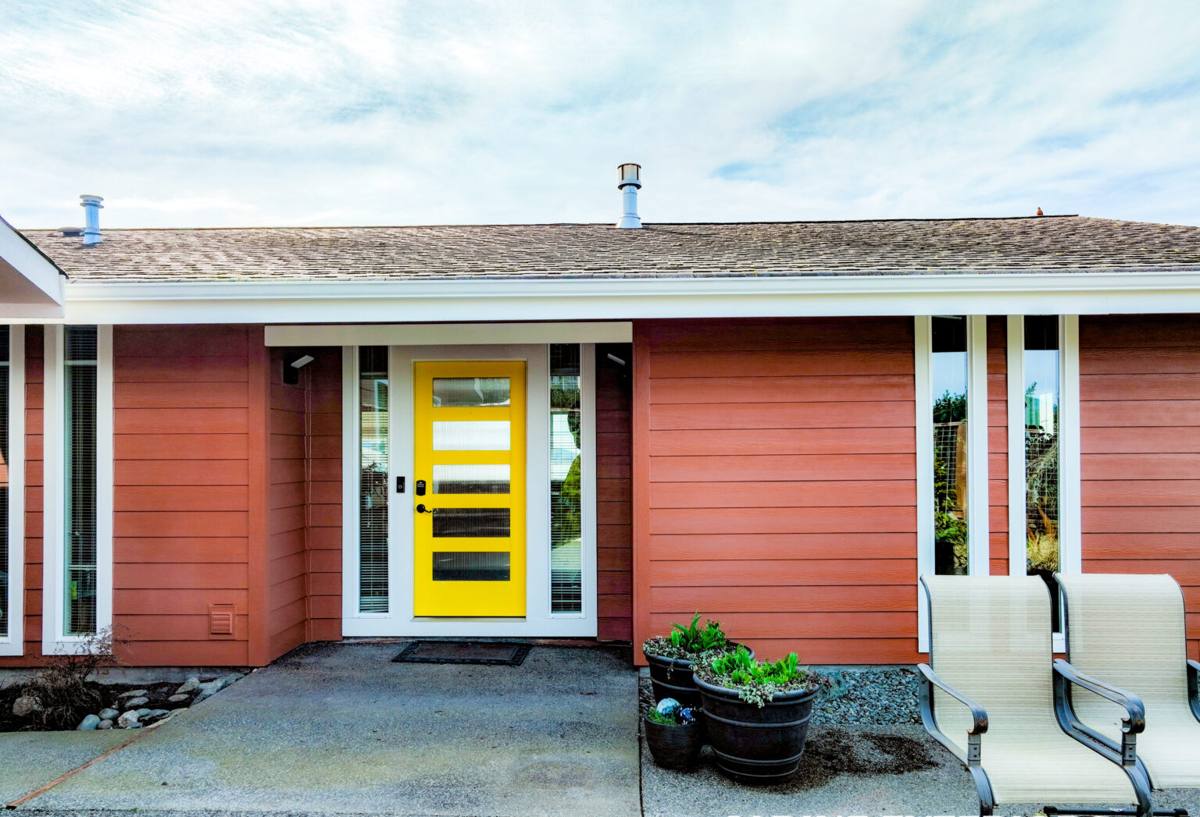
What Edgemoor's Climate Does to Siding
Salt Air Off Bellingham Bay
Homes set on the bluffs and lower slopes of Edgemoor sit close enough to the water that salt-laden air reaches the siding, trim, and fasteners on a near-constant basis, not just during storms. Salt accelerates corrosion in exposed metal fasteners and speeds the breakdown of finishes that aren't built to resist it, which is part of why a factory-applied, baked-on finish tends to outlast field-applied paint in this location.
Driving Rain
Storms coming off the water don't arrive straight down in Edgemoor; wind pushes rain sideways into south- and west-facing walls, forcing water into seams, trim joints, and any gap in caulking that's started to fail. A siding system and an installation that hold up fine on a calm, dry day can still take on water the moment wind gets involved, and that's the condition Edgemoor sees regularly, not occasionally.
A Moss Season That Runs Most of the Year
Mature tree cover is part of what makes Edgemoor's lots attractive, but it also means a lot of walls stay shaded and damp longer after a storm than they would on a more open lot. Combined with mild year-round temperatures, that gives moss and mildew a long growing season, and any siding material with surface porosity gives it something to hold onto. Shaded, north-facing walls are usually the first place it shows up.
Common Siding Repair Needs We See in Edgemoor
Not every repair call in Edgemoor looks the same, but a few patterns come up often enough that we watch for them specifically:
- Impact damage from storm debris or falling branches, common on lots with mature tree cover close to the house
- Cracked or failed caulking at trim and panel joints, which gives wind-driven rain a direct path behind the siding
- Soft or water-damaged sections near window and door trim, usually traced back to a flashing or sealant failure rather than the siding material itself
- Persistent moss or algae staining on shaded, north-facing walls that doesn't clear with routine washing
- Sections of older, non-Hardie siding — wood, older fiber cement, or other materials — that have reached the end of their service life while the rest of the wall is still sound
Some of these are cosmetic, and some point to an active moisture problem. Telling the difference is the first real step in any repair, before a scope or a price gets decided.
Repair or Replace? How We Make the Call
A homeowner calling about a damaged section of siding usually wants to know one thing first: is this a patch, or does it mean a bigger project? The honest answer depends on what's actually happening behind the siding, not just what's visible on the surface.
| Situation | Usually a Repair | Usually Points to Replacement |
|---|---|---|
| Impact damage | Isolated to one or two panels, framing behind is dry | Damage spans multiple walls or coincides with rot |
| Moisture staining | Surface-level, wall assembly tests dry | Moisture readings show sustained dampness behind the siding |
| Age of existing siding | Hardie siding still within its service life | Older wood or aging non-Hardie material nearing the end of its useful life |
| Extent of damage | A single wall section or trim run | Damage recurring across several areas of the house |
We check moisture levels and look at what's underneath before making that call, because a repair estimate that skips this step is really just a guess.
What a Correct Siding Repair Involves
Finding the Real Source
Siding damage in Edgemoor rarely starts with the siding itself. A roof flashing detail, a window that wasn't sealed correctly, or a deck ledger trapping moisture against the wall can all show up later as a stained or soft section of siding, with the siding simply being where the water finally became visible. Repairing the visible panel without addressing what's actually feeding it moisture just delays the same repair.
Matching Existing Siding
James Hardie's ColorPlus finishes and product lines are consistent enough that a skilled crew can usually match new panels into existing siding without a visible seam, provided the original material and profile are identified correctly first. On older homes where the existing siding isn't Hardie, or where a color has weathered enough that an exact match isn't realistic, we'll say so up front rather than promise a blend that won't hold up under close inspection.
Sealing and Flashing Details
The parts of a repair a homeowner never sees — house wrap continuity, flashing at trim and window returns, and correctly gapped and caulked joints — are what determine whether the repair lasts through Edgemoor's next few wet seasons or fails again in the same spot. We treat those details as the actual job, not a step to rush through on the way to the visible finish work.
Why We Only Repair With James Hardie Fiber Cement
We install and repair James Hardie fiber cement exclusively — we don't patch in vinyl, LP SmartSide, cedar, or other fiber cement brands, even for a small repair. Part of that is practical: Hardie's climate-engineered HZ product lines are built for conditions like this one, with a factory ColorPlus finish that resists salt air and UV fade far better than field-applied paint, and a transferable warranty that only applies when the product is installed to Hardie's specifications. Mixing in a different material on a repair can also create a seam where two products expand, contract, and age differently, which tends to show over time even if it looks fine on install day. When a repair calls for new material, we use the same product and the same standard we'd use on a full installation.
Our Repair Process in Edgemoor
- Site visit and diagnosis — we look at the damaged area, check moisture levels, and identify whether the cause is isolated or tied to a flashing, roofing, or window issue elsewhere on the house
- Honest scope and estimate — we tell you plainly whether you're looking at a patch repair, a larger section replacement, or something that points toward a full re-side, along with a straightforward cost range
- Repair work — damaged material is removed, the wall assembly behind it is corrected if needed, and new Hardie material is installed and matched to the existing siding
- Final check — flashing, caulking, and joint details are inspected before we consider the job finished, not just the visible panel work
Signs Your Edgemoor Home May Need Siding Repair
- Cracked, chipped, or missing sections of siding, especially after a windstorm
- Soft spots when you press on siding near window or door trim
- Paint or finish that's bubbling, peeling, or discolored in one specific area
- Persistent moss, algae, or dark staining on shaded walls that doesn't wash off
- Visible gaps or cracked caulking at panel seams and trim joints
- A musty smell or discoloration on an interior wall that shares an exterior wall with a damaged siding section
Why It Matters That We Already Work Edgemoor
A crew that mostly works flatter, more sheltered parts of Bellingham can still do a competent repair, but Edgemoor's bluff-top and shoreline lots come with variables that don't show up as often elsewhere — sustained salt exposure, wind-driven rain hitting walls with less to break it up before it arrives, and mature tree cover that keeps certain walls damp longer than most of the county. Working this neighborhood regularly means we're not guessing at those conditions on your repair. We've seen how Hardie siding actually performs against Edgemoor's specific mix of salt air, driving rain, and a long moss season, and we know which repair details are worth the extra time rather than a shortcut that looks fine for one season and fails the next.
If you've got a section of damaged, stained, or aging siding on your Edgemoor home, we're glad to take a look and give you a straight answer about what it actually needs. Reach out using the form below to schedule a free, no-pressure estimate.