 Bellingham Roofing
 Roof Repair Built for Cordata's Weather, Not Just Any Weather
Cordata sits in north Bellingham, close enough to Bellingham Bay and the Salish Sea that salt-laden air is a real factor in how roofing materials age here, not just a talking point. Add Whatcom County's long, wet stretches of driving rain and a moss season that can run from fall through spring, and you've got a climate that is genuinely tougher on a roof than most homeowners realize until something starts leaking. A roof repair here has to account for all three of those stressors at once — salt air's slow corrosion of metal components, wind-driven rain's habit of finding the smallest gap, and moss's relentless work prying up shingle edges and holding moisture against the deck.
We repair roofs across Bellingham, but Cordata's mix of housing stock — from newer construction to homes now old enough that their original roofing is showing real wear — means we see a consistent pattern of problems here. Understanding that pattern is what separates a repair that holds up for years from one that reopens the same leak next winter.
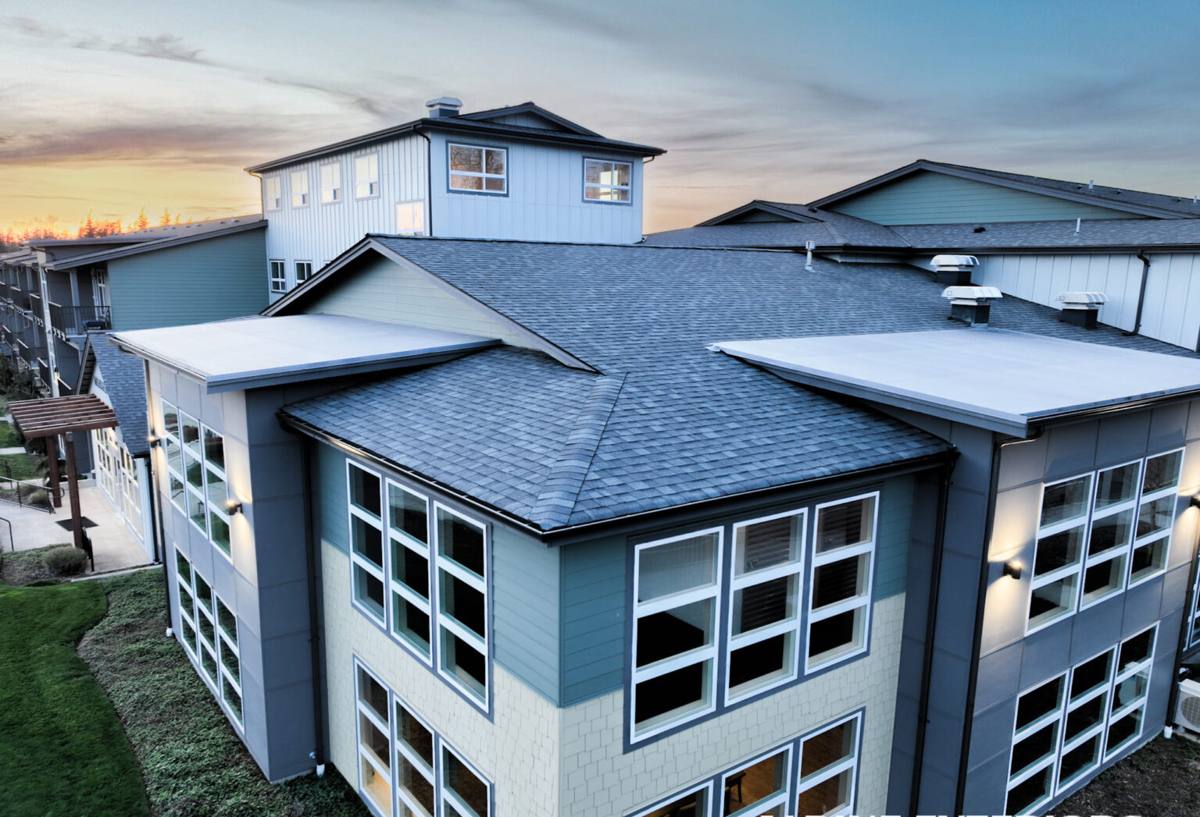
The Repair Issues We See Most Often in Cordata
Moss Intrusion on Shaded Slopes
North-facing roof slopes and any section shaded by trees or neighboring structures stay damp far longer after a storm than a south-facing slope does. That extra moisture is exactly what moss needs, and once it's established, its root structure lifts shingle edges just enough to let wind-driven rain underneath. By the time moss is visible from the ground, it's usually already done some damage to the shingles beneath it.
Flashing Failure Around Penetrations
Flashing around chimneys, vent pipes, skylights, and roof-to-wall junctions is almost always where we find the actual leak, even when the visible damage is somewhere else. Salt air accelerates corrosion on lower-grade metal flashing and exposed fasteners, and once a flashing seal fails, water travels along the deck before it shows up as a ceiling stain — often nowhere near where the leak actually started.
Valley and Eave Wear
Roof valleys concentrate water flow during heavy rain, and Whatcom County gets plenty of it. Valleys with worn or improperly lapped materials are a common repair call. Eaves take a similar beating from wind-driven rain being pushed sideways under the shingle edge rather than running off cleanly.
Granule Loss and Shingle Curling
Repeated wet-dry cycling and UV exposure over the years cause asphalt shingles to lose their protective granules and start curling at the edges. This is often an age issue rather than a one-time damage event, and it shows up gradually — which is exactly why it gets missed until a leak forces the issue.
What a Correct Roof Repair Actually Involves
A repair that's done right is not just sealing the spot where water is currently showing up inside the house. That's a symptom, not the cause. A proper repair traces the water back to its actual entry point, which can be several feet from the interior stain because water runs along the underlayment or decking before it drips through.
- Full inspection of the affected area and the roof sections that drain into it, not just the immediate spot
- Removal of damaged shingles and underlayment back far enough to reach sound material, not just a surface patch over the visible gap
- Inspection of the decking underneath for soft spots or rot before anything gets reinstalled
- Correct flashing detail work at any penetration, valley, or wall intersection in the repair area
- Matching shingle material as closely as possible in type, weight, and where feasible, color, so the repair doesn't stand out or perform differently than the surrounding roof
- Reinstallation following proper shingle lap and fastening patterns, not just gluing or nailing over the top
Skipping the tear-back step is the single most common shortcut we see from patch-style repairs, and it's the reason so many "fixed" leaks come back within a season or two.
Our Repair Process
We keep this straightforward because homeowners dealing with a leak don't need more complexity added to an already stressful situation.
- Inspection and estimate. We look at the interior damage, the roof itself, and the attic if accessible, and give you an honest read on what's actually going on before any work starts.
- Diagnosis. We identify the true source of the leak, which is often not where the water is showing up inside.
- Repair plan and pricing. You get a clear scope of work and cost before we start, including what materials we'll use and why.
- The repair itself. Proper tear-back, decking check, flashing correction, and reinstallation, done in a way that blends with your existing roof.
- Cleanup and check-in. Job site cleared of debris, and we walk you through what was done and what to watch for going forward.
Repair or Replacement? How to Tell
Not every roof problem calls for a full replacement, and not every leak can be solved with a spot repair. The honest answer depends on the roof's age, how widespread the damage is, and how many repairs it's already had.
| Factor | Points Toward Repair | Points Toward Replacement |
|---|---|---|
| Roof age | Well within expected service life | At or past the end of its expected life |
| Damage extent | Isolated to one area or slope | Widespread across multiple slopes |
| Repair history | First or second repair on this roof | Repeated repairs in the same areas |
| Decking condition | Sound, no rot found | Soft spots or rot found during inspection |
| Granule loss | Minimal, isolated | Widespread, shingles visibly balding |
| Cost outlook | Repair cost is modest relative to a full roof | Repair costs are stacking up close to replacement cost |
We'll always tell you straight if a repair is genuinely the right call versus if you're better off putting that money toward a longer-term fix. A repair that's patching over a roof near the end of its life isn't doing you any favors.
Materials We Use, and Why
For repair work, matching your existing roofing is usually the priority so the fix doesn't look tacked-on and performs consistently with the rest of the roof. Where we have latitude — flashing, fasteners, and underlayment — we lean toward materials with better resistance to the corrosion and moisture cycling that this area's salt air and rainfall put them through.
We're selective about lower-grade flashing metals and fasteners in repair work near the coast, not because any one product is inherently bad, but because our professional standard is to use what holds up under the specific conditions a Cordata roof actually faces. That sometimes means a slightly higher material cost on the flashing details in exchange for not being back at the same spot in three years. We'll walk you through the trade-offs on any material decision so you're not guessing.
Signs You Need a Roof Repair Now, Not Later
Roof problems rarely announce themselves clearly. Here's what we tell Cordata homeowners to watch for between now and moss season:
- Visible moss or heavy algae streaking on any roof slope, especially shaded or north-facing sections
- Granules collecting in gutters or at downspout outlets
- Shingles that look curled, cracked, or are missing entirely
- Rust staining or visible gaps around flashing at chimneys, vents, or skylights
- Water stains or discoloration on interior ceilings, especially after a heavy storm
- Daylight visible through the roof deck when viewed from inside the attic
- Sagging in any part of the roofline
Catching any of these early is almost always cheaper and less disruptive than waiting until there's active water intrusion inside the house.
Why a Crew That Already Works Cordata Matters
Roofing repair isn't one-size-fits-all, even within a single city. A crew that regularly works this neighborhood already has a working sense of which slopes tend to hold moss longest, how the local housing stock's roofing ages under Bellingham Bay's salt air, and what flashing and material choices actually hold up here versus in a drier inland climate. That familiarity means less time spent re-learning the basics on your roof and more time spent on getting the diagnosis and repair right the first time. It also means we're a known, findable local business if you ever need a warranty check or follow-up — not a crew that did one job and moved on.
Get an Honest Look at Your Roof
If you're dealing with a leak, seeing moss creeping across a slope, or just want a second opinion before moss season sets in, we're glad to take a look. The estimate is free, there's no pressure to sign anything, and you'll get a straight answer about whether you need a repair, a bigger fix, or nothing at all right now. Fill out the form below to get started.