 Bellingham Roofing
 Building New in Ferndale? The Windows Deserve the Same Care as the Foundation
Ferndale is one of the more active building areas in Whatcom County right now, and a lot of that new construction sits close enough to Bellingham Bay and the Nooksack lowlands that the windows are dealing with coastal conditions from day one. New-construction window installation is a different job than replacing an old window in an existing wall. There's no old frame to work around, no compromises to make for what's already there — but there's also no room to get the flashing, the sill pan, or the water management wrong, because everything gets buried behind siding and trim before anyone finds out. We install new-construction windows for builders and homeowners throughout Ferndale and the surrounding Bellingham area, and we treat the water-management details as the actual job, not a step on the way to the job.
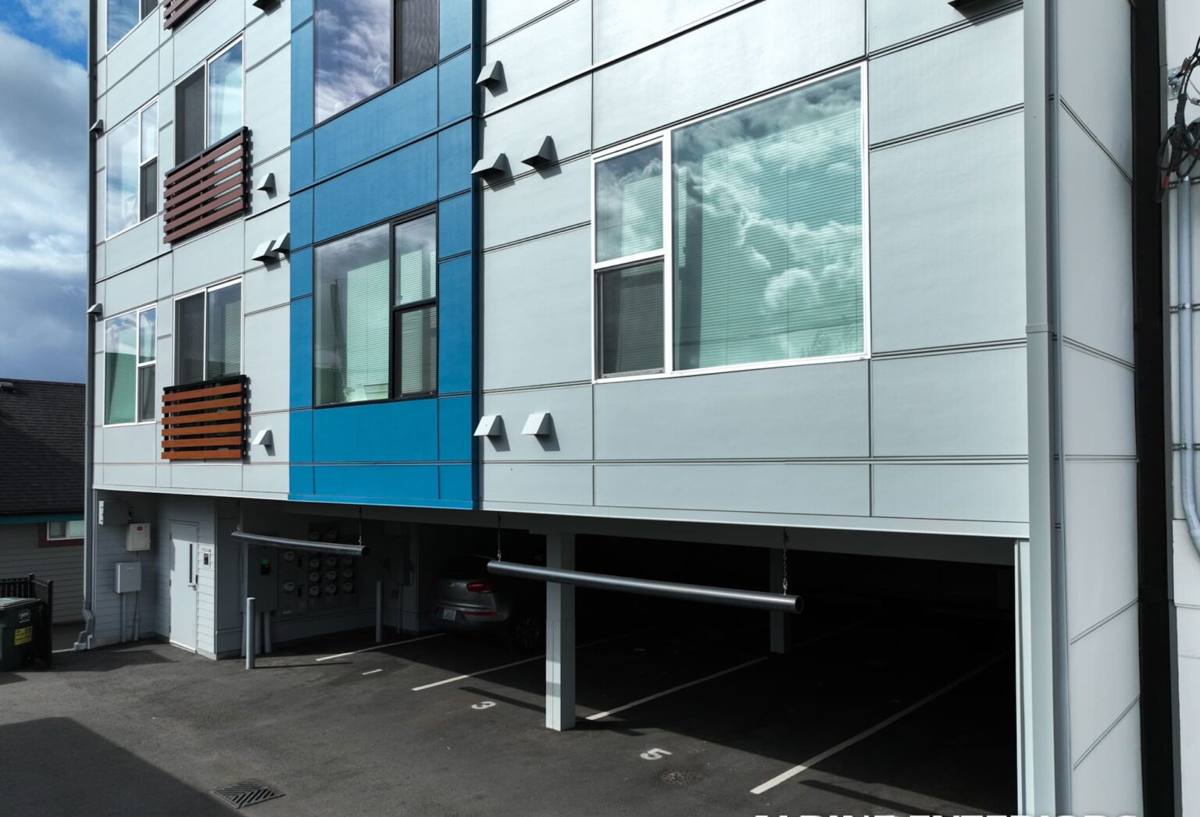
What Ferndale's Climate Actually Does to a Window Opening
Whatcom County weather isn't dramatic, but it's relentless, and that's what wears out a poorly installed window over time.
Salt Air
Homes closer to the water pick up salt-laden air that accelerates corrosion on hardware, fasteners, and unprotected metal flashing. Over years, that can mean pitted hinges, corroded screws, and flashing that fails quietly behind the siding long before anyone sees a stain on the drywall.
Driving Rain
Storms off the Strait push rain sideways into west- and southwest-facing walls, which are exactly the walls where a sloppy sill pan or a missed bead of sealant turns into a slow leak. Wind-driven rain doesn't just sit against a window — it gets forced up and under trim and flashing that isn't lapped correctly.
Long Moss Season
Whatcom County's wet stretch runs long, and anywhere moisture lingers — window sills, the tops of trim boards, shaded north walls — moss and algae get a foothold. On a new build, that's a sign the water isn't shedding the way it should, and left alone it holds moisture against wood trim and siding.
None of this is exotic. It's the same weather Ferndale has always had. The difference is whether the window install accounts for it now, while the wall is still open, or leaves it to be discovered in five or ten years.
What a Correct New-Construction Install Actually Involves
New-construction windows have a nailing fin (sometimes called a nail flange) that gets fastened directly to the sheathing before siding goes on. That gives us full access to build a proper water-management system around the opening — something a replacement install often can't fully do. The sequence matters more than any single product:
- Rough opening checked for square, level, and correct size before the window ever gets set
- Sill pan flashing installed with back-dam and end dams so any water that gets past the window drains back outside, not into the wall cavity
- Window set in a bed of sealant at the nailing fin, not just caulked around the edges afterward
- Flashing tape applied in the correct shingle-lap order — sill first, then jambs, then head — so water always sheds downward and outward
- House wrap integrated over the head flashing, never tucked behind it, so the drainage plane stays continuous
- Shims set at structural load points so the frame doesn't bow or bind once trim and siding add weight and pressure
- Interior and exterior gaps insulated and sealed without over-packing, which can bow the frame and cause the sash to stick
Skip or shortcut any one of these steps and the window itself can be a perfectly good product and still leak. This is why we treat new-construction installation as a flashing and drainage job first, and a window job second.
Choosing a Frame Material for a Ferndale New Build
There's no single "best" window material — the right call depends on the home's exposure, the budget, and how much upkeep the owner wants to take on. Here's how the common options hold up under Whatcom County's coastal, wet conditions:
| Frame Material | How It Handles This Climate | Maintenance | Typical Fit |
|---|---|---|---|
| Vinyl | Good moisture and salt resistance; won't rot or corrode | Low — occasional cleaning | Most new builds; strong value |
| Fiberglass | Excellent stability in temperature swings; holds up well to coastal exposure | Low | Higher-end builds, larger openings |
| Wood-clad | Attractive interior wood with an exterior clad shell; clad protects against rain, but any breach in the cladding exposes wood to rot | Moderate — depends on cladding integrity | Traditional or high-end aesthetic |
| Aluminum | Strong and slim-profile, but conducts cold and is more prone to corrosion near salt air unless properly finished | Moderate to high | Modern designs, covered exposures |
For homes with direct wind and rain exposure, or anywhere within a mile or two of the bay, we generally steer owners toward vinyl or fiberglass for the exterior-facing performance and the lower long-term maintenance. Wood-clad and aluminum both have a place, but we're upfront that they ask more of the owner over time — not because the material is bad, but because any gap in the protective layer gives moisture a way in, and that's a harder problem to catch early than it sounds.
Our Process on a New-Construction Job
- Plan review: we look at window schedules, elevations, and rough-opening sizes before framing is even finished, so nothing gets discovered too late.
- Rough opening check: every opening gets verified for size, square, and level before a window goes in.
- Flashing and sill pan install: the water-management layer goes in first, built for the specific exposure of that wall.
- Window setting: the unit is set, shimmed, and fastened to spec, then checked for smooth sash and lock operation before we move on.
- Integration with house wrap and siding trades: we coordinate flashing laps with whoever's doing the weather barrier and siding so there's no gap in coverage between trades.
- Final inspection: every opening gets a walk-through check for sealant coverage, drainage path, and operation before the crew leaves.
On a full new build we're usually working alongside a general contractor's schedule, and we coordinate directly with the framing and siding crews so the window openings don't sit exposed to weather any longer than necessary.
Mistakes We See on New-Construction Jobs in This Area
Most of the window problems we get called out to look at in Ferndale and nearby didn't start with a bad window — they started with an install shortcut that got covered up by trim and siding.
- Reverse-lapped flashing: head flashing tucked under the house wrap instead of over it, which funnels water straight into the wall cavity.
- No back-dam on the sill pan: without it, any water that reaches the sill has nowhere to go but inward.
- Caulk used as a substitute for flashing: sealant is a backup layer, not the primary water barrier — used alone, it fails as soon as it ages or cracks.
- Over-shimmed frames: bowed jambs that bind the sash, usually not noticed until the homeowner complains the window is hard to open a year or two in.
- Moss and algae staining setting in fast on shaded or north-facing walls — often the first visible sign that water is sitting somewhere it shouldn't.
None of these show up on move-in day. They show up two, five, or ten years later, which is exactly why the install quality matters more than almost anything visible about the window itself.
What Drives Cost on a New-Construction Window Project
| Factor | Why It Matters |
|---|---|
| Number and size of openings | More openings and larger units mean more material and labor per house |
| Frame material | Vinyl typically costs less upfront than fiberglass or wood-clad |
| Glass package | Low-E coatings, gas fills, and impact-rated glass all add cost but improve comfort and performance |
| Exposure and elevation | Walls facing prevailing wind and rain need more careful — and sometimes more time-intensive — flashing detail |
| Access and building stage | Coordinating with framing and siding crews on an active job site affects scheduling and labor |
| Trim and interior finish | Site-built versus factory trim packages change both material and labor cost |
We give firm, itemized quotes once we've seen the plans or the actual openings — we don't work off vague per-window averages, because exposure and glass package swing the number more than most homeowners expect.
Why It Matters That We Already Work in Ferndale
A crew that installs windows all over the country can still do competent work, but a crew that's already installing new-construction windows across Ferndale and Whatcom County knows which walls in this area take the worst of the wind-driven rain, how fast moss sets in on shaded elevations here, and what it takes for flashing to actually hold up against salt air near the water. That's not something you get from a spec sheet — it's from doing the work locally, season after season. We also know how to coordinate with the framing and siding trades on active Ferndale job sites without slowing the schedule down, which matters on a build with a lot of moving parts.
A Quick Owner's Checklist for a New-Construction Window Install
- Confirm the installer builds a sill pan with back-dam and end dams on every opening
- Ask how head flashing is lapped over the house wrap, not under it
- Confirm frame material choice matches the wall's actual sun, wind, and rain exposure
- Check that sash and locks are tested for smooth operation before the crew leaves
- Get a written, itemized quote — not a rough per-window estimate
If you're building new in Ferndale or anywhere else in Whatcom County, we're glad to walk the plans or the framed openings with you and put together a straightforward, no-pressure estimate — just fill out the form below to get started.