 Bellingham Roofing
 Windows Built for Lynden's Weather, Not Just Any Weather
Lynden sits inland from Bellingham Bay in the Nooksack River valley, but it shares the same weather systems as the rest of Whatcom County — long stretches of low-pressure rain off the Pacific, humid air that never fully dries out between storms, and winter cold snaps that can turn sharp when outflow winds push down out of the Fraser Valley to the north. Add in the shaded, moisture-holding conditions that keep moss and algae active on north-facing exteriors most of the year, and you have a climate that is genuinely hard on windows — especially older ones that were never detailed for this much sustained moisture.
A window that's a fine fit for a dry inland climate can still fail here within a few years if it isn't flashed, sealed, and vented correctly. Window installation in Lynden isn't just about picking a good window off a shelf — it's about installing it in a way that accounts for wind-driven rain hitting the wall assembly at an angle, seasonal condensation from temperature swings, and the slow, patient damage that comes from water finding the one gap you missed.
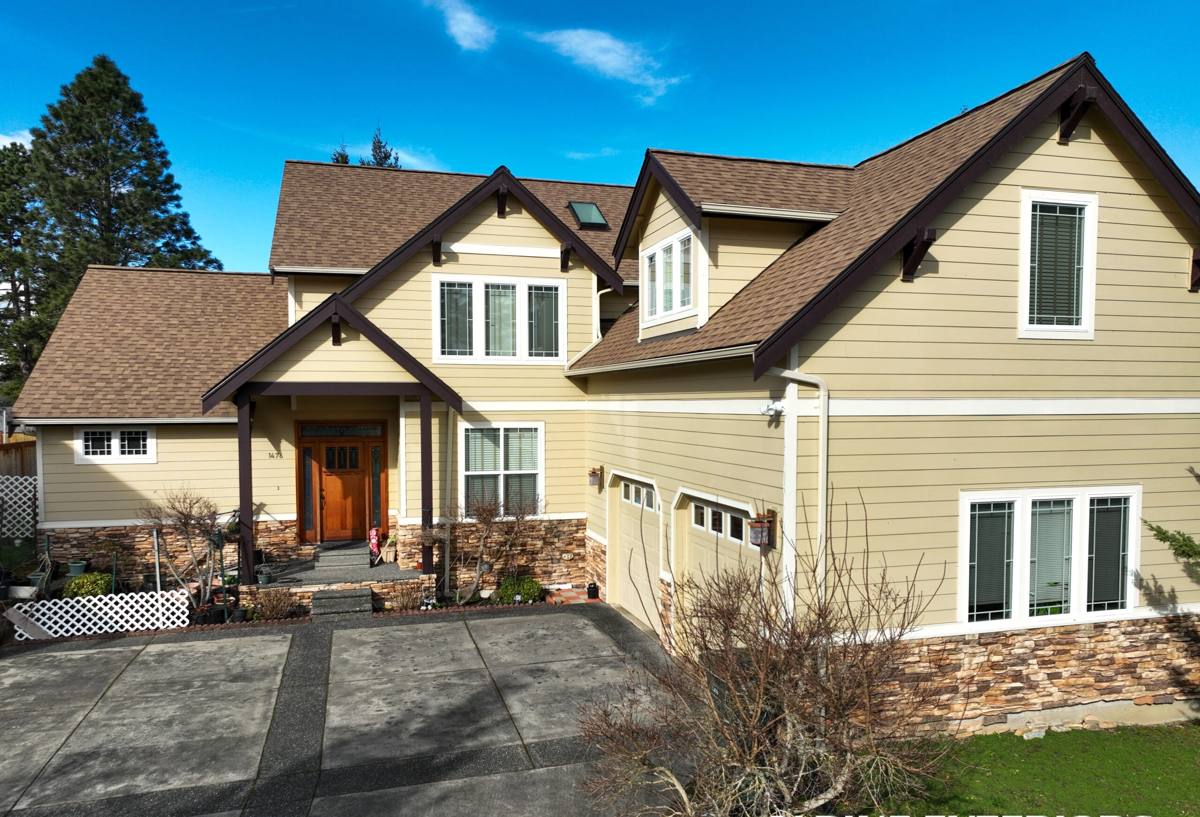
What Whatcom County Weather Does to Windows Over Time
Most window failures we see in this area aren't sudden. They build over several rainy seasons:
- Wind-driven rain gets pushed sideways into gaps around the frame that a calmer climate would never test.
- Constant humidity keeps wood trim, sills, and sashes damp longer after each storm, which accelerates rot in anything not properly sealed or primed.
- Moss and algae take hold on shaded sills, mullions, and trim, holding moisture against the surface and staining paint and caulk lines.
- Winter cold snaps from outflow wind events stress seals and glazing, especially on older single-pane or early dual-pane units.
- Condensation between panes is often the first visible sign that a seal has failed — it shows up as permanent fogging that no amount of cleaning fixes.
None of this means Lynden homes need exotic solutions. It means the basics — flashing, sealants, and drainage — have to be done right every time, because this climate doesn't forgive a shortcut the way a drier region might.
Signs Your Windows Need Attention
Before recommending replacement, we look for real evidence that a window's function has broken down, not just cosmetic wear. Common signs in Lynden homes include:
- Fogging or haze between panes that won't clean off (a failed insulated glass seal)
- Soft, spongy, or discolored wood at the sill or lower frame corners
- Visible daylight or a noticeable draft around the frame when it's windy
- Paint or caulk that keeps cracking and failing in the same spots year after year
- Difficulty opening, closing, or locking — often a sign the frame has shifted or swollen
- Moss, algae, or persistent black staining on the sill or trim below the window
- Noticeably higher heating bills without another clear cause
Sometimes one or two of these can be fixed with re-caulking or minor repair. When several show up together, especially rot at the frame, that's usually a sign the window and its surrounding flashing need to come out and be replaced correctly.
What a Correct Window Installation Actually Involves
The window unit itself is only part of the job. In a climate like ours, the installation details matter as much as the product:
Sill Pan Flashing
A sloped, waterproof pan under the window opening gives any water that gets past the sash a way out instead of a place to pool and soak into framing.
Integrated Weather-Resistive Barrier
Flashing tape and building paper or house wrap need to be layered correctly — like shingles — so water sheds down and out rather than getting trapped behind the siding.
Head Flashing
A drip cap or head flashing above the window breaks the path of water running down the wall, directing it around the opening instead of down into the top corners.
Proper Sealant, Not Just More Sealant
Caulk is a backup layer, not the primary defense. Over-caulking a poorly flashed window just hides a problem until it fails again.
Insulation and Air Sealing at the Rough Opening
Gaps between the frame and the rough opening need to be insulated and air-sealed without over-packing, which can bow the frame and affect operation.
Skip any one of these steps and the window may look fine on move-in day, but the next few rainy seasons will find the weak point.
Choosing the Right Window for a Lynden Home
There's no single "best" window material — the right choice depends on the home, the budget, and how much maintenance you want to take on. Here's how the common options compare for this climate:
| Material | Moisture Performance | Maintenance | Typical Fit |
|---|---|---|---|
| Vinyl | Won't rot; seams need quality construction to stay watertight | Low — no painting or sealing | Most homes, strong value |
| Fiberglass | Very stable in wet/dry and hot/cold cycles | Low | Homes wanting durability and a slimmer frame profile |
| Wood-Clad | Exterior clad face resists weather; interior wood needs the clad seal to stay intact | Moderate to high | Historic-style or traditional-look homes |
| Aluminum | Conducts cold and can condense heavily in our winters unless thermally broken | Low | Limited use; usually only with thermal break upgrades |
For most Lynden homes, we steer toward vinyl or fiberglass because they hold up to sustained moisture without ongoing upkeep. Wood-clad windows can look excellent on farmhouse or traditional-style homes, but we're upfront that they need the exterior cladding and seals inspected periodically — if that layer is ever compromised, the wood underneath is exposed to exactly the kind of damp cycle this region is hardest on.
Glass Package
Double-pane, low-E glass with argon fill is the practical baseline here — it manages heat loss in winter and keeps interiors more comfortable without the added cost of triple-pane, which usually isn't necessary outside of homes near major noise or unusually exposed sites.
Our Installation Process
- On-site assessment — we check existing frames, sills, and surrounding siding for rot or moisture damage before quoting anything.
- Measure and order — accurate measurements matter more than brand; a slightly-off window is a leak waiting to happen.
- Remove and inspect — old windows come out carefully so we can see the condition of the rough opening and framing underneath.
- Repair as needed — any rot or damaged sheathing gets addressed before a new window ever goes in; we don't install a good window into a bad opening.
- Flash, set, and seal — sill pan, side flashing, the window itself, then head flashing, integrated with the wall's weather barrier.
- Insulate and trim — rough opening gaps are filled correctly, then interior and exterior trim is finished.
- Final check — operation, locks, and weatherproofing are tested before we call the job done.
What Affects the Cost
| Factor | Why It Matters |
|---|---|
| Full-frame vs. insert replacement | Full-frame lets us fully re-flash the opening; inserts are faster but rely on the existing frame being sound |
| Number and size of openings | Larger or custom-sized windows cost more in both material and labor |
| Existing rot or water damage | Framing repair adds cost but is not optional if damage is found |
| Material choice | Vinyl is typically the most budget-friendly; fiberglass and wood-clad run higher |
| Trim and siding tie-in | Matching existing trim profiles or siding cuts can add labor time |
We give straightforward, itemized estimates so you can see exactly what you're paying for — no vague lump-sum numbers that hide whether flashing and prep work were actually included.
Why Hire a Crew That Already Works in Lynden
Window installation done well looks almost identical to window installation done poorly — until the first hard winter storm rolls through. The difference shows up two or three rainy seasons later, in the form of a soft sill or a fogged pane, and by then it's a repair job instead of a quick fix. A crew that regularly works Whatcom County homes has already seen how driving rain, humidity, and moss find the gaps that a textbook installation in a milder climate might get away with skipping. That experience shows up in the small decisions — how the flashing is lapped, how much clearance is left at the sill, how the trim is sealed — that determine whether a window is still performing correctly a decade from now.
We also carry the proper permitting knowledge for work in and around Lynden, including how local building department requirements apply to full-frame replacements and any structural openings that change in the process.
Ready for an Honest Look at Your Windows?
If you're seeing drafts, fogged glass, or soft trim around your windows, it's worth having them looked at before another rainy season adds to the damage. We offer a free, no-pressure estimate — use the form below to get started and we'll walk you through exactly what your home needs and why.