 Bellingham Roofing
 Lynden's Climate Is Harder on Siding Than It Looks
Lynden sits inland from Bellingham Bay, but it doesn't escape the weather patterns that define this corner of Washington. Long stretches of driving rain move through the Nooksack Valley for much of the year, moss season runs longer here than it does in drier parts of the state, and the same marine-influenced air that reaches the rest of Whatcom County still finds its way into the valley on wind out of the west. Add in the agricultural setting — open fields, irrigation, morning fog that sits low before burning off — and you get siding conditions that are more demanding than a homeowner moving here from eastern Washington or another state might expect.
Siding on a Lynden home isn't just a weather shield. It's fighting constant low-grade moisture exposure, UV cycling between grey stretches and summer sun, and the slow biological growth that comes with shade, damp ground, and tree cover common on larger valley lots. Products that aren't engineered for this kind of sustained moisture load tend to show it early — soft spots, swelling, peeling paint, moss and algae staining that keeps coming back no matter how often it's cleaned off.
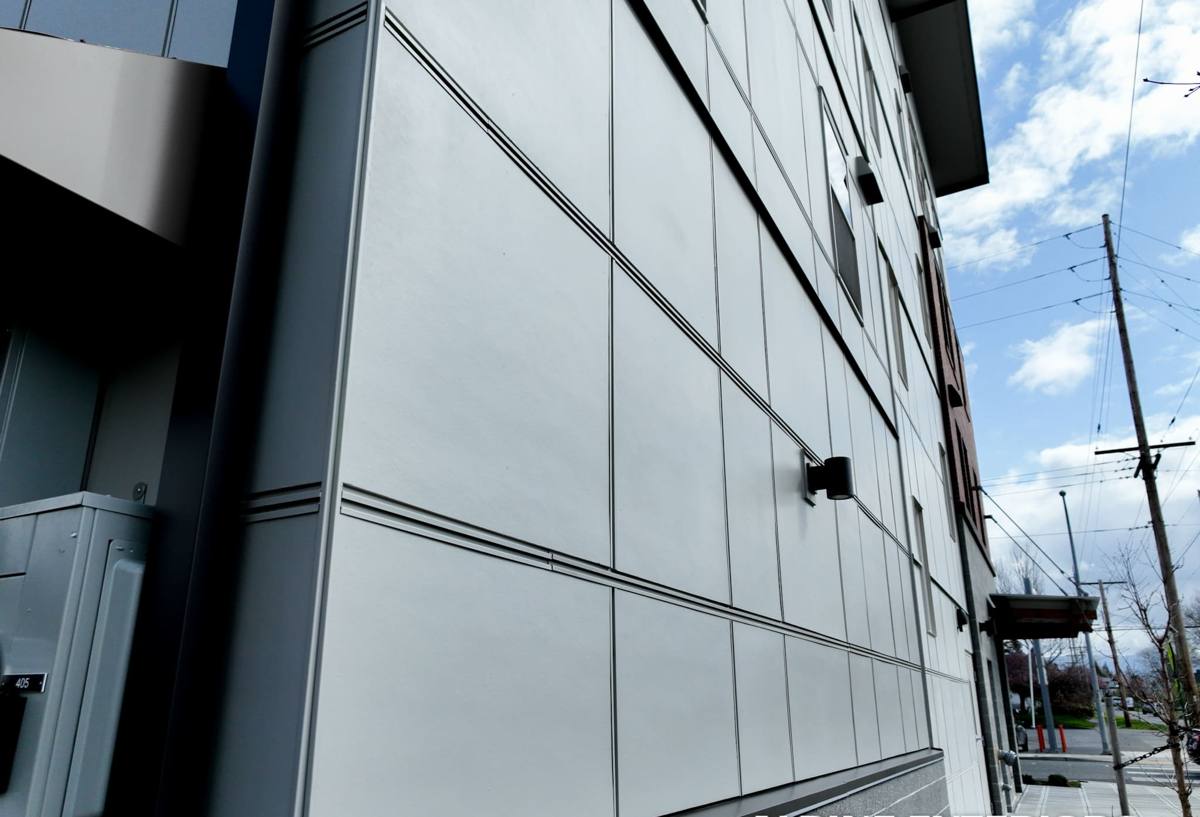
Why We Install Fiber Cement — and Only James Hardie
We install James Hardie fiber cement siding exclusively. We don't install LP SmartSide, vinyl, Cemplank, Allura, primed spruce, or cedar. That's not a marketing position — it's a standard we've held to because of what we've seen hold up in this climate and what hasn't.
Fiber cement as a category resists moisture, insects, and fire in ways that wood-based and engineered-wood products can't match, since it's made from cement, sand, and cellulose fiber rather than wood. Within that category, James Hardie is the manufacturer we've standardized on for a combination of reasons: their HZ5 product line is specifically engineered for regions with sustained moisture exposure like ours, their ColorPlus factory finish holds color and resists fading better than field-applied paint, and their warranty structure is transferable and backed by a company with a long track record in the fiber cement space. When a product is installed to spec, it holds up through the kind of weather cycle Lynden sees year after year.
We'd rather turn down a job than install a product on a Lynden home that we know will need premature repainting, will trap moisture at the seams, or will leave a homeowner chasing warranty claims through a smaller manufacturer with less installation oversight.
What This Means in Practice
- No vinyl siding installs — vinyl expands and contracts significantly with our temperature swings and can crack or bow over time, and it doesn't hold paint if a color change is ever wanted.
- No LP SmartSide or Cemplank/Allura — we install James Hardie's engineered cement board exclusively, for consistency in product knowledge, warranty administration, and long-term performance.
- No unprimed or field-primed wood products — cedar and primed spruce require an ongoing maintenance commitment (recoating, caulking, moisture checks) that most homeowners underestimate going in.
What a Correct Fiber Cement Installation Actually Involves
Fiber cement siding is only as good as the installation behind it. Most of the siding failures we get called out to inspect in Whatcom County aren't product failures — they're installation failures. The board itself held up; the water management behind it didn't.
Moisture Barrier and Drainage Plane
Every Hardie installation we do starts with a continuous weather-resistive barrier and a drainage gap behind the siding, so any moisture that does get past the cladding has somewhere to go instead of sitting against the sheathing. In a climate with as much sustained rain as Lynden gets, this drainage plane isn't optional — it's the difference between siding that sheds incidental moisture and a wall assembly that slowly rots from the inside.
Flashing at Every Penetration
Windows, doors, hose bibs, vents, and anywhere else the siding is interrupted need proper flashing and integrated house wrap detailing. This is the step that gets rushed on lower-bid jobs, and it's the first place water finds its way in during a hard, wind-driven rain event.
Fastening and Clearances to Manufacturer Spec
James Hardie publishes specific fastener patterns, nailing zones, and minimum clearances from grade, roof lines, and decks. Boards fastened too tight or too loose, or installed with insufficient ground clearance, can trap moisture at the bottom edge — exactly where we see the most moss and staining develop on improperly installed siding in this area.
Caulking and Joint Treatment
Butt joints, corners, and trim intersections need to be treated with the right sealant and technique, not just caulked over as a finishing step. Done wrong, these are the first spots to open up and let moisture behind the cladding within a few seasons.
Our Process for Lynden Siding Projects
- On-site assessment — we walk the property, check the current wall assembly, look for existing moisture damage or rot, and evaluate drainage and grading around the foundation before quoting anything.
- Scope and product selection — we walk through Hardie's lap, panel, and shingle profiles and color options, and match the product to the home's exposure (more shaded, moisture-prone walls sometimes warrant different detailing than south- and west-facing walls).
- Tear-off and substrate check — old siding comes off, and we inspect sheathing underneath for hidden damage before anything new goes up. This is often where we find the real story behind why old siding failed.
- Barrier, flashing, and drainage install — the unglamorous work that determines whether the new siding lasts twenty years or five.
- Hardie installation to manufacturer spec — correct fastening, clearances, and joint treatment throughout.
- Final walkthrough and cleanup — we review the finished work with the homeowner and clear the site of debris and old material.
James Hardie Product Lines: Choosing the Right Fit for a Lynden Home
Not every Hardie product line is the same, and the right choice depends on the home's exposure and style. Here's how the common options compare for a valley property like the ones common around Lynden:
| Product | Best Suited For | Key Consideration |
|---|---|---|
| HardiePlank Lap Siding | Most home styles, standard exposure | Most common choice; wide range of textures and widths |
| HardiePanel Vertical Siding | Modern or farmhouse-style homes, accent walls | Clean vertical lines, often paired with lap siding |
| HardieShingle | Craftsman or cottage-style homes | Higher labor time due to detail work, strong curb appeal |
| HZ5 Engineered Line | Homes with heavier moisture or shade exposure | Formulated for regions with sustained damp climates like ours |
| ColorPlus Factory Finish | Homeowners who want to avoid repainting | Baked-on finish outlasts field-applied paint significantly |
Cost Factors to Understand Before Getting a Quote
Every Lynden property is different, so we don't quote off square footage alone. These are the factors that actually move the number:
| Factor | Why It Matters |
|---|---|
| Tear-off complexity | Multiple layers of old siding or hidden rot adds labor and substrate repair |
| Home shape and trim detail | Dormers, bump-outs, and multiple gables increase cutting and flashing time |
| Product line and profile | Shingle profiles and wider planks carry different labor and material costs than standard lap |
| Color and finish | ColorPlus factory finish vs. field painting affects both cost and long-term maintenance |
| Access and site conditions | Larger valley lots, outbuildings, or difficult staging areas can affect crew efficiency |
We give straightforward, itemized quotes after the on-site assessment rather than ballpark numbers over the phone, because guessing at these factors leads to change orders later.
What to Expect After Installation
Fiber cement is a low-maintenance product, but "low-maintenance" isn't "no-maintenance," especially in a climate that grows moss as readily as ours does. A short annual routine keeps a correctly installed Hardie system performing the way it's designed to:
- Rinse siding annually with a garden hose and soft brush to clear pollen, dust, and early moss growth before it takes hold
- Check caulked joints and trim intersections once a year for cracking or separation
- Keep gutters clear so overflow doesn't run down the face of the siding repeatedly
- Trim back vegetation and tree limbs that hold moisture against exterior walls or shade them from ever fully drying
- Watch for staining at the bottom courses near grade, which can signal a drainage or clearance issue worth having checked
Why Hiring a Crew That Already Works in Lynden Matters
Siding installation quality varies enormously by crew, not just by product. A contractor who already works regularly in Lynden and the surrounding Whatcom County area understands the specific moisture and moss conditions of this valley, knows how local wall assemblies typically age, and has already worked through the flashing and drainage details that matter most here. That local pattern-recognition is worth more than a lower bid from an out-of-area crew learning the region on someone's home.
If you're weighing a siding replacement or new-construction siding project in Lynden, we're happy to walk the property, look at what's there now, and give you a straightforward, no-pressure estimate — just fill out the form below.