 Bellingham Roofing
 Siding Built for Happy Valley's Weather, Not Just Its Curb Appeal
Happy Valley sits close enough to the water and the hillside tree cover that its homes take a specific kind of beating: salt-tinged air drifting up from Bellingham Bay, long stretches of driving rain off the Sound, and shaded, damp yards where moss and algae get a head start every fall and don't let go until late spring. None of that is unusual for Whatcom County. But it adds up differently depending on what's nailed to your walls, and it's a big part of why we install James Hardie fiber cement siding exclusively and won't put anything else on a home in this neighborhood.
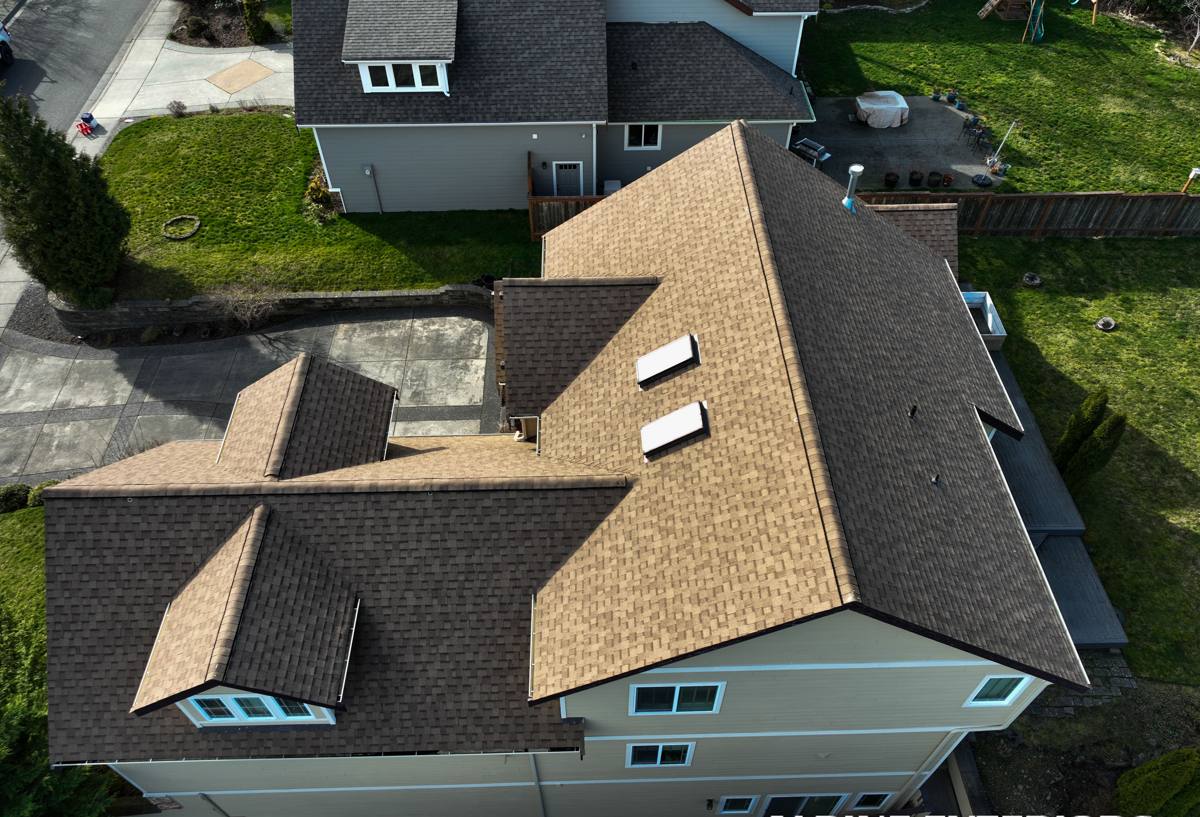
This page is about one job in one place: correctly installed James Hardie siding on a Happy Valley house. Not a general product pitch, not a countywide overview — what your siding actually has to survive here, what a correct installation looks like, and why a crew that already works this neighborhood is worth choosing over one that doesn't.
What Happy Valley's Climate Actually Does to Siding
Salt Air and Slow Corrosion
Proximity to Bellingham Bay means a light but steady dose of salt-laden moisture in the air, especially on windier days. Salt air doesn't rot wood outright, but it accelerates corrosion on fasteners, flashing, and any metal trim components, and it speeds up the breakdown of lower-grade paint films on wood and composite siding. Over years, that shows up as rust streaking, chalky or peeling paint, and fastener heads that back out or stain the surface around them.
Driving Rain and Wind-Driven Moisture
Bellingham's rain doesn't always fall straight down. Storms coming off the Sound push rain sideways into wall assemblies, which means siding here needs a real drainage plane behind it, not just a water-resistant face. Any siding product with seams, laps, or panel joints that aren't detailed correctly becomes a wicking point, and wood-based products in particular will swell, cup, or delaminate at those joints over time if water gets behind them repeatedly.
The Long Moss and Algae Season
Shaded lots, tree cover, and consistent moisture give moss, algae, and mildew a long growing window on north- and west-facing walls especially. This isn't just cosmetic. Organic growth holds moisture against the siding surface, which keeps the substrate wet longer after every rain and creates the conditions for rot in wood-based products or for a factory paint film to fail early on lower-grade composites.
Why We Standardized on James Hardie for This Neighborhood
We don't install LP SmartSide, vinyl, Cemplank, Allura, primed spruce, or cedar. That's not a marketing position — it's a decision made after weighing what each of those products actually needs to perform well long-term against what a Happy Valley home's exposure demands.
| Material | Where it struggles in this climate | How Hardie compares |
|---|---|---|
| Vinyl siding | Can warp or distort in temperature swings; seams are a moisture entry point; color is not repairable if damaged | Fiber cement holds dimensional stability and the ColorPlus finish is factory-baked, not a surface coating |
| Cedar / primed spruce | Organic material — moss, mildew, and driving rain accelerate rot, especially on shaded elevations | Non-combustible fiber cement doesn't feed mold or provide an organic food source for rot |
| LP SmartSide / OSB-based products | Engineered wood strand product; edge swelling and moisture intrusion at cut ends and joints is a known failure point | Cement-based composition resists moisture swelling at properly sealed cuts and joints |
| Cemplank / Allura (other fiber cement) | Similar base material to Hardie but different regional engineering, paint systems, and warranty structure | Hardie's HZ5 product line and ColorPlus finish are engineered specifically for Pacific Northwest wet-climate exposure |
To be fair to these products: vinyl is inexpensive and low-maintenance in dry climates, cedar has a natural look many homeowners love, and other fiber cement brands are legitimate building materials. Our position isn't that they're defective — it's that given Happy Valley's combination of salt exposure, wind-driven rain, and shade-driven moss growth, we don't think they hold up as well over 20-30 years as Hardie does, and we'd rather stand behind one product we trust completely than offer several we have reservations about.
The James Hardie System We Install
HZ5 Engineered for Wet Climates
James Hardie engineers its siding by climate zone, and the HZ5 product line is built for regions like ours — freeze-thaw cycling combined with sustained moisture exposure. It's more moisture- and impact-resistant at the formulation level than a generic, non-zone-engineered fiber cement product.
ColorPlus Factory Finish
Rather than field-painted siding, ColorPlus is a multi-coat finish baked on at the factory under controlled conditions. That matters directly for the salt-air and moss issues above: a factory finish adheres more consistently and resists fading and chalking better than most field-applied paint jobs, and Hardie backs it with its own finish warranty separate from the substrate warranty.
Non-Combustible Core
Fiber cement is non-combustible, which is relevant given wildfire smoke seasons the region has seen in recent summers, and it simply removes an entire category of material degradation (rot, insect damage, organic growth feeding on the substrate itself) that wood-based sidings can't avoid.
What a Correct Installation Involves
James Hardie siding is only as good as its installation. A huge share of the "fiber cement problems" homeowners hear about trace back to installation mistakes, not the product. On a Happy Valley home, given the wind-driven rain and moisture exposure discussed above, these details are not optional:
- Proper drainage plane and rainscreen gap — a ventilated air gap behind the siding lets any moisture that does get past the surface drain and dry out instead of sitting against the wall sheathing
- Correct fastener type and placement — Hardie specifies fastener material, length, and placement pattern; using the wrong fastener in a salt-air environment invites corrosion and staining
- Flashing at every penetration — windows, doors, vents, and any wall penetration need integrated flashing that directs water outward, not just caulk
- Minimum ground clearance — Hardie requires clearance from grade, decks, and roof lines to keep the bottom edge of the siding from sitting in standing moisture
- Factory-cut edges sealed on-site cuts — any field cut needs to be sealed per Hardie's installation guide to prevent the cut edge from wicking moisture
- Correct panel gapping and caulking at joints — too tight and the panel can't expand and contract; too loose and it's an open moisture path
Skip any one of these and you can void the manufacturer warranty even though the siding itself is rated for the job. This is the gap between "we installed Hardie" and "we installed Hardie correctly for this climate."
Our Process for a Happy Valley Siding Job
1. On-Site Assessment
We walk the exterior, check for existing moisture damage or rot behind the current siding (especially on shaded and north-facing walls where moss has likely been active longest), and assess drainage, grading, and flashing conditions before quoting anything.
2. Tear-Off and Sheathing Check
We remove the existing siding and inspect the wall sheathing underneath. Any water damage found at this stage gets addressed before new siding goes up — covering damaged sheathing with new siding just hides the problem.
3. Weather Barrier and Rainscreen Installation
A code-compliant weather-resistive barrier goes on first, followed by the rainscreen furring that creates the drainage gap behind the Hardie panels.
4. Hardie Panel and Trim Installation
Panels, trim, and fascia go up to Hardie's fastening and clearance specifications, with flashing integrated at every window, door, and penetration as we go — not added afterward.
5. Final Inspection and Walkthrough
We walk the finished job with the homeowner, checking caulking, trim lines, and clearances, and go over basic care so the siding performs the way it's designed to for the next several decades.
Why a Crew That Already Works Happy Valley Matters
A contractor who works this specific area regularly already knows which elevations on a typical Happy Valley lot get the most driving rain, where moss tends to establish fastest, and how local permitting and inspection tends to go. That's not a small thing — it means fewer surprises mid-project and a crew that's already calibrated its installation habits (flashing details, rainscreen spacing, fastener choice) to what actually holds up here, rather than applying a one-size-fits-all approach built for a drier climate.
It also means accountability. A crew based in and around Bellingham has a reputation in this community to protect and is easy to reach if a warranty question comes up five or ten years down the road — not a name from an out-of-area outfit that did one job and moved on.
Maintenance: What Hardie Siding Actually Needs Here
- Rinse siding with a garden hose (not a pressure washer aimed directly at seams) once or twice a year to clear salt residue and early moss growth, especially on shaded walls
- Keep gutters clear so overflow doesn't run down the siding face repeatedly in one spot
- Trim back vegetation and tree cover that keeps a wall shaded and damp longer than necessary
- Re-caulk joints and penetrations if you notice cracking or gaps developing over the years
- Inspect the bottom edge near grade periodically, since that's the area most exposed to splash-back moisture
Compared to wood siding, this is a light maintenance load — there's no repainting cycle to keep ahead of and no organic substrate for moss to actually damage, just a surface to keep clean.
Cost Factors for a Happy Valley Hardie Project
| Factor | Why it affects your cost |
|---|---|
| Tear-off and sheathing condition | Existing moisture or rot damage found behind old siding adds repair scope before new siding can go up |
| Home size and wall complexity | More corners, gables, and trim detail means more labor and cut waste |
| Siding profile and color | Lap width, shingle-style panels, and premium ColorPlus colors carry different material costs |
| Rainscreen and drainage upgrades | Adding or upgrading a drainage plane where none existed is additional labor but pays off in moisture performance |
| Trim and accessory scope | Fascia, soffit, corner boards, and window trim replacement add to the total project |
We don't publish flat per-square-foot pricing because these factors vary too much house to house to make a number meaningful — every estimate is based on an actual walk of your home.
If you're weighing a siding replacement in Happy Valley, we're happy to take a look at your home, point out what your specific exposure is dealing with, and put together a clear, no-pressure estimate. There's no obligation — just an honest read on what your siding needs. Reach out using the form below.