 Bellingham Roofing
 Roofing for Happy Valley's Particular Climate
Happy Valley sits close enough to the water and the hills around Bellingham that its homes take a specific kind of weather beating year-round. Salt-laden air moves in off Bellingham Bay, driving rain comes sideways during fall and winter storms, and the shaded, moisture-heavy conditions common to this part of Whatcom County set up a long moss season that can run eight months or more. None of that is unusual for western Washington, but it does mean a roof installed here needs to be built differently than one going up somewhere hot and dry. Fastener corrosion resistance, underlayment quality, and ventilation all matter more here than the shingle color most homeowners focus on first.
A new roof installation is one of the few home improvements where the visible work — the shingles or panels on top — is actually the smaller half of the job. The parts that determine whether a roof lasts 15 years or 30 in this climate are underneath: the decking, the underlayment, the flashing details, and the airflow through the attic. We treat Happy Valley new roof installations as a full system replacement, not a materials swap.
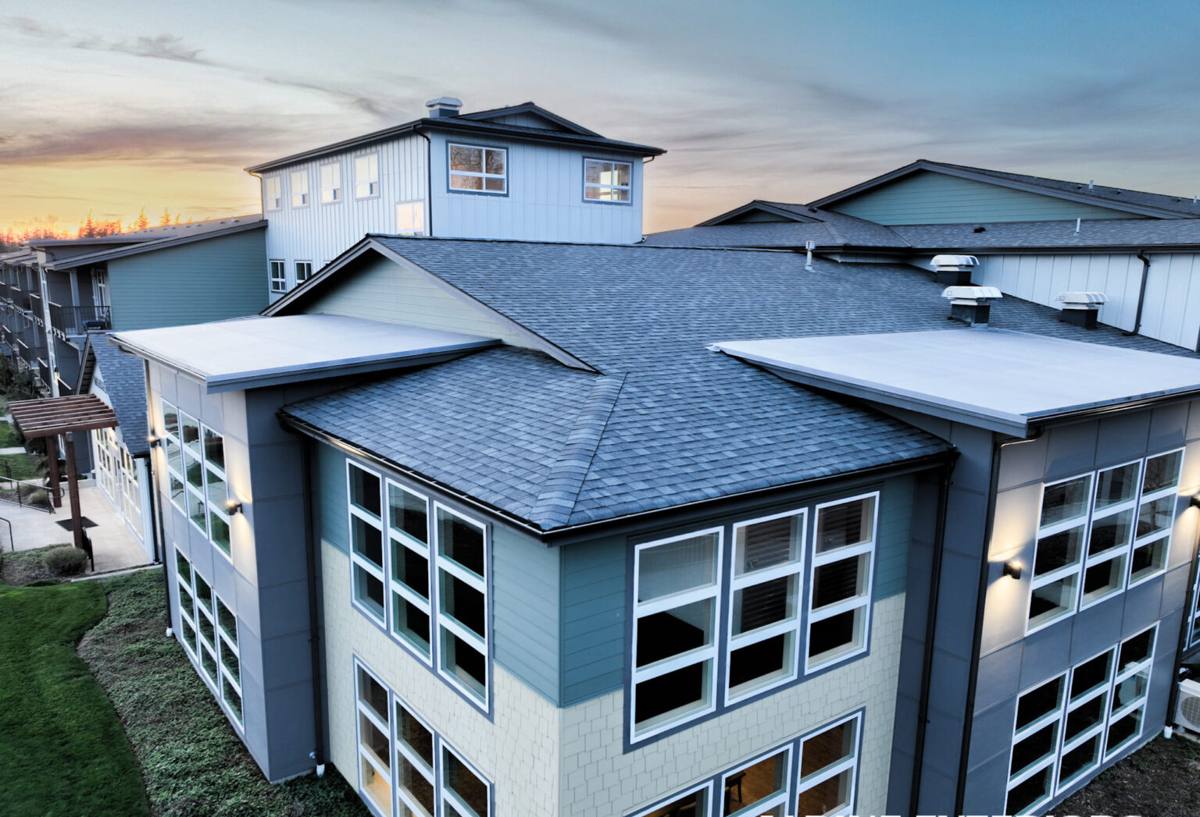
Signs a Happy Valley Roof Is Ready for Replacement
Roofs rarely fail all at once. In this climate, the warning signs tend to show up gradually, and homeowners often notice cosmetic issues (moss, streaking) well before they notice the structural ones underneath.
- Granules collecting in gutters or at downspout outlets, indicating the shingle surface is wearing thin
- Moss or algae established in mats rather than thin patches, especially on north-facing slopes
- Shingles that are cupping, curling, or lifting at the edges
- Soft or spongy decking felt when walking the roof, or sagging visible from the ground
- Daylight visible through the roof deck from inside the attic
- Water stains on interior ceilings or in the attic near valleys, chimneys, or vent penetrations
- A roof approaching or past 20-25 years old, even if it "looks fine" from the street
Any one of these on its own might mean a repair is enough. Several together, or a roof that's simply past its expected service life, usually means replacement is the more honest recommendation — repeated patch repairs on an aging roof often cost more over a few years than one correct installation.
What a Correct New Roof Installation Actually Involves
A new roof is more than removing old shingles and nailing down new ones. In a climate with this much rain and moss pressure, skipping steps underneath the surface is exactly what causes premature failures.
Tear-Off and Deck Inspection
We remove the old roofing down to the deck rather than layering over it. That's the only way to actually see the condition of the plywood or plank decking underneath — rot, delamination, or soft spots from long-term moisture intrusion are common findings on older Whatcom County roofs and can't be assessed from the top layer. Any damaged decking gets replaced before anything new goes down.
Underlayment and Moisture Barriers
This is where a lot of the real weather protection lives. In a driving-rain climate, we use synthetic underlayment rated for the exposure, with self-adhered ice-and-water membrane at vulnerable points — eaves, valleys, and around penetrations — where wind-driven rain is most likely to work its way under the roof covering.
Ventilation and Moisture Control
Attic ventilation is often the most overlooked part of a re-roof, and it's one of the biggest factors in how long a roof lasts in a wet, mossy climate. Poor airflow traps moisture against the underside of the deck, which accelerates rot and gives moss and algae more to feed on from below as well as above. We check intake and exhaust balance as part of every installation, not as an afterthought.
Flashing and Water Management
Flashing around chimneys, skylights, valleys, and wall intersections is where the majority of roof leaks actually originate — not in the open field of shingles. We install new flashing rather than reusing old pieces, since flashing failures are one of the most common causes of hidden water damage in older homes throughout the Bellingham area.
Roofing Materials That Hold Up in Whatcom County Conditions
There's no single "best" roofing material — the right choice depends on the home, the budget, and how much long-term maintenance the homeowner wants to take on. Here's how the common options perform under salt air, heavy rain, and moss pressure specifically.
| Material | Moss/Moisture Resistance | Salt Air Considerations | Typical Lifespan Here |
|---|---|---|---|
| Architectural asphalt shingle | Good with proper ventilation; algae-resistant granules help | Standard fasteners should be corrosion-resistant near the coast | 20-30 years |
| Standing seam metal | Excellent — sheds moisture fast, little surface for moss to grip | Requires coastal-rated coatings and fasteners to avoid corrosion | 40-50+ years |
| Composite/synthetic shake | Very good; resists moisture absorption better than natural wood | Generally stable in salt air | 30-50 years |
| Cedar shake | Requires regular treatment and cleaning to resist moss and rot | Higher maintenance burden in humid, salt-exposed settings | 20-30 years with upkeep |
We install cedar shake when a homeowner specifically wants that appearance and understands the maintenance commitment, but we're upfront that in a climate with this much sustained moisture, wood roofing asks more of the homeowner over time than composite or metal alternatives — not because the material is bad, but because untreated organic material and eight months of damp shade are naturally at odds.
Our Installation Process, Start to Finish
- Roof assessment — We inspect the current roof, decking, ventilation, and flashing details in person and discuss what we find before recommending a scope.
- Material selection — We walk through the tradeoffs above based on your budget, the home's style, and how much long-term maintenance you want.
- Scheduling around weather — Roofing in this region means planning around rain windows. We build in realistic timelines rather than rushing a tear-off into an exposed deck.
- Tear-off and deck repair — Full removal, inspection, and any necessary decking replacement.
- Underlayment, flashing, and ventilation work — The system underneath the visible roof, installed to handle this climate specifically.
- Final installation and cleanup — New roofing installed, site cleaned, and a walkthrough so you know exactly what was done.
Why a Local Crew Matters for Happy Valley Homes
Roofing crews that work primarily in dry climates sometimes bring assumptions that don't hold up in Whatcom County. Underlayment specs, ventilation ratios, and fastener choices that are "good enough" in a low-moisture region can fall short here, and the failures usually don't show up until years later in the form of hidden rot or a leak that traces back to an installation shortcut. A crew based in Bellingham and familiar with Happy Valley's specific mix of tree cover, elevation, and coastal exposure is making those decisions with the actual local conditions in mind, not a generic spec sheet.
There's also a practical side to hiring local: warranty service, follow-up questions, and any post-installation adjustments are far simpler when the crew that did the work is a short drive away rather than a company that moved on to the next region.
Cost Factors for a New Roof in Happy Valley
Roofing costs vary widely based on roof size, pitch, accessibility, material choice, and how much decking or flashing repair is needed once the old roof comes off. Rather than quote a number that won't reflect your actual home, here's what actually drives the cost up or down, and what's worth asking about before you commit to a bid.
- Ask whether the quote includes full tear-off or assumes an overlay — overlays are cheaper but hide problems and shorten the new roof's effective lifespan
- Ask what underlayment and ice-and-water membrane are specified, not just the shingle or panel brand
- Ask how ventilation will be assessed and whether changes are included if the current setup is inadequate
- Ask how decking repair is priced if damage is found — by the sheet, by the hour, or as a rough allowance
- Ask about the manufacturer's warranty terms versus the installer's workmanship warranty — they're not the same thing
- Get the scope in writing before work starts, including material specs, not just a total price
A lower bid that skips ventilation improvements, reuses old flashing, or uses minimal underlayment can look attractive up front and cost more in five years when moisture problems surface.
Maintaining a New Roof Through Moss Season
Even a correctly installed roof benefits from basic upkeep in a climate that stays damp and shaded for most of the year. Keeping gutters clear so water isn't backing up under the eaves, having moss growth addressed before it establishes into thick mats, and keeping overhanging branches trimmed back to let more light and air reach the roof surface all extend the life of the installation. We're happy to talk through a simple maintenance schedule as part of any new roof project, since a well-built roof paired with basic seasonal care is what actually gets you the full lifespan the materials are rated for.
If your Happy Valley home's roof is showing its age or you're planning ahead rather than waiting for a leak, we're glad to take a look and talk through honest options. Use the form below to request a free, no-pressure estimate.