 Bellingham Roofing
 Siding Built for South Hill's Particular Weather
South Hill sits up on the rise above downtown Bellingham, and that elevation cuts both ways. Homes up here often get a better view and better light than houses tucked down closer to the water, but they also catch more of the wind, more of the driving rain, and more of the salt-laden air that blows in off Bellingham Bay before it has a chance to settle. Add in the tree cover that lines a lot of South Hill's older streets, and you get long stretches of shade that never fully dry out between storms. That combination — salt air, driving rain, and a long moss season — is exactly what wears a wall down over time, and it's the starting point for how we think about siding on every South Hill home we work on.
This page is about one thing specifically: fiber cement siding on South Hill homes. Not siding in general, and not every product on the market — just what this neighborhood's housing stock and climate actually need, what a correct fiber cement installation involves, and how our process works when we take on a South Hill project.
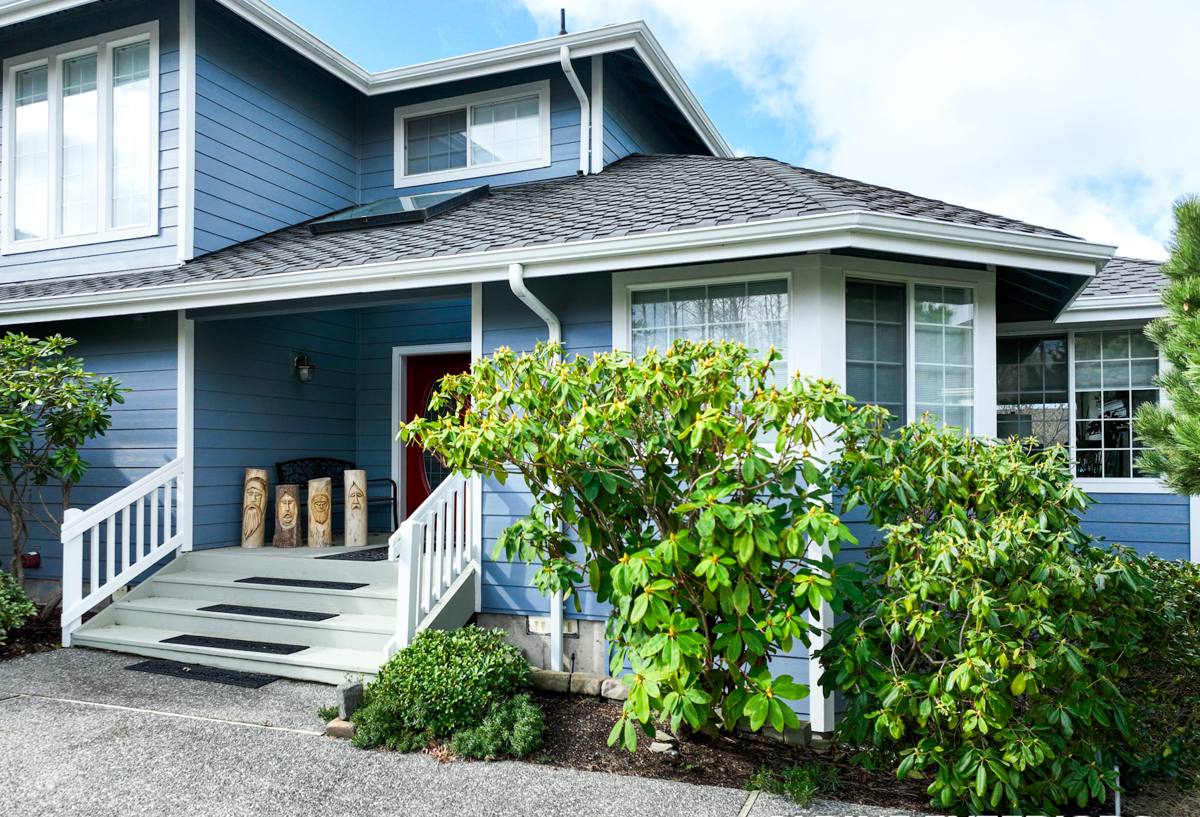
What South Hill's Hillside Setting Asks of a Siding System
Elevation and Wind Exposure
Being up the hill means South Hill homes are more exposed to wind than houses sitting down in more sheltered parts of Bellingham. Wind doesn't just move rain sideways, it drives it into lap joints, trim seams, and anywhere a siding system depends on gravity alone to shed water. A wall assembly that would hold up fine on a calm, low-lying lot can still take on moisture here because of how much harder the wind pushes against it.
Salt Air Drift Off the Bay
South Hill isn't waterfront, but it's close enough and high enough that salt-tinged marine air still reaches it regularly. That air is mild but persistent, and over years it works on fasteners, caulking, and lower-grade finishes in ways that are rarely dramatic in the moment but add up. Rust bleed at nail heads, early chalking on a painted finish, and caulk joints that fail years ahead of schedule are the kind of quiet damage salt air causes.
Shade, Moss, and a Long Wet Season
A lot of South Hill's older lots have mature trees, and mature trees mean shade. Shaded, north-facing walls in Whatcom County can stay damp for most of the fall and winter, which is exactly what moss and algae need to take hold. Once moss establishes itself on a siding surface, it holds moisture against the wall longer than an open, sun-exposed wall would, which accelerates whatever weakness is already present in the material underneath it.
Older Housing Stock
South Hill has a good number of established, older homes, and older homes often come with wall assemblies that were never built to modern moisture-management standards. That doesn't mean the siding job has to be complicated, but it does mean a re-side is a good moment to find and fix problems that have been sitting hidden behind old siding for years, rather than covering them up with something new.
Why We Install Only James Hardie Fiber Cement
We don't install vinyl, LP SmartSide, primed wood, or other fiber cement brands like Allura or Cemplank. That's a standard we hold across every job, not just South Hill, and it comes from years of pulling old siding off Whatcom County homes and seeing firsthand what survives this climate and what doesn't. James Hardie's fiber cement is engineered from cement, sand, and cellulose fiber into a dense board that doesn't expand, contract, or absorb moisture the way wood-based or vinyl products do. Their HZ5 product line is built specifically for regions with heavy, sustained moisture and repeated freeze-thaw cycling — which describes South Hill's winters well. Most of what we install carries Hardie's ColorPlus factory finish, a baked-on coating applied under factory conditions no jobsite can match, which holds color and resists chalking far longer than field-applied paint. It's also non-combustible, which matters more each year as wildfire smoke seasons stretch later into the Pacific Northwest calendar.
| Material | Behavior in Salt Air & Driving Rain | Behavior in Shade / Moss Conditions | Typical Maintenance |
|---|---|---|---|
| James Hardie fiber cement (HZ5) | Dimensionally stable; doesn't wick moisture into the board | Factory finish resists moss adhesion and staining | Low; periodic washing, no repainting on ColorPlus finishes |
| LP SmartSide (engineered wood) | More sensitive at cut edges and fastener penetrations | Can be prone to moisture uptake if edge sealing lapses | Moderate; edge sealing and finish upkeep over time |
| Vinyl | Loose panel seams can let wind-driven rain behind the wall | Textured surface can hold moss and algae in shaded areas | Low, but hidden moisture problems can go unnoticed |
| Primed wood / cedar | Absorbs moisture readily without a diligent paint cycle | Prone to rot and mildew in prolonged damp shade | High; repainting or resealing on a recurring schedule |
What a Correct Fiber Cement Install Actually Involves
Fiber cement is only as good as the assembly it's installed into. On a hillside, wind-exposed lot like a typical South Hill property, the details behind the board matter as much as the board itself:
- A house wrap or weather-resistive barrier installed and correctly lapped before any siding goes up, so water that gets past the surface has somewhere to go besides the sheathing
- A drainage gap or rainscreen behind the siding, giving any moisture that does get through a way to dry out instead of sitting against the wall
- Corrosion-resistant fasteners driven at Hardie's specified spacing and depth — overdriven or underdriven fasteners are one of the most common causes of early siding failure
- Correct flashing at every window, door, and roofline transition, since these penetrations are where wind-driven rain finds its way in first
- Proper joint treatment and caulking at butt joints and trim, sized and sealed to Hardie's install specifications rather than caulked shut in a way that traps moisture
- Field-cut edges primed and sealed before installation, since a factory finish only protects what the factory actually coated
Skipping any one of these steps can still look fine on installation day. The problems show up two, five, or ten years later, and by then they're usually hidden behind the siding rather than visible on the surface.
Our Process on a South Hill Project
Assessment and Walkthrough
We start by walking the property and looking at actual exposure — which walls take the most wind and rain, which stay shaded and damp longest, where trim and flashing are already showing wear. Two homes on the same street can need different detailing depending on tree cover, orientation, and how the original siding was installed.
Tear-Off and What's Underneath
Removing the old siding is also when we find out what's actually been happening behind it — rot, old moisture staining, or wall assemblies that were never properly wrapped. On older South Hill homes this step regularly turns up issues that need to be addressed before new siding goes on, and we'll walk you through anything we find before moving forward.
Prep and Water Management
This is where the drainage plane, house wrap, and flashing get installed correctly, and it's the step that determines how the siding performs fifteen years from now, not just how it looks the day we finish.
Installation and Finish Detail
Boards go up to Hardie's fastening and clearance specifications, with trim, caulking, and touch-up handled to match the ColorPlus finish. We walk the finished job with you before we consider it done.
Cost Factors for a South Hill Fiber Cement Project
| Factor | Why It Affects Cost |
|---|---|
| Wall height and roofline complexity | Multi-story hillside homes and steep rooflines mean more cuts, flashing details, and access equipment |
| Condition found at tear-off | Rot or moisture damage on older homes needs repair before new siding can go up |
| Siding profile chosen | Lap siding, board and batten, and panel systems each carry different material and labor costs |
| Trim and window count | More openings mean more flashing and detail work around each one |
| Site access | Sloped lots, retaining walls, and tight setbacks common on hillside properties can add labor time |
We'll give you real numbers based on a walkthrough of your specific home rather than a rough square-footage estimate — hillside lots in particular can vary a lot in access and complexity even when the home sizes look similar on paper.
Signs Your Current Siding Is Already Struggling
- Persistent moss or dark staining on shaded walls that comes back soon after cleaning
- Soft spots, bubbling, or visible warping, especially near ground level or under windows
- Paint that's chalking, peeling, or fading noticeably faster on wind- and rain-exposed walls
- Caulk joints that are cracked, shrunken, or pulling away from trim
- Rust streaking below fastener heads or trim fasteners
Any of these on their own isn't necessarily an emergency, but they're worth having looked at before they turn into a bigger repair.
Why a Crew That Already Works South Hill Matters
South Hill's hillside lots, mature landscaping, and mix of older and newer construction reward a crew that already knows what to expect before the first ladder goes up. We've worked properties throughout Bellingham and Whatcom County with the same salt air, driving rain, and moss season this neighborhood deals with, and that experience shapes real decisions on site — where extra flashing attention is worth it, which walls need the drainage gap taken most seriously, and how to sequence a tear-off around a steep or tight lot without turning the job into a bigger disruption than it needs to be. That's a different starting point than a crew working from a generic install manual with no sense of how this specific hillside treats a wall.
Ready for a Straight Answer on Your South Hill Home
If your siding is showing its age, or you're planning ahead before it becomes a problem, we're glad to take a look and give you an honest read on what your home actually needs. Fill out the form below for a free, no-pressure estimate.