 Bellingham Roofing
 Storm Damage Roof Repair Built for Edgemoor
Edgemoor sits close to the water on wooded, sloped lots along Bellingham's shoreline, and that setting shapes what a roof in this neighborhood actually has to survive. Mature tree cover means falling limbs and heavy debris loads during winter windstorms. Proximity to Bellingham Bay means salt-laden air working on metal fasteners and flashing year-round. And like the rest of Whatcom County, Edgemoor gets long stretches of driving rain followed by a moss season that never fully lets up. When a storm hits, the damage it leaves behind on an Edgemoor roof often looks different from what we see on a roof a few miles inland, and the repair needs to account for that.
This page covers what storm damage repair actually involves for homes in this specific area, what we look for, and how we approach the work so it holds up through the next storm, not just until the next inspection.
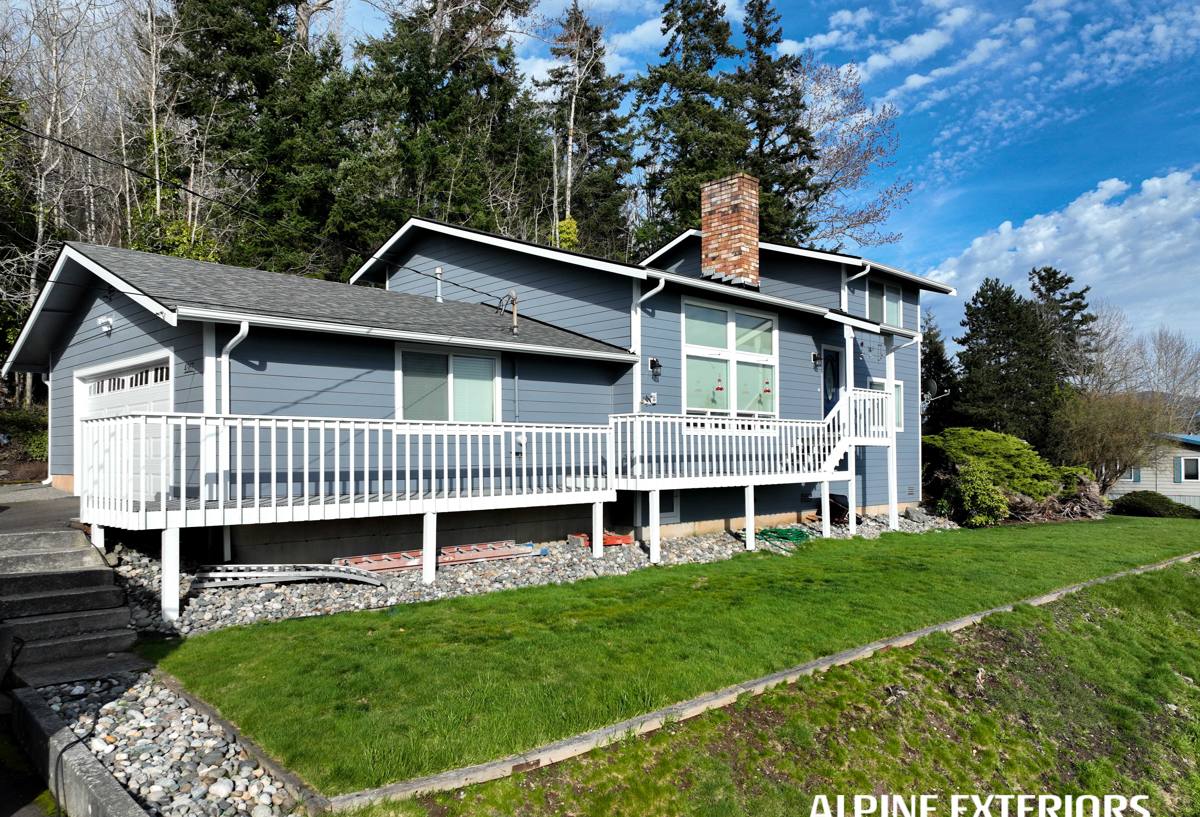
What Storm Damage Looks Like on Edgemoor Roofs
Wind off the water and wind funneled down through tree cover don't damage a roof the same way. Homes in Edgemoor tend to see a mix of both, plus impact damage from branches and debris that inland homes are less exposed to.
Wind and Debris Damage
- Lifted or torn shingles along ridgelines and roof edges, where wind uplift is strongest
- Cracked, punctured, or displaced shingles from falling branches and wind-driven debris
- Bent, loosened, or torn-loose flashing around chimneys, vents, and skylights
- Gutters pulled away from the fascia by wind load or debris weight
- Loosened ridge caps and hip caps that let wind-driven rain work underneath
Water Intrusion Damage
- Water staining on interior ceilings or upper walls after a storm, even without visible missing shingles
- Saturated or sagging roof decking under a section that took repeated wind-driven rain
- Backed-up valleys and gutters overflowing onto fascia and soffits
- Moisture trapped under moss mats that have been loosened or shifted by wind
A lot of this damage isn't visible from the ground. That's the main reason storm damage on a roof gets missed until it's already caused an interior leak.
Why the Coastal and Wooded Setting Matters
Salt air is corrosive to exposed metal, and it works continuously, not just during storms. Nails, flashing, and fastener heads on an Edgemoor roof age faster than the same materials would on a roof further from the shoreline. After a storm loosens a shingle or lifts a flashing edge, that corrosion is often what's actually keeping the repair from sealing back down cleanly, so a proper repair sometimes means replacing fasteners and flashing, not just resetting them.
Tree cover adds a second factor: shade and moisture retention. Roof sections under heavy canopy dry more slowly after rain, which is exactly the condition moss needs to establish. Moss holds water against the roof surface, and during a windstorm, moss mats can shift or partially lift, breaking the seal on shingles beneath them even where the shingles themselves aren't damaged. When we inspect a storm-damaged roof in this neighborhood, we're checking moss-covered areas as carefully as the obviously wind-torn ones, because that's often where hidden intrusion starts.
What a Correct Storm Damage Repair Involves
A storm damage repair that actually holds up starts with a full-roof inspection, not just a patch at the point of visible damage. Wind and debris rarely affect only the spot you can see from the yard.
Our Inspection Process
- Full roof walk to identify every area of lifted, cracked, or missing material — not just the obvious spot
- Check of all flashing points: chimneys, vents, skylights, valleys, and roof-to-wall transitions
- Attic and decking check from the interior where accessible, to catch moisture that hasn't shown up on ceilings yet
- Assessment of moss coverage and trapped moisture in shaded or tree-covered sections
- Gutter and drainage check, since storm damage to gutters directly affects how water moves off the roof afterward
The Repair Itself
Once we know the full scope, the repair addresses root cause, not just the surface symptom. That means replacing saturated decking rather than shingling over it, resetting or replacing corroded flashing rather than resealing it with caulk, and matching shingle repairs to the existing roof so the patch doesn't become its own weak point down the line. Where moss has compromised a section, we address the moss and the underlying moisture before closing the repair back up — sealing over active moisture is how small storm damage turns into a bigger problem by the next season.
Repair vs. Replacement After a Storm
Not every storm-damaged roof needs full replacement, and not every roof can be safely repaired section by section. The right call depends on the roof's age, how much of it is affected, and what condition the rest of the roof is in.
| Factor | Favors Repair | Favors Replacement |
|---|---|---|
| Roof age | Under 10-12 years | Nearing or past expected lifespan |
| Extent of damage | Isolated section or single slope | Widespread across multiple slopes |
| Decking condition | Dry, sound decking under damaged area | Multiple areas of soft or saturated decking |
| Moss/moisture history | Minimal prior moss buildup | Long-term moss coverage with repeated trapped moisture |
| Shingle match availability | Matching material still available | Discontinued product, visible mismatch likely |
We'll walk you through where your roof falls on this before recommending either option. A repair that's likely to fail again within a season or two isn't a favor to a homeowner, even if it's the cheaper number up front.
Working With Insurance on Storm Claims
Most storm damage repairs in this area involve a homeowner's insurance claim. We provide the documentation an adjuster needs — photos, a written scope of damage, and an honest assessment of what's storm-caused versus what's pre-existing wear. We won't inflate a claim or describe pre-existing issues as storm damage; that approach causes more problems than it solves once an adjuster reviews it. What we will do is make sure legitimate storm damage isn't underestimated, particularly the kind that isn't obvious from a ground-level look, like decking saturation or flashing corrosion accelerated by the storm.
Timing: Why Speed Matters After a Storm
The gap between a storm and the repair is when most of the secondary damage happens. A section of lifted shingles or exposed decking left through even a few more days of Whatcom County rain can turn a straightforward shingle repair into a decking replacement. Salt air and moss don't pause while a repair is scheduled either — a small flashing gap left open through a wet stretch corrodes and grows into a bigger leak point. If your roof took storm damage, getting it assessed and tarped or temporarily sealed quickly matters as much as the eventual permanent repair.
What to Check After a Storm
- Interior ceilings and upper walls for new water spots, especially after wind-driven rain
- Visible shingle displacement, cracking, or granule loss in gutters and downspouts
- Gutters and downspouts pulled loose or clogged with storm debris
- Chimney and vent flashing for obvious gaps or lifted edges, viewed from the ground or a safe vantage point
- Attic space, if accessible, for damp insulation, staining, or daylight showing through the decking
- Any branches or debris resting directly on the roof surface, which can trap moisture even without a puncture
None of these checks require getting on the roof yourself, and we'd rather you didn't, especially right after a storm when surfaces are wet and footing is unreliable. If you see any of the above, that's the point to call in an inspection rather than wait and see.
Why a Crew That Already Works Edgemoor Matters
Storm damage repair goes better and faster when the crew already understands the specific conditions of a neighborhood rather than treating it like a generic roof. Knowing that Edgemoor's tree cover means moss checks are part of every storm inspection, that its shoreline proximity means flashing and fasteners corrode faster than the roof's age alone would suggest, and that the terrain affects how debris and wind hit different roof sections — that local knowledge shapes a more accurate inspection and a repair that's built for what this specific roof will face again. We work storm damage repairs throughout Bellingham and Whatcom County, and Edgemoor's coastal, wooded conditions are ones we account for from the first walk-around, not something we're figuring out on the fly.
If your Edgemoor home has storm damage, or you just want a roof checked after a recent windstorm, we're happy to take a look. Reach out for a free, no-pressure estimate using the form below.