 Bellingham Roofing
 Building a Deck That Actually Holds Up in York's Climate
York is one of the older, established residential pockets close to the heart of Bellingham, and homes here share a common problem when it comes to outdoor living space: the same marine climate that makes this part of Whatcom County beautiful is also hard on wood, fasteners, and finishes. Salt-tinged air off Bellingham Bay, long stretches of driving rain, and a moss season that can run from fall well into spring all work against a deck that wasn't built with this environment in mind. A deck that would be perfectly fine in a drier inland climate can start showing rot, cupping, and slick surfaces within a few seasons here if it was framed, flashed, or finished the wrong way.
This page is about one thing: building and replacing custom decks for York homes, specifically accounting for what this climate does to outdoor structures over time. It's not a generic overview of deck building — it's what we've learned matters most for houses in this part of Bellingham.
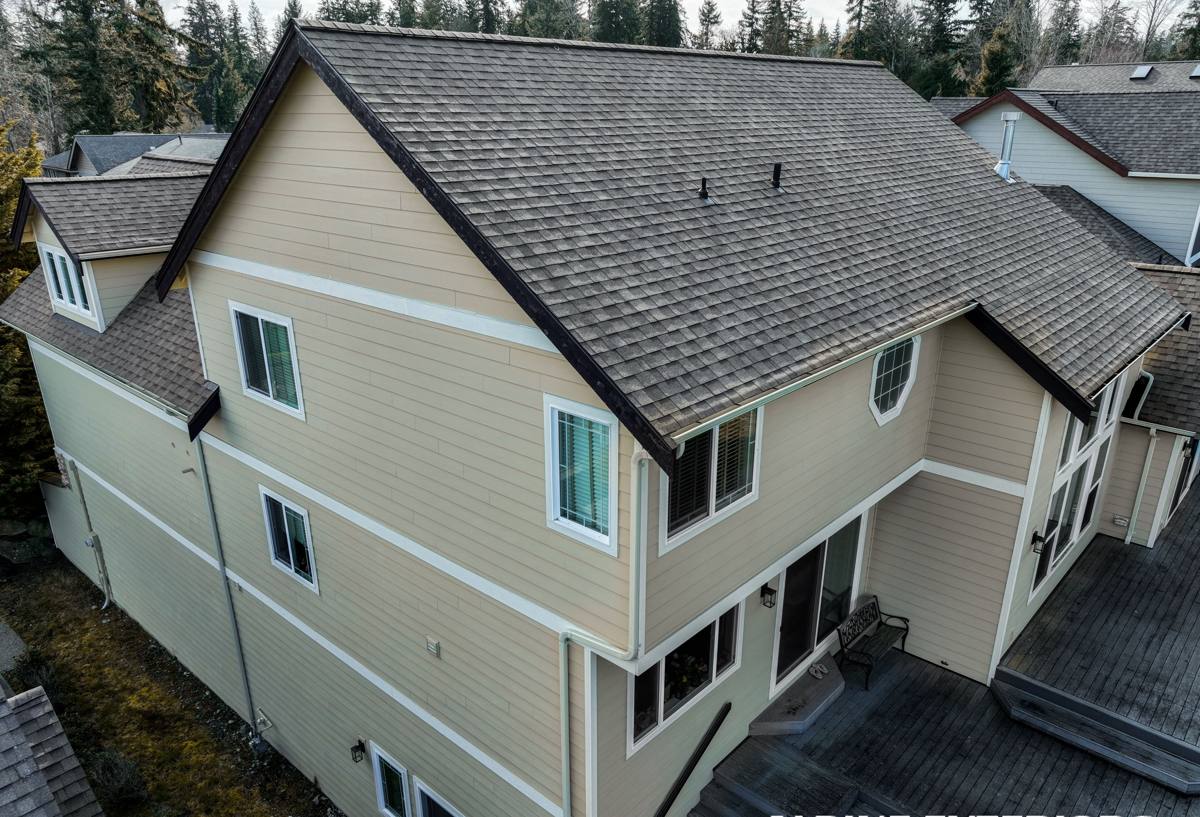
What This Climate Actually Does to a Deck
Moisture That Doesn't Let Up
The issue in York isn't one big storm — it's the accumulation of many wet months in a row. Wood that stays damp for extended periods, without enough time to dry out between rain events, is where rot gets started. This shows up first at the spots where a deck traps water instead of shedding it: end grain on joists, the ledger board where the deck meets the house, under railing posts, and anywhere two boards sit tight against each other with no room for airflow.
Moss, Algae, and Constant Shade
Many York lots carry mature tree cover, which is part of the neighborhood's character but also means a lot of deck surfaces sit in partial shade for much of the day. Combine shade with regular rain and you get ideal conditions for moss and algae to take hold on decking boards, especially on the north or west side of a house. Beyond looking bad, a mossy deck surface is a slip hazard and, left alone, moss holds moisture against the board surface far longer than open air would, accelerating wear on whatever material is underneath it.
Salt Air and Metal Hardware
Being close to the water means fasteners, brackets, and connectors are exposed to a mild but steady dose of salt-laden air. Hardware that isn't rated for coastal exposure can corrode faster than homeowners expect, and a corroding fastener at a structural connection is a much bigger problem than a corroding one that's purely cosmetic.
Decking Material Options for This Climate
There's no single "best" decking material for every home — it depends on budget, how much upkeep you want to do, and how much shade and moisture the specific deck location deals with. Here's how the main options actually compare for a York-area project.
| Material | Moisture Behavior | Moss/Algae Resistance | Maintenance | Typical Lifespan |
|---|---|---|---|---|
| Pressure-treated lumber | Absorbs and releases moisture readily; prone to cupping if not sealed | Low — needs regular cleaning/treatment | Annual cleaning, periodic sealing | 10-15 years before major issues |
| Cedar | Naturally more rot-resistant than treated pine, still needs finish maintenance | Moderate — still grows moss without upkeep | Sealing every 1-2 years to hold color and repel moisture | 15-20 years with upkeep |
| Capped composite | Doesn't absorb water like wood; core is protected by a plastic cap | Better — smoother surface sheds moss more easily, still needs occasional washing | Occasional washing, no sealing or staining | 25-30 years, manufacturer-dependent |
| Cellular PVC | Essentially waterproof; doesn't take on moisture at all | Best of the group, still benefits from periodic cleaning | Lowest — wash as needed | 25+ years |
For a lot of York homes with heavy shade, we lean toward capped composite or PVC decking on the walking surface simply because they don't give moss the same foothold that raw wood does, and they don't need re-sealing on a schedule most homeowners realistically keep up with. That said, plenty of homeowners still want the look and feel of real wood, and a well-built cedar deck with a disciplined maintenance routine can look great for many years — it just asks more of you along the way. We'll walk through the honest trade-offs for your specific yard and sun exposure rather than push one material on every project.
Where Decks Actually Fail: Framing and Structure
Ledger Board Attachment and Flashing
The single most common failure point on any deck attached to a house is the ledger board — the piece bolted to the house that the deck framing hangs from. If it isn't flashed correctly to keep water from getting behind it and into the house's wall structure, you get slow, hidden rot that isn't visible until the damage is significant. In a climate with this much sustained rain, ledger flashing isn't optional trim work — it's the difference between a deck that's structurally sound in ten years and one that isn't.
Posts, Footings, and Ground Contact
Whatcom County's clay-heavy and often waterlogged soils mean footings need to be sized and set correctly to stay stable through wet winters and drier summers. Posts that sit in standing water or are undersized for the soil conditions on a given lot are a common source of a deck that develops a noticeable lean or bounce over time.
Fasteners and Connectors
We use fasteners and structural hardware rated for exterior and coastal-adjacent exposure — stainless or heavy-coated options at connection points that matter, rather than standard-grade hardware that can start corroding at the exact spots holding the structure together.
Our Process, Start to Finish
- Site visit and assessment — we look at sun exposure, drainage, existing structure (if it's a rebuild), and how the house's siding and framing meet the proposed deck location.
- Design and material selection — we go over layout, railing style, and decking material options against your budget and how much maintenance you actually want to take on.
- Permitting — we handle the paperwork with the City of Bellingham or Whatcom County, whichever applies to your property, before any work starts.
- Framing and structural work — footings, posts, joists, and ledger flashing get built to hold up under this region's wet-season loads, not just to pass a quick inspection.
- Decking, railing, and finish work — surface material goes down, railings are installed, and any staining or sealing (for wood decks) is done properly, not rushed.
- Final walkthrough — we go over the finished deck with you, including what maintenance it will need and on what schedule.
Permits and Code Requirements Locally
Most new decks and many deck replacements in Bellingham and unincorporated Whatcom County require a building permit, and requirements can differ depending on deck height, size, and whether it's attached to the house. Guardrails, stair geometry, and footing depth are all things an inspector will check. Rather than guess at what applies to your specific project, we pull the actual permit and build to the code that's in effect for your address — that's part of what you're paying for when you hire a licensed local crew instead of doing it as an owner-builder project without inspection.
Maintaining a Deck Through Moss Season
Whatever material you choose, a little regular upkeep goes a long way toward getting the full lifespan out of a deck in this climate. Here's the basic maintenance checklist we give homeowners after a build:
- Sweep leaves and debris off the deck surface regularly in fall — trapped organic matter holds moisture and feeds moss growth
- Wash the deck surface at least once or twice a year with a deck-safe cleaner to knock back moss and algae before it gets established
- Check and re-seal wood decking on the schedule recommended for the specific wood species and finish used
- Inspect railing posts and stair stringers annually for movement, soft spots, or corrosion at hardware connections
- Keep gutters and downspouts near the deck clear so runoff isn't draining directly onto or under the deck structure
- Trim back overhanging branches where practical to reduce shade and speed up drying time after rain
Repair, Replace, or Rebuild
Not every deck problem means starting over. Sometimes a deck with solid framing just needs new decking boards, better flashing at the ledger, or hardware upgrades. Other times, especially with older decks in York that were built before current flashing standards were common practice, the structure itself has been quietly compromised by years of trapped moisture and a full rebuild is the more honest recommendation. Here's roughly how we think through that decision:
| Factor | Repair Makes Sense | Rebuild Makes Sense |
|---|---|---|
| Framing condition | Joists and posts are solid, only surface boards are worn | Soft spots, visible rot, or movement in the structural framing |
| Ledger flashing | Already properly flashed and dry behind the siding | No flashing, or evidence of moisture intrusion at the house connection |
| Age of structure | Newer deck, isolated wear | Older deck built to outdated framing or fastening practices |
| Design fit | Layout and size already work for how you use the space | Layout no longer fits how the home is used, or you want a material change |
We'll give you a straight answer on which category your deck falls into rather than defaulting to the more expensive option, and we'll explain what we're seeing so the decision makes sense to you, not just to us.
Why a Crew That Already Works in York Matters
A lot of what makes a deck last here comes down to details that aren't obvious from a set of plans — how much shade a specific lot actually gets through the seasons, how the soil on that side of the neighborhood drains, and how older homes in this area were originally flashed and framed where the house meets the yard. A crew that's already worked on houses nearby has a feel for those conditions before they even walk the site, which shows up in fewer surprises during construction and a deck that's built for the actual conditions on your property rather than a generic set of assumptions. Being local also means we're a short drive away if you ever have a question or a maintenance issue after the project is done — not a call center for a company based somewhere else in Whatcom County or beyond.
If you're planning a new deck or need an honest read on whether your current one is worth repairing, we're glad to take a look. Fill out the form below for a free, no-pressure estimate on your York property.