 Bellingham Roofing
 Building New in Cordata? Get the Windows Right the First Time
New construction is the one point in a home's life where windows can be installed exactly the way the manufacturer and the building code intend — no working around old framing, no guessing what's hidden behind existing trim. In Cordata, that first-install accuracy matters more than in a lot of places, because Whatcom County's weather starts testing a building envelope the day the siding goes on, not years later. Salt-laden air off Bellingham Bay, long stretches of wind-driven rain, and a moss season that can run most of the year all put real stress on window openings. Windows that go in clean and sealed correctly at the framing stage tend to stay problem-free for decades. Windows that go in fast, or get flashed as an afterthought, tend to show it within a few winters.
This page is about one job specifically: installing new-construction windows in new builds and additions around Cordata. It's not a remodel or replacement-window page — the considerations, materials, and sequencing are different when you're working with open framing versus an existing wall.
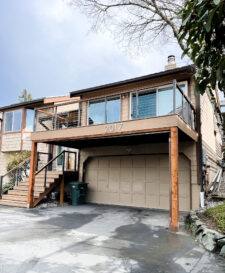
What Bellingham's Climate Does to a Window Opening
Cordata sits inland from the water compared to some Bellingham neighborhoods, but the region as a whole shares the same marine climate pattern, and it shows up in how windows age here.
Salt Air and Corrosion
Proximity to Bellingham Bay means airborne salt is part of the local environment, even a few miles inland on breezy days. Salt accelerates corrosion on unprotected fasteners, hinges, and low-grade hardware. It's a slow process, but it's cumulative — a window with mediocre hardware or exposed steel components will show pitting and stiffness well before a properly specified one does.
Wind-Driven Rain
Whatcom County doesn't just get rain, it gets rain pushed sideways by wind off the water and the surrounding lowlands. That matters for window installation because a lot of window failures aren't about the window unit itself — they're about water finding a path around it, under the flashing, and into the wall assembly. A window that's technically "installed" but not properly flashed and integrated with the weather-resistive barrier can leak in exactly this kind of weather, even if it looks fine from the outside.
Moss and Prolonged Dampness
The long damp season that makes moss thrive on roofs and siding across Whatcom County also keeps humidity elevated around window openings for much of the year. Wood components that aren't properly primed, sealed, or clad can hold moisture longer here than they would in a drier climate, which is part of why material choice and detailing at the sill matter more in this region than in many others.
New-Construction vs. Replacement: Why the Distinction Matters
New-construction windows have a nailing fin (or flange) that gets integrated directly into the wall's weather-resistive barrier and flashing system before siding goes on. Replacement windows are built to fit into an existing opening with the old frame left in place, using a different sealing approach entirely. Installing a new-construction window as if it were a replacement — or vice versa — is one of the more common ways a window opening ends up compromised. On a new build or addition in Cordata, you have the framing open and the opportunity to do it right: correct flashing sequence, correct fastening pattern, correct integration with the house wrap, all before the wall is closed up and inaccessible.
What a Correct Installation Actually Involves
A window unit is only as good as the opening it sits in. On new construction, the sequence and detailing at the rough opening determine whether that window stays dry for its full service life or starts causing hidden problems in five or ten years.
- Rough opening checked for correct size, square, and level before the window ever arrives on site
- Sill pan flashing installed to shed any water that gets past the window to the exterior, not into the wall cavity
- Weather-resistive barrier integrated with the flashing in the correct shingle-lap order — top layer over the one below it, always
- Window set plumb, level, and square, with shims at the correct load-bearing points, not just wherever it happens to sit
- Nailing fin fastened per the manufacturer's schedule — spacing and fastener type both matter for wind and water performance
- Head flashing installed above the window before the housewrap is lapped over it
- Interior and exterior sealed with the correct sealant for the substrate — not just a bead of whatever's on the truck
- Insulation between the window frame and rough opening, without over-packing, which can bow the frame
- Final check for operation — every sash opens, closes, and locks smoothly before we call it done
Skipping or rushing any one of these steps is usually invisible at final walkthrough. It shows up two, five, or ten winters later as a stain on drywall, a soft spot in trim, or a window that's suddenly hard to latch.
Choosing a Window Built for This Climate
Frame material is one of the biggest decisions on a new build, and it's worth making deliberately rather than defaulting to whatever's cheapest per unit. Here's how the common options generally compare for a Cordata new-construction project:
| Frame Material | Moisture & Salt-Air Behavior | Maintenance | Typical Fit |
|---|---|---|---|
| Vinyl | Won't rust or corrode; performs well in damp, salt-influenced air | Low — no painting or sealing needed | Most new builds; strong value for the performance |
| Fiberglass | Excellent stability in temperature and moisture swings; very low expansion/contraction | Low | Larger openings, higher-end builds, better long-term dimensional stability |
| Wood-clad (exterior-clad, interior wood) | Good if cladding and flashing details are done correctly; exposed end grain is a weak point | Moderate — interior wood may need occasional attention | Homeowners who want a wood interior look with exterior protection |
| Aluminum | Prone to condensation and thermal transfer unless thermally broken; can corrode faster in salt air without proper finishing | Moderate to high | Best reserved for specific architectural or commercial applications, with a thermal break |
We don't push one material on every job — the right call depends on the home's design, budget, and how exposed the elevation is to wind and rain. What we won't do is install a window whose maintenance needs or moisture behavior don't match what the site actually demands, just because it's the least expensive option up front.
Glass and Performance Considerations
Double-pane, low-E glass with argon fill is standard for new construction in this climate and does a solid job balancing energy performance with condensation resistance. For rooms with a lot of west or south glazing, or homes aiming for tighter energy targets, triple-pane is worth pricing out — the cost premium is real, but so is the difference in comfort near large windows during Whatcom County's cold, wet stretches.
Our Process on a New-Construction Project
We work with builders and homeowners directly, and the sequence stays consistent whether it's a full new build or a room addition:
- Plan review — we look at window schedules, rough opening sizes, and elevations before the framing is even closed, so any sizing or flashing conflicts get caught early.
- Coordination with the framing and siding crews — window installation has to happen in the right sequence relative to the weather-resistive barrier and siding, and we coordinate timing so nothing gets closed up before it should be.
- Installation — flashing, setting, fastening, and sealing following the sequence above, unit by unit, opening by opening.
- Quality check — every window is checked for square, operation, and seal before we sign off, not just a visual pass from the ground.
Why a Crew That Already Works in Cordata Makes a Difference
Every region's building code and inspection process has its own local wrinkles, and Whatcom County is no exception. A crew that regularly works new construction in and around Cordata already knows the inspection expectations, the moisture-management standards that matter for this climate, and how local siding and WRB systems are typically detailed on new builds here. That familiarity cuts down on rework, failed inspections, and callbacks — and it means the flashing and sealing choices are made with this area's actual weather in mind, not a generic install guide written for a drier climate.
Get a Free, No-Pressure Estimate
If you're framing a new home or addition in Cordata and want windows installed right the first time, we're happy to take a look at your plans and give you a straightforward estimate — no pressure, no upsell. Use the form below to get started.