 Bellingham Roofing
 Why Cordata Homes Need Windows Built for This Climate
Cordata sits close enough to the water and to Whatcom County's marine weather patterns that homes here take on a specific kind of punishment: salt-laden air that corrodes weak metal components, wind-driven rain that finds every gap in a poorly sealed frame, and a moss season that stretches for months and keeps everything around a window damp longer than it should be. None of that is dramatic on its own. It's cumulative. A window that would last two decades in a dry inland climate can start failing in half that time here if it wasn't built or installed with this specific environment in mind.
Energy-efficient windows aren't just about lower heating bills, though that's real. In Cordata, "energy-efficient" and "durable" end up being the same conversation, because the features that stop heat loss — tight seals, quality glazing, well-fitted frames — are the same features that stop water intrusion and condensation damage. A window that leaks air is usually a window that will eventually leak water too.
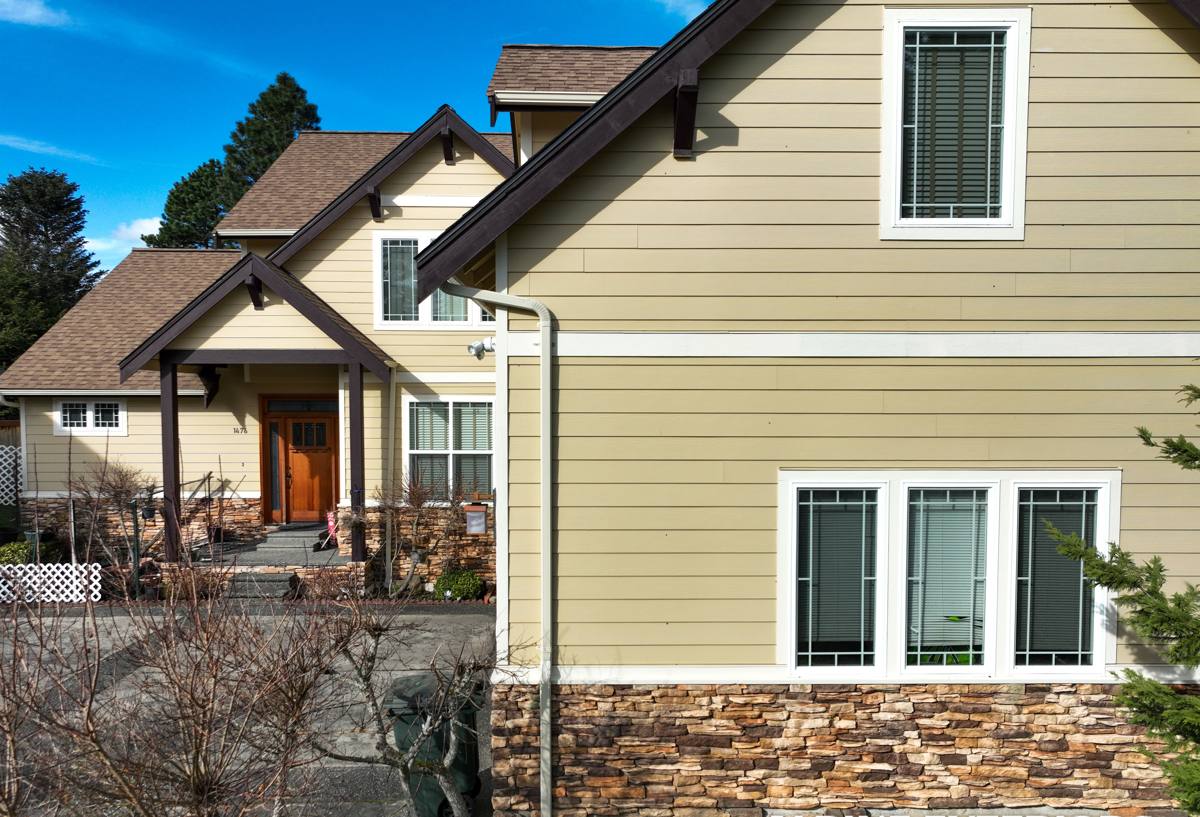
What Salt Air, Rain, and Moss Actually Do to a Window
Salt Air and Corrosion
Even at a modest distance from the coast, airborne salt accelerates corrosion on aluminum hardware, exposed fasteners, and lower-grade window components. Locks stick, cranks seize, and finishes chalk out faster than the manufacturer's literature suggests. This is less about any one brand failing and more about matching hardware quality to the environment it's going into.
Driving Rain and Wind-Driven Water
Whatcom County storms don't always come straight down. Wind pushes rain sideways into wall assemblies, and a window that relies on caulk alone rather than proper flashing and drainage detailing will eventually let water behind the frame. Once water gets into the wall cavity around a window, the damage is often invisible until it's significant — soft framing, stained drywall, or mold you can smell before you can see.
Moss, Shade, and Chronic Dampness
A long moss season means a long season of things staying wet. Windows under eaves, near tree cover, or on the north side of a house often sit in shade for weeks at a stretch. That keeps sill areas damp, which is exactly the condition wood rot and failed seals need to take hold. Vinyl and fiberglass frames resist this better than untreated wood, but even those still need correct sill flashing and a slight outward pitch so water actually leaves the opening instead of pooling in it.
Signs a Cordata Home Needs a Window Upgrade
- Visible condensation or fogging between the panes of a double-pane window — a sign the seal has failed
- Drafts you can feel near the frame even with the window fully latched
- Soft or discolored wood on the interior sill or exterior trim
- Difficulty opening, closing, or locking the window smoothly
- Noticeably higher heating costs compared to similar homes nearby
- Visible gaps between the window frame and siding or trim
- Moss or persistent green staining building up on the sill or exterior casing
What Actually Makes a Window Energy-Efficient
The term gets used loosely, so it helps to know what actually matters. Three numbers do most of the work:
- U-factor — measures how much heat the window loses. Lower is better for our climate.
- SHGC (Solar Heat Gain Coefficient) — measures how much solar heat passes through the glass. Matters less here than in sunnier climates, but still worth getting right on south- and west-facing openings.
- Air leakage rating — measures how much air passes through the assembled window, not just the glass. This is the number most closely tied to actual comfort and to keeping wind-driven rain out.
Double-pane, low-E glazing with an argon gas fill is the practical standard for this region — it balances performance and cost well for our winters. Triple-pane can make sense for homes with heavy road noise or unusually exposed sites, but for most Cordata homes it's a marginal gain over a well-installed double-pane window at meaningfully higher cost.
Frame Material Comparison for This Climate
| Frame Material | Salt Air / Moisture Resistance | Maintenance | Typical Lifespan |
|---|---|---|---|
| Vinyl | Good — won't corrode or rot, some UV fading over time | Low | 20–30 years |
| Fiberglass | Very good — dimensionally stable, resists moisture well | Low | 30+ years |
| Aluminum | Fair — prone to corrosion near salt air without upgraded coatings | Moderate | 20–25 years |
| Wood (clad exterior) | Good if properly clad and flashed; poor if bare wood is exposed | High | Varies widely with maintenance |
How We Approach a Window Job in Cordata
1. Assess the Opening, Not Just the Window
Before we talk product, we look at the rough opening — the framing, the existing flashing, and any signs of prior water intrusion. A brand-new window installed over a compromised opening will fail regardless of how good the glass is.
2. Confirm Sizing and Flashing Details
We measure for the actual opening, not the old window's nominal size, and plan flashing that directs water out and away from the wall assembly — critical given how much wind-driven rain this area sees.
3. Remove and Inspect
Old windows come out carefully so we can check the sill and surrounding framing for rot or moisture damage before anything new goes in. This is often where we find problems the homeowner didn't know existed.
4. Repair Before We Install
Any soft framing or compromised sheathing gets addressed before the new window goes in. Installing a good window into a bad opening just hides the problem for a while.
5. Install with Proper Sealing and Insulation
Correct shimming, low-expansion foam or backer rod where appropriate, and sealant rated for exterior exposure — not just whatever caulk is on hand.
6. Final Check
We test operation, confirm the seal, and walk the exterior trim line to make sure water has a clear path away from the opening.
Why a Crew That Already Works Cordata Matters
Window installation done wrong doesn't usually show up as a problem on day one — it shows up eighteen months later as a stain, a draft, or a soft spot in the sill. A crew that regularly works in Cordata and similar Bellingham neighborhoods has already seen how local homes age, which orientations take the worst weather, and which older construction methods tend to need extra attention around openings. That's not something you get from a crew that only occasionally works this specific stretch of Whatcom County.
It also matters for accountability. A local contractor is still in the area next season if a question comes up, and has a reputation in the community worth protecting — not just a project that's finished and forgotten.
Common Mistakes We See on Prior Window Jobs
- Caulk used as the only water management strategy, with no proper flashing underneath
- New windows installed into openings with existing hidden rot
- Wrong sizing that leaves gaps packed with excess sealant instead of proper shimming
- Aluminum hardware left unprotected in a salt-air environment
- Sills with no outward pitch, allowing water to sit rather than drain
- Mismatched flashing that doesn't tie into the existing siding or house wrap correctly
What Affects the Cost of a Window Project
| Factor | Why It Matters |
|---|---|
| Frame material | Vinyl is typically the most budget-friendly; fiberglass costs more upfront but lasts longer |
| Number of openings | Whole-house replacement usually costs less per window than doing them piecemeal over time |
| Condition of existing framing | Rot or water damage found during removal adds repair work before installation |
| Window size and configuration | Larger openings, custom shapes, or multi-panel units cost more than standard sizes |
| Glazing package | Double-pane low-E is standard; triple-pane or specialty coatings raise the price |
We don't quote window jobs without seeing the actual openings — too much of the real cost depends on what's found once the old window comes out, not just the size of the glass.
Living with Windows in a Marine Climate
Even a well-installed window needs occasional attention here. Rinsing salt residue off exterior frames a few times a year keeps corrosion from getting a foothold on hardware. Clearing moss and debris from sills and tracks prevents the kind of chronic dampness that shortens a window's life. Checking that exterior sealant hasn't cracked or pulled away from the frame — especially after a hard winter — catches small problems before they become water damage. None of this is complicated, but it's the difference between a window that performs well for its full rated lifespan and one that starts causing problems a decade early.
If you're noticing drafts, fogged glass, or trim that's starting to show its age, we're happy to take a look and give you a straightforward, no-pressure estimate on what it would take to fix it right. There's a form below — reach out and we'll get you scheduled.