 Bellingham Roofing
 Building Decks in Cordata: A Different Climate Challenge
A deck in Cordata has to earn its keep. This part of Bellingham sits inland from the bay but still squarely inside Whatcom County's marine climate — long stretches of steady rain, short winter daylight, and shaded lots where moisture lingers instead of drying out. Add in the salt air that drifts off Bellingham Bay and settles on fasteners and metal hardware over time, and you've got a structure that takes a beating in ways a deck in a drier climate never would. Building one that lasts here isn't about a fancier design. It's about getting the details right that nobody sees once the boards are down.
We build and repair decks all over Bellingham, but Cordata comes with its own pattern: newer homes with taller decks off the back, mature landscaping that shades half the structure by afternoon, and drainage that has to work with, not against, the lot's grading. A deck built without those things in mind might look fine for a year or two. The problems show up later — and by then they're usually structural, not cosmetic.
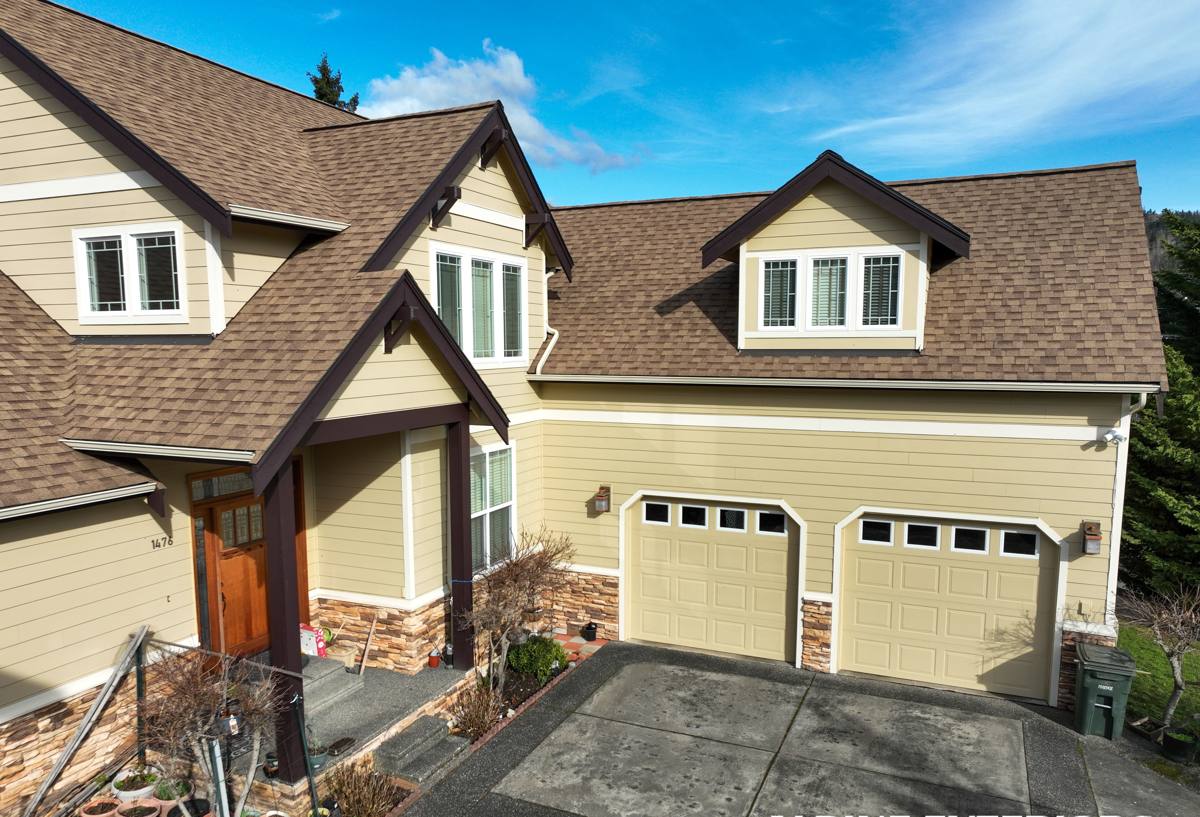
What Bellingham's Weather Does to an Improperly Built Deck
Wood and moisture have a predictable relationship, and Whatcom County gives them plenty of time together. When a deck isn't detailed correctly, here's the order problems tend to show up in:
- Ledger board rot — where the deck attaches to the house. If flashing wasn't installed correctly, water gets behind the ledger and rots it from the inside, often invisibly, for years.
- Moss and algae film on the decking surface — cosmetic at first, but it holds moisture against the boards and turns the deck slick and unsafe underfoot, especially on shaded sections.
- Corroded fasteners — screws and hardware that aren't rated for coastal exposure can start rusting and staining the decking within a few seasons, especially closer to the bay.
- Soft or spongy joists — trapped moisture between decking boards and framing slowly breaks down untreated or under-protected lumber from below, where it's hardest to spot.
- Failed footings — freeze-thaw cycles and saturated soil can shift undersized or shallow footings over a few winters, leading to a deck that feels less solid than it used to.
None of these are dramatic on day one. That's exactly the problem — a deck built without the right details often looks perfectly normal for a couple of years before it starts telling on itself.
The Materials Question: What Actually Holds Up Here
There's no single "best" decking material — there's a best material for this climate, this budget, and how much upkeep you actually want to do. We'll talk through real trade-offs rather than pushing one product line.
Decking Material Options
| Material | How It Handles Bellingham's Climate | Maintenance |
|---|---|---|
| Pressure-treated wood | Affordable and strong, but needs sealing on a schedule or it will absorb moisture, gray unevenly, and grow moss in shaded spots | High — annual cleaning and periodic sealing |
| Cedar | Naturally resists some rot and looks great, but is softer and still needs regular maintenance in a wet climate like ours | Moderate to high |
| Composite decking | Doesn't absorb water the way wood does, resists moss buildup better, and holds up well under constant damp shade | Low — periodic washing |
| PVC decking | Fully synthetic, essentially immune to rot; the tradeoff is a higher upfront cost and a different look/feel than wood | Very low |
For a lot of Cordata homes — especially decks under mature trees or facing north — composite or PVC earns its higher upfront cost back in avoided maintenance. For decks that get more sun and airflow, a well-sealed wood deck can still be the right call, especially if the look of real wood matters to you.
Hardware and Fasteners
This is where a lot of corners get cut, and it's the part homeowners can't easily inspect themselves. Given the salt air this area sees, we use fasteners and structural hardware rated for coastal or high-corrosion exposure — not the standard-grade screws and joist hangers that are fine inland but start rusting and staining decking within a few years here.
The Structural Details Most Deck Builders Rush
The decking boards are the part everyone sees. The part that determines whether the deck is still safe in ten years is underneath, and it's where quality varies the most between builders.
- Ledger flashing — the flashing where the deck meets the house has to be layered correctly with the house's existing water-resistive barrier, not just caulked and hoped for. This single detail is behind more deck ledger failures than anything else.
- Joist tape — a self-adhering waterproof tape over the top of each joist and beam keeps water from soaking into the end grain and top surface of the framing, which is where rot typically starts.
- Proper board spacing — decking boards need consistent gaps for drainage and airflow. Too tight, and water and debris sit on top of the framing; too wide, and the deck feels unfinished and can be a tripping hazard.
- Footings sized for our soil and frost depth — footings that are undersized or too shallow are one of the most common shortcuts on lower-cost deck jobs, and the consequences show up as instability, not immediately, but eventually.
- Proper fastening pattern into framing — every board needs to be secured into solid framing at the right intervals, not just wherever a joist happens to line up.
Permits and Whatcom County Code
Most new decks and many deck rebuilds in Whatcom County require a building permit, particularly once you're above a certain height off grade or attaching a structure to the house. Requirements can vary depending on the deck's size, height, and whether it's a repair versus new construction. We handle the permitting conversation as part of the job rather than leaving it on the homeowner's plate, and we build to the code requirements that apply — guardrail height, baluster spacing, and stair specs included. Skipping this step might save time upfront, but it can create real problems later when you sell the home or need insurance to recognize the structure.
Our Process, Start to Finish
- On-site assessment — we look at your existing deck (if there is one), the grade, drainage, sun exposure, and how the space is actually used before recommending anything.
- Design and material selection — we walk through decking material, railing style, and layout options with honest pros and cons for each, based on your budget and how much upkeep you want going forward.
- Permitting — we prepare and submit what's needed with Whatcom County so the job is done above-board from the start.
- Demo (if replacing an existing deck) — old decking, framing, and footings are inspected as they come out, since that's often when hidden rot or undersized footings get discovered.
- Framing and structural work — ledger flashing, joist tape, hardware, and footings go in first, and this is the stage that determines the deck's lifespan more than any other.
- Decking and railing installation — boards, railing, and stairs are installed to spec, with attention to consistent spacing and drainage.
- Final walkthrough — we go over the finished deck with you, along with what maintenance it actually needs (and how often).
Living With Your Deck: Moss Season Maintenance
Even a well-built deck needs some seasonal attention in this climate — the goal is just to keep that list short and manageable rather than reactive.
- Sweep leaves, needles, and debris off the deck regularly through fall, especially in shaded corners where they tend to pile up and hold moisture.
- Rinse or lightly scrub visible moss or algae film before it gets a chance to establish, rather than waiting until the surface is slick.
- Check that gaps between decking boards are clear of trapped debris so water can keep draining as designed.
- Inspect railings and stair connections once a year for any looseness — a quick tightening now is a lot easier than a repair later.
- Reseal or refinish wood decking on the schedule appropriate for the product — skipping a cycle in a climate like ours catches up fast.
- Keep an eye on the area where the deck meets the house for any staining, soft spots, or gaps in caulking around the ledger.
Repair, Replace, or Rebuild?
Not every aging deck needs to be torn out completely. The right call depends on what's actually failing versus what's just cosmetic.
| Situation | Likely Path | Why |
|---|---|---|
| Surface graying, moss film, minor board wear | Cleaning, sealing, or board replacement | Framing and footings are typically still sound; the issue is surface-level |
| Soft or spongy spots near the house | Ledger and flashing repair, possibly partial rebuild | Usually points to a flashing failure rather than a full-structure problem |
| Deck feels unstable, footings visibly shifted | Full rebuild | Structural issues at the footing level generally aren't a spot-repair situation |
| Deck is 20+ years old with no upgrades | Full rebuild | Older decks often predate current fastener, flashing, and code standards |
We'll always tell you honestly which category your deck falls into. Sometimes a repair genuinely is the right answer, and we'd rather say that than sell you a rebuild you don't need yet.
Why a Local Cordata Crew Makes the Difference
A deck built by a crew that already works in this neighborhood understands things a traveling contractor has to learn on your project's dime — how the local grading tends to route water, what Whatcom County's permitting process actually expects, and how much shade and moisture a given lot orientation really deals with through the winter. That familiarity shows up in fewer surprises during the build and a deck that's designed for the conditions it will actually sit in, not a generic set of national building assumptions.
It also matters after the job is done. A local crew is the one you can call if a question comes up two years down the road — not a name you found once and never heard from again.
If you're thinking about a new deck, a rebuild, or just want an honest opinion on what shape your current one is in, we're happy to take a look. Reach out for a free, no-pressure estimate — the form below only takes a minute.