 Bellingham Roofing
 New-Construction Windows Built for Columbia's Weather
Columbia sits close enough to Bellingham Bay that salt-tinged air, wind-driven rain, and long stretches of gray, damp weather are just part of owning a home here. When a home is being framed from the ground up, or when a room addition opens a wall down to the studs, the window installation is one of the few chances a builder gets to do the water management and air-sealing right the first time. New-construction windows are not the same job as a retrofit — they use a nailing flange set directly to the sheathing and integrated into the home's weather-resistive barrier, rather than being squeezed into an existing frame from the exterior. Done correctly, that assembly is the single biggest factor in whether a Whatcom County wall stays dry for the next thirty years.
We've installed new-construction windows on homes throughout Bellingham, and Columbia's mix of older infill lots and newer builds means we see both simple single-story additions and full custom homes going up near the waterfront. The climate doesn't change block to block, but the exposure does — a home on a slope facing the bay takes wind-driven rain very differently than one tucked behind mature trees a few streets over. Reading that exposure correctly is part of doing this job right.
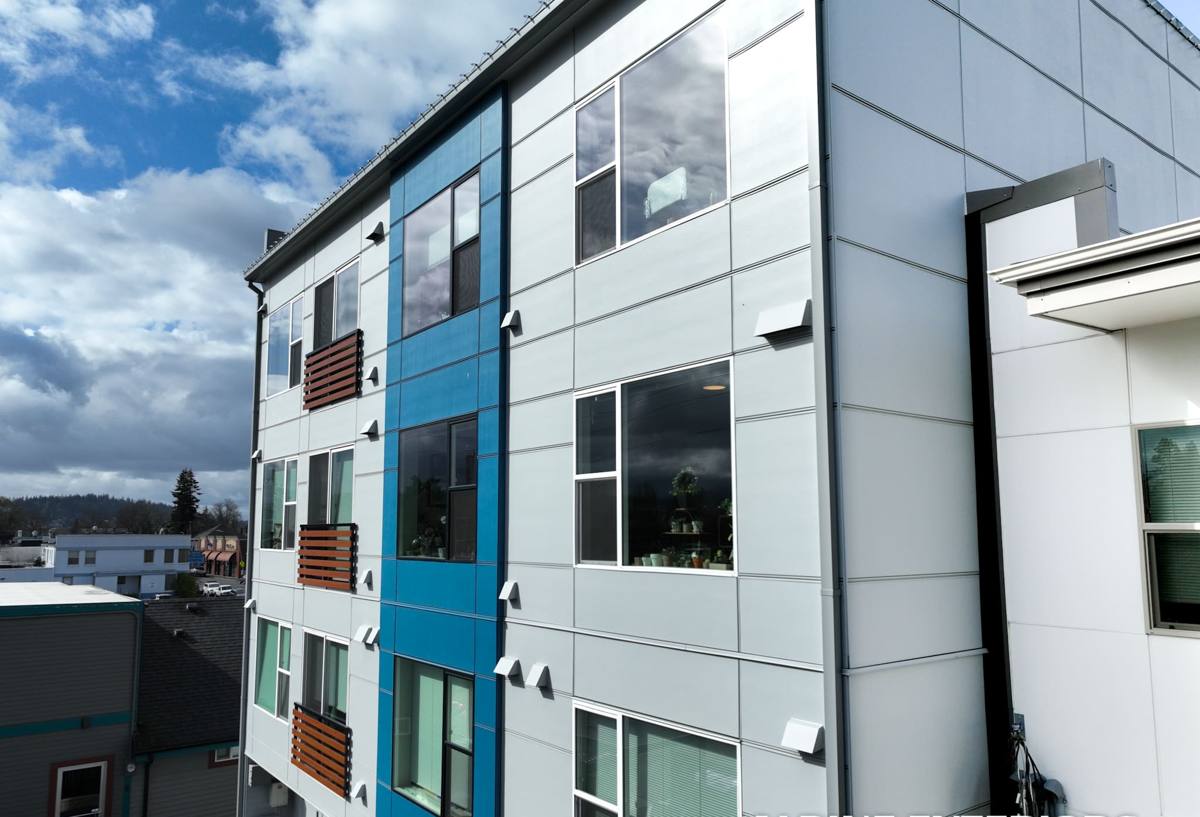
Why New-Construction Detailing Matters More Here Than in Drier Climates
In a dry climate, a mediocre window installation might go a decade before anyone notices a problem. In Bellingham, moss season alone runs several months a year, and the wall assembly behind a new window is under near-constant moisture pressure from fall through spring. A flashing detail that's slightly off, a gap in the weather-resistive barrier lap, or sealant used in place of proper flashing will show up as rot, mold, or a soft spot in the sheathing — usually a few years after the drywall is already closed up and nobody's looking.
New construction gives us an advantage retrofits don't have: open access to the rough opening from both sides. That means we can build the water management system in layers, the way it's supposed to work, instead of patching around finished siding or interior trim.
What the Marine Climate Actually Does to a Window Opening
- Wind-driven rain pushes water sideways and upward against the wall, not just straight down — a detail standard sill pans and basic caulk don't account for.
- Salt-laden air off Bellingham Bay accelerates corrosion on lower-grade fasteners, hinges, and hardware over time.
- Persistent humidity and shade keep organic growth active on north-facing and tree-shaded walls for much of the year, which is why moss and algae staining show up around window trim faster here than in drier regions.
- Temperature swings between a mild summer and a wet, cold winter put steady stress on sealant joints, which is why sealant alone is never treated as a primary water barrier in our installations.
What a Correct New-Construction Window Installation Involves
The window unit itself matters, but it's the sequence of work around it that determines whether the wall stays dry. Here's the order we follow on every new-construction opening:
- Rough opening inspection. Confirm the opening is square, plumb, and sized correctly before anything else happens — a window forced into an out-of-square opening never seals or operates right.
- Sill pan flashing. A sloped, back-dammed pan at the bottom of the opening directs any water that gets past the window back out, rather than letting it sit on the sill and migrate into the wall cavity.
- Weather-resistive barrier integration. The house wrap or building paper is lapped and taped so water is always shed downward and outward, following proper shingle-lap sequencing at the jambs and head.
- Window placement and fastening. The unit is set into the pan, checked for level and square, and fastened through the nailing flange per the manufacturer's schedule — not just at the corners.
- Flange and flashing tape. Self-adhered flashing tape seals the nailing flange to the wall, with the head flashing lapped over the jamb flashing so water always moves down and away.
- Head flashing or drip cap. An additional flashing above the window sheds bulk water before it ever reaches the flange seal.
- Interior air seal. Low-expansion foam or backer rod and sealant close the gap between the frame and rough opening, controlling both drafts and condensation risk without over-compressing the frame.
- Final operation and seal check. Every window is opened, closed, and locked, and every exterior seal is inspected before siding or trim goes on and covers the work.
Comparing New-Construction vs. Retrofit (Pocket) Installation
Homeowners planning an addition or new build sometimes ask why we don't just use retrofit-style windows to save time. The two products solve different problems, and using the wrong one costs more in the long run.
| Factor | New-Construction (Flange) | Retrofit / Pocket |
|---|---|---|
| Best used for | New builds, additions, full wall-open remodels | Replacing an existing window without disturbing siding |
| Water management | Full flange integrated into sheathing and WRB | Relies on the existing frame and perimeter sealant |
| Access during install | Open stud bay, both sides accessible | Limited to the existing opening |
| Long-term moisture risk in this climate | Low, when detailed correctly | Moderate — depends on condition of existing flashing |
| Typical use in Columbia projects | New homes, additions, garage conversions | Window swaps in existing finished walls |
For a true new-construction opening, the flange window is almost always the right call — it's built for exactly the layered water management a marine climate demands.
Sizing, Glass, and Frame Choices for a Bay-Adjacent Property
New construction is also the moment to make smart product decisions, since the wall is open and changes are cheap now and expensive later.
Frame Material
Vinyl and fiberglass frames both hold up well against Bellingham's humidity and salt exposure with minimal maintenance. Wood-clad frames can look excellent but need consistent exterior maintenance to keep moisture out of the clad joints — something worth discussing honestly before committing, especially on a home with direct bay exposure.
Glass Package
Double-pane, low-E glass with argon fill is the practical baseline for Whatcom County's mild-but-damp climate — it manages heat loss in winter and keeps interior surfaces warmer, which cuts down on condensation on cold, wet days. Triple-pane is worth considering for north- or west-facing rooms that take the brunt of winter storms off the water.
Hardware and Fasteners
Given the corrosion pressure from salt air, we spec stainless or corrosion-resistant fasteners and hardware on new-construction installs near the bay rather than standard-grade options that perform fine inland but degrade faster this close to salt water.
Our Process for Columbia Projects
Whether it's a single addition or a full new build, the process stays the same:
- On-site walkthrough to review the plans, rough openings, and site exposure — sun, wind, and rain direction all factor into product and detailing decisions.
- Product recommendation based on the specific wall orientation, budget, and how exposed that side of the home is to weather off the bay.
- Coordinated scheduling with your builder or general contractor so windows go in at the right point in the framing sequence — not too early, not after the sheathing's already closed up wrong.
- Full flashing and flange installation following the sequence above, on every opening, every time — no shortcuts on the openings nobody will see once trim goes on.
- Final walkthrough with photos of the flashing work before it's covered, so you have a record of what's behind your walls.
What to Ask Before Hiring Anyone for This Work
New-construction window installation is easy to do badly and hard to inspect after the fact — once siding and trim go up, the flashing work is invisible. That makes the contractor's process and track record more important than almost any other trade decision on a build.
- Do they document flashing and sill pan work with photos before it's covered?
- Do they follow a written sequence (WRB, sill pan, window, flange tape, head flashing) on every opening, or wing it?
- Are they familiar with how wind-driven rain and salt exposure behave specifically on bay-facing or exposed sites?
- Will they coordinate directly with your general contractor or builder on timing?
- Do they stand behind the installation separately from the manufacturer's product warranty?
A crew that already works regularly in Bellingham and Whatcom County has usually already made and learned from the mistakes that a crew unfamiliar with this climate is still going to make on your project.
Common Mistakes We See on New-Construction Openings
Most water problems around new windows don't come from a bad window — they come from a handful of repeatable installation errors:
- Sealant used as the primary water barrier instead of proper flashing and pan detailing.
- Weather-resistive barrier lapped backward or out of sequence at the head and jambs, so water gets directed into the wall instead of away from it.
- No sill pan, or a flat sill pan with no back dam, allowing water to pool and eventually find its way into the framing.
- Head flashing skipped or installed under the WRB instead of over it.
- Fasteners driven through the flange at the wrong spacing, leaving gaps that flex and eventually let water in.
Every one of these is avoidable with a consistent process — which is exactly why we follow the same sequence on every opening, regardless of how small or routine the job looks.
Maintenance After Installation
A correctly installed new-construction window needs very little upkeep, but Bellingham's moss season and salt air still call for a light annual routine: clear debris and moss from sills and nearby trim, rinse salt residue off frames and hardware near the bay, and check exterior sealant joints for cracking every year or two. Catching a small sealant crack early is a five-minute fix; ignoring it for a few wet seasons can turn into a much bigger repair.
Get a Free, No-Pressure Estimate
If you're planning an addition, a new build, or a garage conversion in Columbia and need new-construction windows done right the first time, we're happy to walk the site, look at your plans, and give you an honest read on product and process. Fill out the form below for a free estimate — no pressure, just a straight answer on what your project needs.