 Bellingham Roofing
 Deck Replacement Built for Bellingham's Marine Climate
A deck in Bellingham does not age the way a deck does in a drier inland town. Homes in the Columbia neighborhood sit close enough to Bellingham Bay that salt-laden air, wind-driven rain, and long stretches of shade and dampness are simply part of the deal. Add in Whatcom County's long moss season — the extended stretch of cool, wet weather each year that favors growth on any shaded, damp surface — and a deck that was built without that reality in mind will show it early: soft spots, black staining, loose fasteners, and boards that cup or split well before they should.
Columbia is one of Bellingham's older, established residential areas, with a mix of home ages and a good amount of mature tree cover. That combination of shade, moisture, and age means a lot of the decks in this neighborhood were built to standards that didn't fully account for how hard our climate is on exterior wood structures. Replacing a deck the right way here means designing and building for what the site actually experiences, not just swapping old boards for new ones on top of a frame that was never built to last.
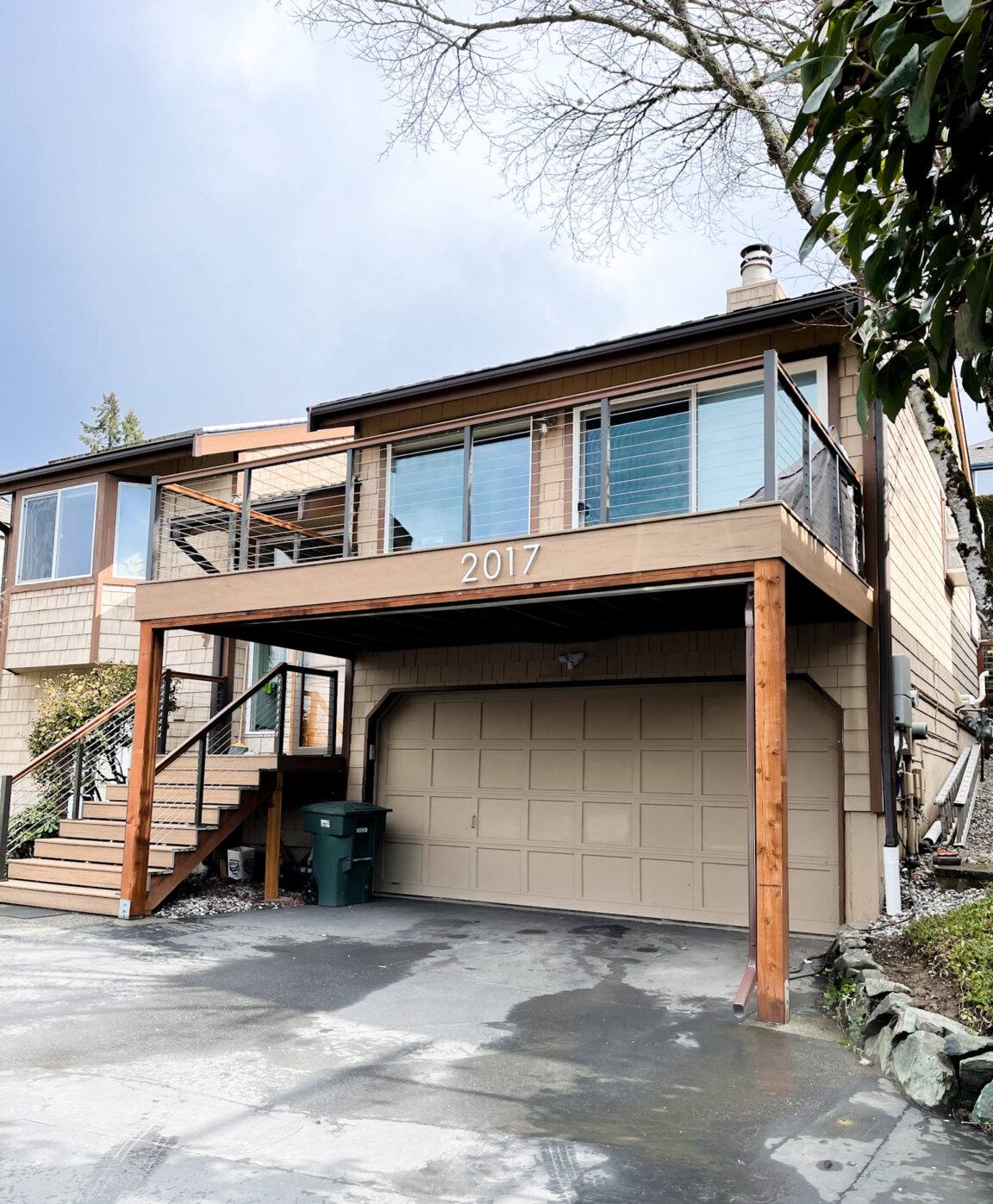
Signs a Columbia Deck Needs Replacement, Not Just Repair
Not every tired-looking deck needs a full teardown. But there are signs that point past repair and toward replacement, especially on older decks built before newer flashing and fastening standards became common practice.
- Soft, spongy, or springy decking when you walk across it, especially near the house
- Visible rot, dark staining, or crumbling wood at the ledger board where the deck meets the house
- Rust streaks around fasteners or visible corrosion on hardware
- Posts or footings that shift, rock, or show cracking at ground level
- Railings that flex or feel loose under hand pressure
- Persistent green or black growth that returns within weeks of cleaning
- Gaps between boards that have closed up or widened unevenly, signaling movement in the frame
Any one of these on its own might be repairable. Several together, especially rot at the ledger or footings, usually means the structure has reached the point where patching costs more over time than a proper rebuild.
Why Ledger Rot Shows Up First
The ledger board — the piece that attaches the deck to the house — is where most deck failures in this climate start. It sits directly against the siding and rim joist, in the spot most likely to trap moisture that never fully dries out between rain events. Older decks often used minimal or no flashing at this connection, or flashing that has since failed. Once water gets behind the ledger, the damage is hidden until the deck is already unsafe.
What a Correct Deck Replacement Actually Involves
A deck replacement is a structural project, not a cosmetic one. Doing it correctly in this climate means paying attention to the parts nobody sees once the decking is down — the framing, fasteners, and drainage details that determine whether the new deck lasts decades or just a few years.
Ledger Flashing and House Connection
The ledger board gets properly flashed with a water-resistant barrier and metal or high-quality flashing tape, installed so water sheds away from the house rather than pooling behind the board. This single detail does more to prevent early failure than any decking material choice.
Framing and Fasteners
Joists, beams, and posts should be pressure-treated lumber rated for ground contact where applicable, connected with corrosion-resistant hardware rated for treated lumber's chemical makeup. In an area with this much salt air and rain exposure, standard fasteners corrode faster than they would inland — this is not a place to save money on hardware.
Footings
Footings need to sit below frost depth and bear on undisturbed or properly compacted soil. On sloped or older lots, this is often where an existing deck's problems originate, especially if the original footings were undersized or set shallow.
Drainage and Airflow
Decks built low to the ground or over poorly draining soil trap moisture underneath, which accelerates rot and feeds moss and mildew growth on the underside of boards. Grading, gravel, and adequate clearance under the frame all matter more here than in a drier climate.
Choosing Decking Material for Whatcom County Conditions
There is no single "best" decking material — there's a best fit for the homeowner's budget, maintenance appetite, and how the deck will be used. The table below reflects how common options actually perform under salt air, frequent rain, and heavy shade.
| Material | Moisture & Moss Resistance | Maintenance | Typical Lifespan |
|---|---|---|---|
| Pressure-treated wood | Fair — absorbs moisture, needs sealing to resist staining and moss | Annual cleaning and periodic sealing/staining | 10-15 years before boards need replacing |
| Cedar | Good natural resistance, but greys and can grow moss in shaded, damp spots without upkeep | Regular cleaning, occasional oil or sealant | 15-20 years with consistent care |
| Composite decking | Very good — resists rot and moisture absorption; can still get slick with algae if not cleaned | Periodic washing, no sealing or staining | 25-30+ years, manufacturer-dependent |
| Capped PVC decking | Excellent — fully sealed surface sheds water and resists staining | Occasional washing | 25-30+ years, manufacturer-dependent |
Wood remains a reasonable choice for homeowners who want a traditional look and don't mind the upkeep. Composite and capped PVC cost more upfront but make sense for shaded, damp lots like much of Columbia has, where a low-maintenance surface saves real time and money over the deck's life. We'll walk through the honest trade-offs for your specific site rather than pushing one product line — the right call depends on sun exposure, tree cover, and how much maintenance you actually want to do.
What Actually Drives the Cost
Deck size and shape are the biggest factors, but they're not the only ones. Condition of the existing framing matters a lot — if footings and joists are sound and just the surface boards need replacing, that's a smaller job than a full structural rebuild. Material choice moves the price meaningfully too, since composite and PVC decking cost more per square foot than wood, even though they save on maintenance later. Multi-level decks, built-in seating or planters, elaborate railing systems, and permitting requirements all add cost as well. We break all of this down in the written estimate so you know exactly what you're paying for and why.
Railings, Stairs, and Code Requirements
Railing and stair requirements are governed by Washington's residential building code, and a full deck replacement is the right time to bring an older structure up to current standards — especially on elevated decks where an outdated or undersized railing is a real safety issue, not just a code technicality. This typically covers railing height, baluster spacing, guard strength, and stair rise-and-run consistency. Permitting requirements apply to most deck replacements of this scope; we handle that process as part of the job so it isn't left for the homeowner to sort out.
How Our Deck Replacement Process Works
We keep the process straightforward because most homeowners have been through a confusing contractor experience before and don't want another one.
- On-site assessment — we inspect the existing deck's framing, ledger, footings, and site drainage to determine what's actually driving the deterioration.
- Honest scope and estimate — a written estimate that covers material options, structural work needed, and permitting where required, with no vague allowances hiding the real cost.
- Tear-off and structural rebuild — old decking, framing, and any compromised footings come out; the new structure goes in with proper flashing, treated framing, and corrosion-resistant hardware.
- Decking, railing, and finish work — installed to manufacturer specifications, with attention to fastening patterns and spacing that account for our wet-dry cycling.
- Final walkthrough — we go over the finished deck with you, including what maintenance it does and doesn't need going forward.
Maintaining a New Deck in a Damp, Shaded Climate
Even the best-built deck benefits from a little seasonal attention. This is the same short checklist we leave with homeowners after a replacement.
- Sweep leaves and debris off the deck regularly, especially in fall — trapped organic matter holds moisture and feeds moss
- Rinse or gently wash the surface a couple of times a year to remove algae and pollen buildup before it takes hold
- Keep gutters and downspouts clear so water isn't dumping directly onto or under the deck
- Trim back overhanging branches to improve sun exposure and airflow where practical
- Check railings and stair connections once a year for any looseness
- Reseal or re-stain wood decking on the schedule recommended for the product — don't wait until it's visibly grey and worn
- Address any soft spots or discoloration early rather than waiting for it to spread
Why Hire a Crew That Already Works in Columbia
A contractor who works regularly in this part of Bellingham already understands how this neighborhood's mix of mature tree cover, older housing stock, and proximity to the bay affects a deck's exposure. That means fewer surprises during the estimate, fewer change orders once tear-off starts, and a design that accounts for shade patterns and drainage specific to the lot rather than a one-size-fits-all approach.
It also means we're a known, local crew if a warranty question or maintenance question comes up years down the road — not a company that did one job in the area and moved on. We've built and replaced decks across Bellingham and Whatcom County long enough to know which construction details actually matter in this climate and which ones are just upsells. That local, on-the-ground experience is worth more than a generic install from a crew that doesn't build for salt air and driving rain as a matter of course.
Get a Free, No-Pressure Estimate
If your deck is showing soft spots, moss buildup, or just isn't holding up the way it used to, we're happy to take a look and give you a straight answer about repair versus replacement — no pressure either way. Use the form below to request a free estimate for your Columbia-area home.