 Bellingham Roofing
 Asphalt Shingle Roofing Built for Birchwood's Climate
Birchwood sits close enough to Bellingham Bay and the surrounding waterways that salt-laden air is a constant, quiet factor in how a roof ages here. Add Whatcom County's long wet season, driving rain that comes in sideways off frequent windstorms, and shaded, moisture-holding tree cover in many yards, and you have a climate that is genuinely tougher on a roof than most manufacturers' warranty testing accounts for. An asphalt shingle roof installed correctly for these conditions can last decades. One installed with shortcuts, or with materials and ventilation chosen for a drier climate, will show problems in half that time.
We work on roofs throughout Birchwood and the rest of Bellingham regularly, which means we see the same failure patterns over and over: moss working its way under shingle tabs on north-facing slopes, granule loss from wind-driven rain hammering the same exposed edges year after year, and nail corrosion in older roofs that were never detailed for a marine climate. This page covers what a correctly built asphalt shingle roof looks like for a Birchwood home, what our process involves, and why local experience matters more here than in a lot of other parts of the country.
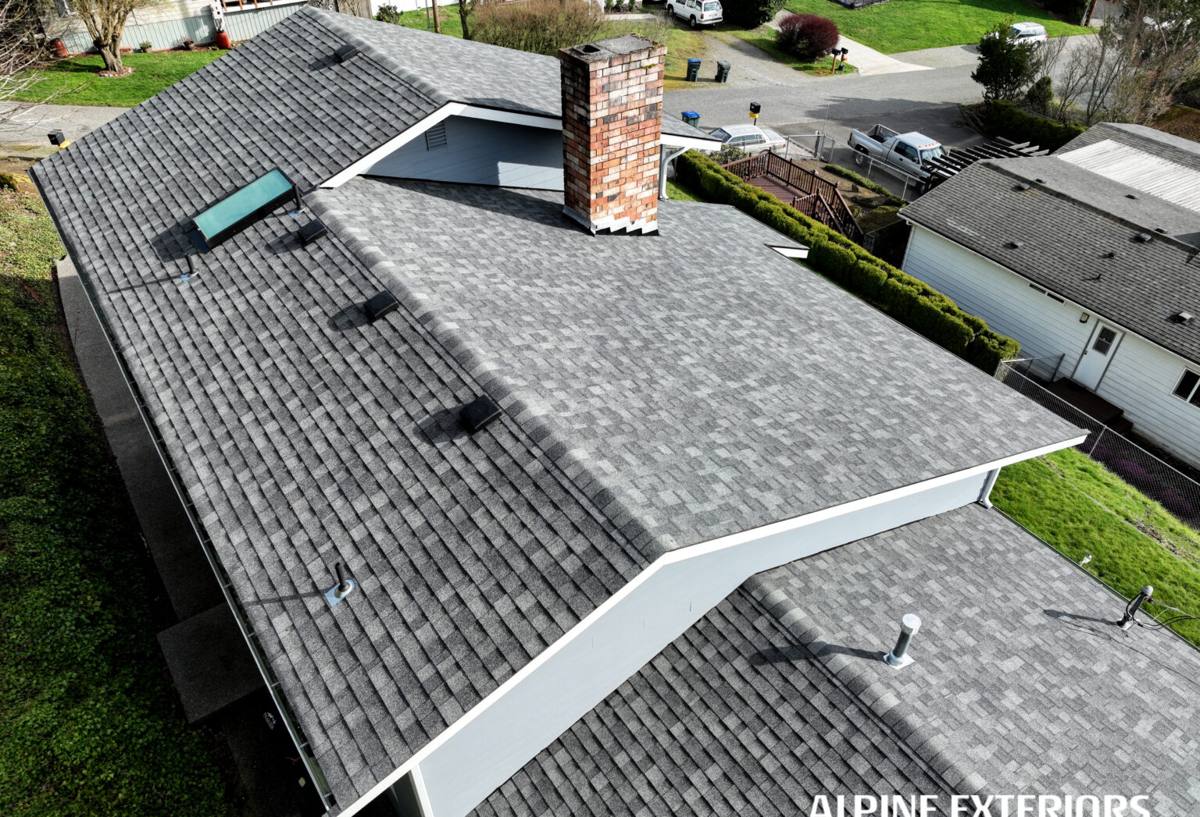
What Bellingham's Climate Actually Does to a Shingle Roof
Salt Air and Metal Fatigue
Homes closer to the water deal with airborne salt that accelerates corrosion on any exposed metal — roofing nails, flashing, vent stacks, and gutter hardware. Standard electro-galvanized fasteners hold up fine in a dry inland climate but can start corroding within a handful of years near Bellingham Bay. Once a nail head weakens or rusts through, the shingle it's holding loses its grip, and that's how wind gets underneath a roof.
Driving Rain and Wind-Driven Water
Whatcom County storms rarely come straight down. Wind-driven rain pushes water sideways and upward under shingle edges, valleys, and anywhere flashing meets a wall or chimney. A roof that would be watertight in calm rain can leak in a Birchwood windstorm if the underlayment, valley metal, and flashing details weren't built for lateral water intrusion in the first place.
The Long Moss Season
Bellingham's moss season runs long — shaded, north-facing, and low-slope sections of roof can stay damp for weeks at a stretch during fall, winter, and spring. Moss doesn't just look bad; it holds moisture against the shingle surface, lifts tabs as it grows, and works its root structure into the granule layer. Left unaddressed, a mossy roof degrades years faster than a clean one, regardless of the shingle's rated lifespan.
What a Correctly Installed Asphalt Shingle Roof Involves
Asphalt shingles are a proven, cost-effective roofing material, but the shingle itself is only part of the system. Most leaks and premature failures we're called out to repair trace back to what's underneath the shingles, not the shingles themselves. A roof built for this climate should include:
- Ice-and-water shield at eaves, valleys, and around penetrations — the areas most exposed to wind-driven rain and ice damming during cold snaps
- Synthetic underlayment across the full deck for a secondary water barrier that outperforms old-style felt in wet climates
- Balanced attic ventilation (intake at the eaves, exhaust at the ridge) to control moisture buildup that feeds mold, rot, and moss
- Corrosion-resistant fasteners and flashing rated for coastal or marine exposure, not standard-grade hardware
- Properly stepped and counter-flashed details at chimneys, walls, and skylights, since these are the most common leak points in the region
- Algae-resistant shingles with copper or zinc granules where moss and algae exposure is a known issue
Skip any one of these and the shingle warranty on paper stops matching what actually happens on the roof. This is the gap between a roof that's "up to code" and a roof that's built to hold up in Whatcom County specifically.
Signs a Birchwood Roof Needs Attention
Because so much roof damage here starts underneath the shingles, homeowners often don't notice a problem until it shows up as a stain on a ceiling. A few things worth checking or asking about:
- Granules collecting in gutters or at downspout outlets — a sign shingles are wearing faster than they should
- Dark streaking or moss growth concentrated on north-facing or shaded slopes
- Curling, cupping, or lifted shingle edges, especially on sections that catch the prevailing wind
- Rusted or visibly corroded nail heads, flashing, or vent boots
- Soft spots in the decking felt underfoot during an inspection, which points to moisture that's already gotten past the shingle layer
- Daylight visible through the attic sheathing, or damp insulation near the roofline
Any one of these on its own isn't necessarily an emergency, but they're worth a professional look before the next major storm season.
Choosing the Right Shingle for This Climate
Not every asphalt shingle product performs the same way in a wet, mossy, coastal-influenced climate. The table below outlines how the common tiers compare for Bellingham conditions specifically.
| Shingle Type | Typical Lifespan Here | Moss/Algae Resistance | Wind Rating Fit |
|---|---|---|---|
| Standard 3-tab | 15-20 years | Low unless treated | Adequate for sheltered lots only |
| Architectural/laminate | 25-30 years | Moderate to high with algae-resistant granules | Good for most Birchwood exposures |
| Premium/designer laminate | 30+ years | High with algae-resistant granules | Best for wind-exposed or waterfront-adjacent lots |
For most Birchwood homes, an architectural shingle with algae-resistant granules is the practical middle ground — it costs more than 3-tab up front but noticeably reduces the moss and streaking problems that drive early replacement in this climate. On lots with heavy tree cover or more direct wind exposure, we'll often recommend stepping up to a premium product and paying closer attention to ventilation.
Our Installation Process
1. On-Site Inspection and Assessment
We start by getting on the roof, not just looking at it from the ground. We check the decking condition, existing ventilation, flashing details, and how the current roof has held up against wind and moisture, which tells us a lot about what the replacement needs to address.
2. Written Scope and Straight Answers
We walk through what we found, what shingle and underlayment options make sense for the specific exposure of the home, and a clear scope of work — no vague allowances or surprise add-ons once the tear-off starts.
3. Tear-Off and Deck Inspection
Old roofing comes off down to the deck so we can actually see the sheathing, not guess at its condition from the attic. Any soft, rotted, or delaminated decking gets flagged and replaced before anything new goes down.
4. Underlayment, Flashing, and Ventilation
This is where a Bellingham roof earns its lifespan. Ice-and-water shield at vulnerable areas, full synthetic underlayment, corrosion-resistant flashing at every wall and penetration, and a ventilation setup that's balanced for the attic's actual size and airflow — not a generic default.
5. Shingle Installation
Shingles go down to manufacturer spec for nail placement and exposure, with extra attention to sealing along eaves and rakes where wind-driven rain does the most damage.
6. Final Walkthrough and Cleanup
We walk the finished roof with the homeowner, check gutters and downspouts for debris from the tear-off, and do a magnetic sweep of the yard for stray nails.
What Drives the Cost of a Birchwood Roof
Every roof is different, but the same handful of factors tend to move the price up or down. Rather than quote a number that won't mean much without seeing the roof, here's what actually drives cost:
| Factor | Why It Matters |
|---|---|
| Roof size and number of planes | More cuts, valleys, and edges mean more labor and material waste |
| Roof pitch and access | Steeper or harder-to-access roofs require more safety setup and time |
| Decking condition | Rotted or soft sheathing found during tear-off adds material and labor to replace |
| Shingle tier chosen | 3-tab, architectural, and premium products carry different material costs |
| Ventilation and flashing needs | Correcting inadequate attic ventilation or old flashing adds scope but prevents future callbacks |
| Number of penetrations | Chimneys, skylights, and multiple vent stacks each need individual flashing work |
We give a firm, written number after the on-site inspection, not a ballpark over the phone — too many of these factors only become clear once we're actually on the roof.
Maintenance That Actually Extends a Shingle Roof's Life Here
A new roof still needs some ongoing attention in this climate, especially the moss side of things. A short list worth keeping on a homeowner's calendar:
- Clear gutters and downspouts at least twice a year, more often on tree-heavy lots
- Have moss growth treated or removed at the first sign of it, rather than waiting for a full season of growth
- Trim back overhanging branches to reduce shade, debris buildup, and physical abrasion on the shingle surface
- Check attic ventilation isn't blocked by insulation, which can trap moisture against the roof deck from underneath
- After major windstorms, do a quick visual check for lifted or missing shingles, or have it looked at professionally
- Avoid pressure washing shingles directly — it strips granules and shortens the roof's life
Why a Local Bellingham Crew Matters for This Job
Asphalt shingle roofing isn't a complicated product category, but installing it correctly for Whatcom County's climate is a different job than installing it in a drier or milder region. A crew that works Birchwood and the surrounding Bellingham neighborhoods regularly already knows which slopes tend to hold moss, how local wind patterns hit certain lot orientations, and which flashing and ventilation details actually hold up near the water — instead of relying on generic manufacturer specs written for a national average climate. That local pattern recognition shows up in fewer callbacks and a roof that performs the way it's supposed to for its full rated life.
If you're weighing a repair against a full replacement, or just want an honest read on where your current roof stands, we're glad to take a look. Reach out for a free, no-pressure estimate using the form below.