 Bellingham Roofing
 Why Birch Bay Is Harder on a Deck Than an Inland Yard
Birch Bay sits right on the water, and that changes what a deck has to survive. Homes a few miles inland in Bellingham deal with normal Pacific Northwest rain and shade-driven moss. Homes in Birch Bay deal with that plus salt-laden air blowing off the water, wind-driven rain that gets pushed sideways into ledger boards and railings, and a wet season that runs long even by Whatcom County standards. None of that makes a deck impossible to build well here — it just means the standard approach that works fine in a dry, inland yard isn't the right approach on this stretch of coastline.
Salt air accelerates corrosion on anything metal — fasteners, brackets, railing hardware — faster than most homeowners expect. Combine that with near-constant moisture for several months of the year, and a deck built with inland-grade materials and generic hardware can start showing rust streaks, loose connections, or soft wood within just a few seasons. A deck built for this specific environment should still look and perform the same way ten or fifteen years in.
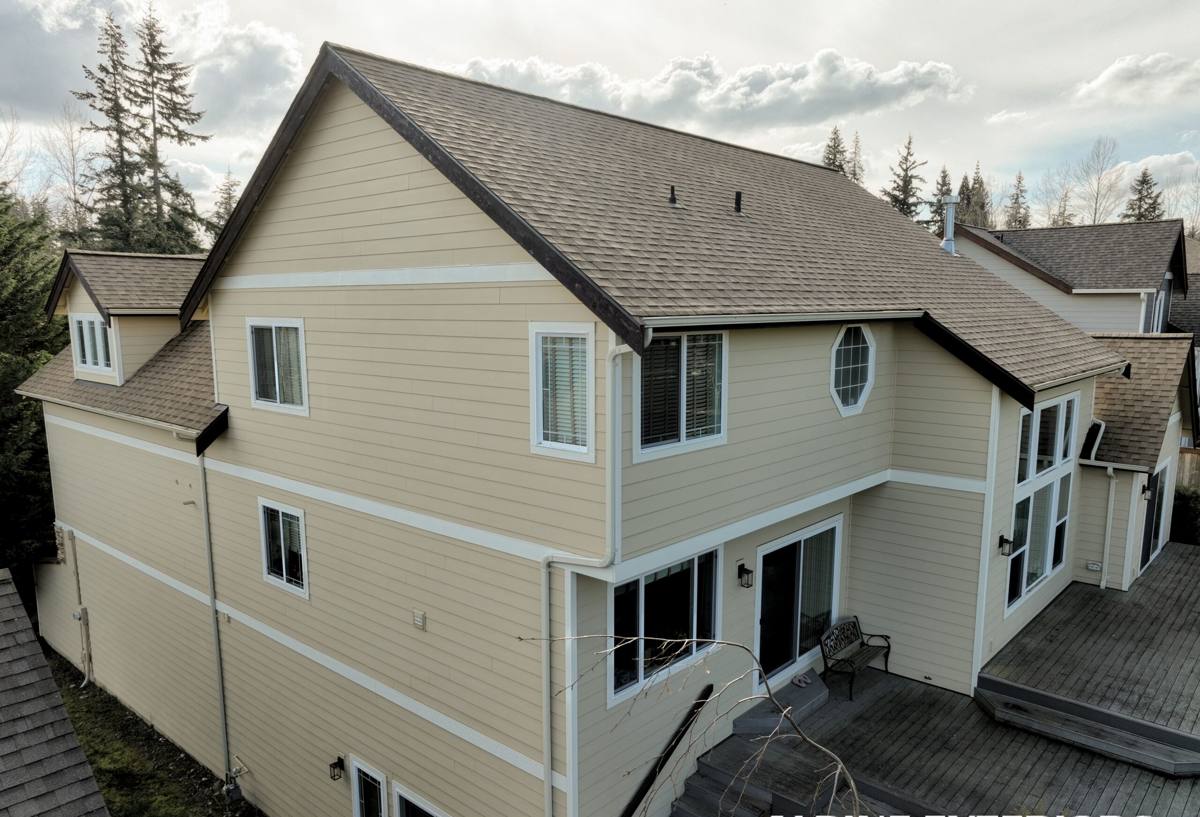
What a Correctly Built Coastal Deck Requires
Fasteners and Hardware Rated for the Environment
This is the single biggest difference between a deck that holds up in Birch Bay and one that doesn't. Standard galvanized fasteners are fine in a lot of the country, but in a salt-air environment they corrode faster than stainless steel or high-grade coated fasteners rated for coastal or marine-adjacent use. The same goes for joist hangers, post bases, and structural screws — anything holding the frame together needs to be spec'd for this exposure, not just "good enough."
Framing That Won't Trap Moisture
Pressure-treated framing lumber is standard almost everywhere, and it's still the right call for most substructures here — but it has to be installed with attention to drainage and airflow underneath, not just nailed together and covered. Trapped moisture under a deck is where rot starts, and in a climate with this much sustained dampness, a substructure that can't dry out between rain events is a substructure that fails early.
Choosing a Decking Material for Salt Air and Long Wet Seasons
There's no single "best" decking material for every yard — it depends on how much maintenance you want to do, your budget, and how exposed the deck is to wind and salt spray. Here's how the common options compare for a Birch Bay property specifically.
| Material | Upfront Cost | Maintenance in Salt Air | Moss/Algae Resistance | Typical Lifespan Here |
|---|---|---|---|---|
| Pressure-Treated Pine | Lower | Higher — regular sealing needed | Lower without upkeep | Shorter unless well maintained |
| Cedar | Moderate | Moderate — needs periodic finish renewal | Moderate, better with airflow | Moderate, varies with care |
| Capped Composite | Higher | Lower — no sealing or staining | Higher, easy to clean | Longer, consistent |
| Tropical Hardwood | Higher | Moderate — periodic oiling recommended | Moderate to higher | Long if maintained |
Capped composite has become a popular choice for waterfront and near-water properties for a simple reason: it doesn't absorb moisture the way wood does, it doesn't need annual staining, and it resists the surface algae and moss growth that shows up fast in shaded, damp spots. It costs more up front, but for owners who don't want a yearly maintenance chore, that trade-off often makes sense. Real wood — cedar in particular — still has a place for owners who want that specific look and are willing to keep up with finish maintenance. We'll walk through the honest trade-offs for your specific yard rather than push one material as the automatic answer.
Substructure and Flashing: Where Coastal Decks Actually Fail
Most deck failures don't start with the decking boards — they start underneath, where nobody's looking. In a climate that gets this much sustained rain, two things matter more than almost anything else:
Ledger Board Flashing
Where an attached deck connects to the house is the most common failure point on any deck, anywhere, and it's worse in a wet climate. Proper flashing keeps water from working its way behind the ledger board and into the house's rim joist and framing. Done wrong, this is a slow leak that can go unnoticed for years — and by the time it shows up as soft siding or interior water stains, the damage is already significant.
Post Bases and Ground Contact
Posts that sit in standing water or direct soil contact rot from the bottom up, regardless of species or treatment. Elevated post bases that keep wood off the ground, combined with proper drainage grading under the deck, are a small detail during construction that prevents a much bigger repair later.
Railings and Hardware for a Windy, Salt-Exposed Site
Railings take direct salt spray and wind load that a lot of other parts of the deck don't. For Birch Bay properties, we favor railing systems and hardware finished specifically to resist corrosion — powder-coated aluminum, marine-grade cable systems, or stainless hardware — over standard-grade options that look fine on day one but start pitting or staining within a season or two near the water. If you want an open view toward the water, cable or glass-panel railings are worth considering, but they need to be engineered for the wind loads this location actually sees, not just installed to code minimums for a sheltered inland lot.
Designing Against Moss and Algae From the Start
Moss doesn't show up because a deck was built poorly — it shows up because a deck was built without thinking about airflow, drainage, and sun exposure. A few design choices make a real difference over the life of the deck:
- Deck board spacing that allows water to shed and air to circulate between boards, rather than tight gaps that hold moisture
- Joist tape or capping on framing members to shed water and slow rot at the most vulnerable structural points
- Grading and drainage under the deck so water moves away from the structure instead of pooling
- Being honest about shaded, north-facing, or tree-covered areas where moss pressure will always be higher, and choosing materials or maintenance schedules accordingly
- Keeping gutters and downspouts routed away from the deck footprint so runoff isn't dumping directly onto boards or framing
None of these decisions cost much extra during construction. Retrofitting them after the fact — or dealing with the rot and slippery moss buildup that comes from skipping them — costs a lot more.
How We Approach a Birch Bay Deck Project
We start with an on-site visit, not a phone estimate. Wind exposure, sun and shade patterns, drainage on the lot, and how close the site is to open water all change the right material and hardware recommendations, and none of that can be judged from a photo. From there:
- Assessment and design: we look at how the deck will actually be used, the exposure it'll face, and what material and railing choices fit both your budget and this environment.
- Permitting: most attached decks, and any deck built a meaningful height off the ground, require a permit through Whatcom County. We handle that process as part of the job so you're not tracking down paperwork yourself.
- Construction: framing, flashing, and fastener choices are handled to coastal-grade standards from the ground up — not upgraded only where it's visible.
- Final walkthrough: we go over the finished deck with you, including what maintenance (if any) the material you chose actually needs, so there are no surprises a year in.
Maintenance Checklist for a Coastal Deck
Whatever material you choose, a small amount of seasonal attention goes a long way in this climate. A reasonable routine looks like:
- Sweep debris and standing leaves off the deck surface regularly through fall, when moss and algae growth accelerates
- Rinse salt residue off railings and hardware periodically, especially after storms with onshore wind
- Check fastener and railing connections once a year for early corrosion or looseness, particularly on older or lower-grade hardware
- Re-seal or re-stain wood decking on the manufacturer's recommended schedule — don't wait until it's visibly gray or worn
- Keep gutters and downspouts clear so runoff isn't draining onto or under the deck
- Clear any vegetation or debris buildup underneath the deck that traps moisture against framing
Why Local Experience in Birch Bay Actually Matters
A lot of deck contractors can frame a rectangle and screw down boards. Fewer have spent real time building specifically in a salt-air, high-moisture coastal environment like Birch Bay, where the difference between a deck that lasts and one that doesn't often comes down to fastener grade, flashing detail, and drainage design that you can't see once the project is finished. We work throughout Whatcom County, including Bellingham and the surrounding coastal communities, and we build every deck to the standard this environment actually demands — not the minimum standard that happens to pass inspection inland.
If you're planning a new deck or replacing one that hasn't held up to the Birch Bay climate, we're happy to take a look and talk through honest options for your property. Reach out for a free, no-pressure estimate using the form below.