 Bellingham Roofing
 Building a Deck That Actually Holds Up in Barkley
Barkley is one of the newer, more established neighborhoods on Bellingham's east side, with a mix of homes ranging from recently built to a couple decades old. A lot of the decks we get called out to look at here aren't failing because the homeowner picked the wrong stain color or the wrong railing style. They're failing because the deck was built like it was going up in a dry climate, and Whatcom County simply isn't one. Salt-tinged air off Bellingham Bay, long stretches of driving rain, and a moss season that can run from fall clear through spring all put a specific kind of stress on outdoor structures. A deck built correctly for Barkley looks almost identical to a deck built anywhere else — the difference is underneath, in the fasteners, the flashing, and the drainage detail most people never think to ask about.
This page is about that one job — building or replacing a deck for a home in Barkley — and what it actually takes to get it right in this climate.
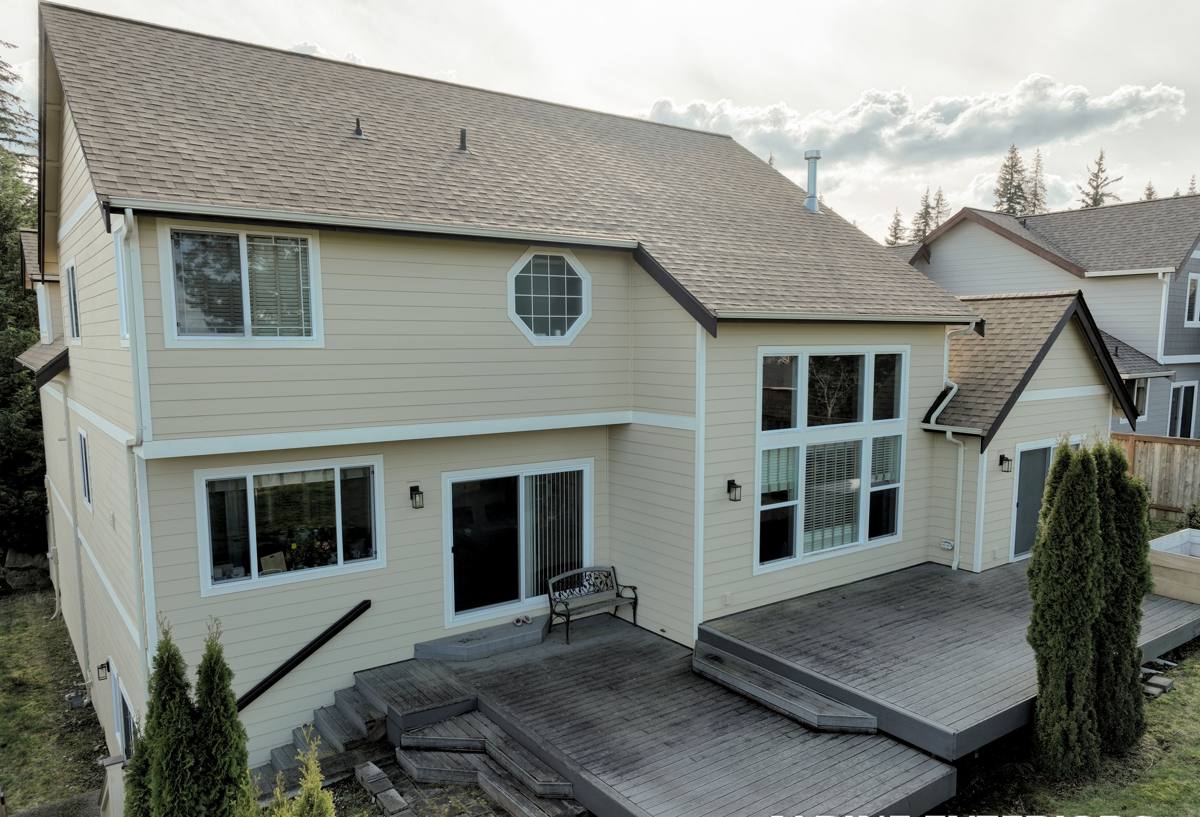
What Bellingham's Climate Does to an Unprepared Deck
Salt Air and Hardware Corrosion
Barkley sits close enough to Bellingham Bay that the air carries a fine amount of salt, especially with a west or southwest wind. That salt doesn't damage wood or composite boards directly, but it's hard on metal. Standard zinc-coated screws, joist hangers, and bolts can start showing rust streaks and pitting years before they would inland. Once corrosion sets into structural hardware, it's not a cosmetic issue — it's a load-bearing one.
Driving Rain and Hidden Moisture
Rain here rarely falls straight down. Wind-driven rain gets pushed sideways into ledger boards, under railing posts, and into any gap in the flashing. A deck can look completely dry on the surface after a storm while water is quietly working its way into the house band board or the top of a post — and that's where rot starts, out of sight, months or years before anyone notices a soft spot.
Moss Season and Slip Risk
Bellingham's moss season is long. Anywhere a deck holds shade, doesn't drain well, or has boards packed too tight, you'll get moss and green algae film building up on the surface. Beyond looking bad, it's genuinely slippery — and it holds moisture against the board surface, which shortens the life of both wood and lower-grade composite decking.
What a Correctly Built Deck Requires Here
None of this is exotic. It's standard deck-building practice applied without cutting corners, because in this climate the corners that get cut are exactly the ones that fail first.
Footings Sized for the Site
Footing depth and sizing need to match the soil conditions and load on the actual site, not a generic assumption. Whatcom County's building department reviews footing design as part of the permit process for most new decks, and that review exists for a reason — undersized or shallow footings are one of the more common causes of a deck that develops a wobble or a lean within a few years.
Ledger Attachment and Flashing
Where the deck attaches to the house is the single most important detail on the whole structure. It needs proper flashing that sheds water away from the band board, not just a bead of caulk and a hope. This is the joint that driving rain attacks hardest, and it's also the joint that's most expensive to fix once it's built over and the siding is closed up around it.
Fasteners and Hardware Grade
Given the salt air, we don't treat corrosion-resistant hardware as an upgrade — it's the standard. Stainless steel or heavy hot-dip galvanized fasteners and connectors cost more up front than basic coated hardware, but replacing rusted joist hangers on a deck that's already built means tearing into a finished structure. It's far cheaper to spec it right the first time.
Board Spacing and Drainage
Gap spacing between deck boards affects how fast the surface dries after rain and how well it resists moss buildup. Too tight, and water sits on the surface and in the gaps; the deck stays damp for days after a storm and moss gets a foothold. Framing also needs a slight pitch away from the house so water actually moves off the deck instead of pooling against the ledger.
Choosing a Decking Material for a Barkley Home
There's no single right answer here — it depends on budget, how much upkeep you want to do, and how much shade and moisture exposure the deck gets. Here's how the common options actually perform in this climate, honestly:
| Material | Moss & Moisture Behavior | Maintenance | Relative Cost |
|---|---|---|---|
| Pressure-treated wood | Absorbs moisture; needs sealing to resist rot and moss staining | Annual cleaning, re-sealing every 1-2 years | Lowest upfront |
| Cedar | Naturally more rot-resistant than treated pine, but still absorbs moisture and grays without upkeep | Regular cleaning and periodic oiling to keep its look | Mid-range |
| Composite decking | Doesn't rot, but can still grow surface algae/moss film in shaded, damp spots | Periodic washing; no sealing or staining needed | Higher upfront |
| PVC / capstock boards | Fully moisture-resistant surface, most resistant to staining and moss adhesion | Lowest ongoing maintenance | Highest upfront |
For a shaded, north-facing deck in Barkley, we're usually steering people away from bare treated wood left unsealed — it's the combination most likely to grow moss fast and show it. For a sunnier, more exposed deck, wood can perform fine with reasonable upkeep. We'll walk the site with you and give a straight opinion based on how much sun and airflow your specific spot actually gets.
Our Process, Start to Finish
- Site visit and design conversation — we look at sun exposure, drainage, grade, and how the deck ties into the house before talking materials.
- Material and layout decisions — based on your budget, maintenance preference, and the site conditions we just walked.
- Permit handling — most new decks and many replacement decks in Bellingham require a permit; we handle the drawings and submittal.
- Framing and structural work — footings, posts, beams, joists, ledger flashing, all built to the grade the site actually needs, not the minimum.
- Decking, railing, and finish work — installed with drainage and airflow in mind, not just appearance.
- Final walkthrough — we go over care and maintenance specific to the material you chose before we consider the job done.
Permits and Whatcom County Requirements
Deck permitting in and around Bellingham depends on the deck's height, size, and attachment to the house — some smaller, low, freestanding decks may not require one, while most elevated or house-attached decks will. Rather than guess on your specific project, we check with the local building department before we finalize a design, and if a permit is needed, we handle that submittal as part of the job. Skipping a required permit isn't a shortcut worth taking — it can complicate things later at resale or with insurance if there's ever a structural question.
Living With a Deck Through Moss Season
Even a well-built deck needs some seasonal attention in this climate. A little consistency goes a long way toward keeping moss from getting established and keeping the surface safe underfoot.
- Sweep leaves and debris off the deck regularly through fall — trapped organic matter is what moss and algae feed on
- Rinse the surface periodically during the wet months, especially in shaded areas that don't get direct sun or wind
- Check that gaps between boards haven't clogged with debris, which traps moisture against the wood or composite
- Inspect railing posts and stair stringers once a year for soft spots or rust streaks around hardware
- Reapply sealant on wood decking on the manufacturer's recommended schedule — don't wait until it's visibly gray and dry
- Confirm gutters and downspouts near the deck aren't dumping extra runoff onto or under the structure
Why a Crew That Already Works Barkley Matters
A deck built by someone unfamiliar with this climate can still look great on install day. The problems show up two, three, five years later — rusted hardware, a soft spot at the ledger, moss that won't go away no matter how often it's scrubbed. We build and repair decks throughout Bellingham and Whatcom County, and Barkley's mix of home ages and lot conditions means we've seen how different framing and material choices actually hold up here over time, not just on paper. That's the difference between a deck that needs real work again in five years and one that just needs normal upkeep.
If you're planning a new deck or replacing one that's showing its age, we're glad to come take a look and give you a straight, no-pressure estimate — just fill out the form below.