 Bellingham Roofing
 Siding in Ferndale Has to Answer to the Weather First
Ferndale sits close enough to the water and the lowland fog belt that its siding takes a different kind of beating than siding twenty minutes inland. Homes here deal with salt-tinged air blowing in off the bay, long stretches of driving rain in the fall and winter, and a moss season that can run most of the year on shaded north and west walls. None of that is dramatic on its own, but stacked together year after year, it's exactly the kind of slow, steady exposure that separates siding systems that hold up from ones that quietly fail from the back side out.
Whatcom County's climate isn't harsh in the way a hurricane zone or a hard freeze-thaw region is harsh. It's harsh in a patient way. Moisture doesn't blast a wall once and leave — it sits against it, seeps into seams, and works on any material that isn't built to shrug it off. That's the lens we use on every Ferndale siding job: not "will this look good going up," but "will this still be doing its job in fifteen years."
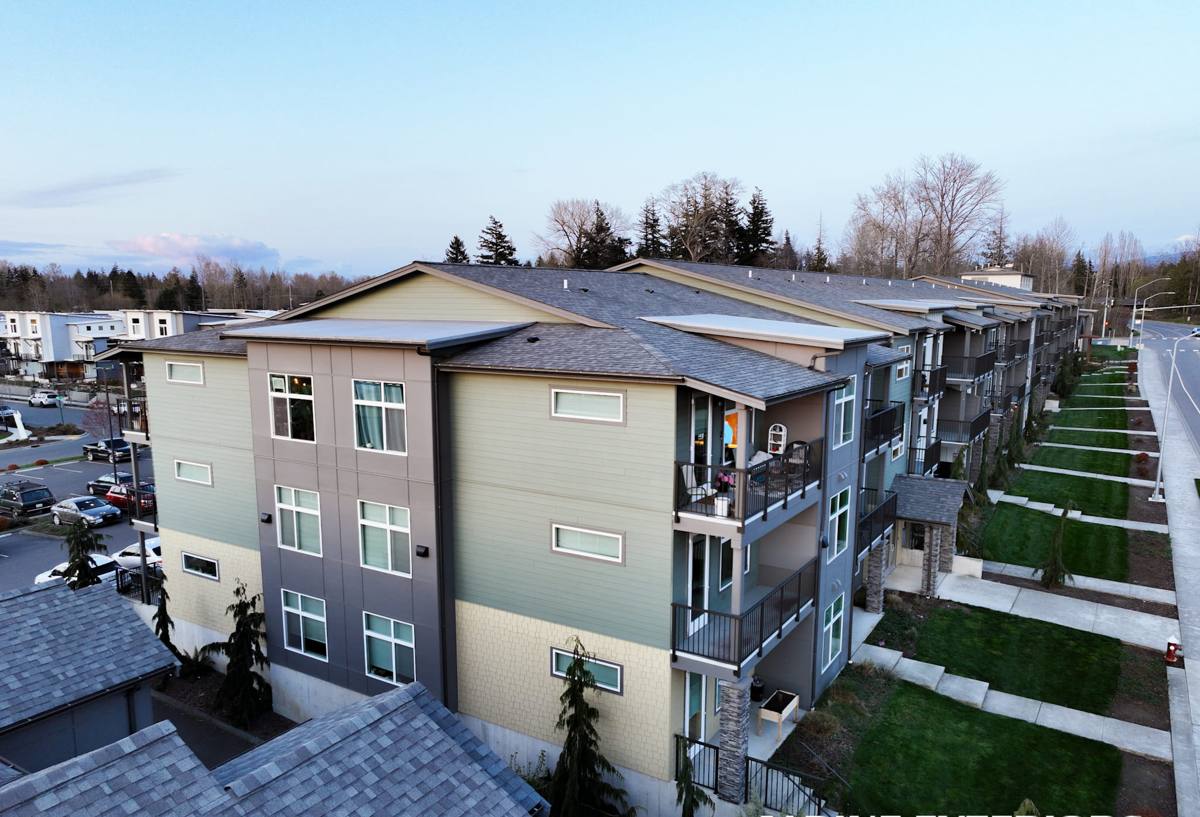
Why We Only Install James Hardie Fiber Cement
We made a decision a long time ago to install one siding system and install it right, rather than offer a menu of products with different trade-offs baked into each one. That system is James Hardie fiber cement. It's not the cheapest option on paper, and we're upfront about that. But for a climate like Ferndale's — wet, salt-touched, moss-prone — it's the product we're willing to put our name behind.
What Fiber Cement Does That Other Materials Don't
- It's non-combustible, which matters more every year as wildfire smoke and ember exposure become a regional concern even in wet coastal counties.
- It doesn't feed moss or algae growth the way wood-based products can, and it doesn't degrade structurally when moss does take hold on the surface.
- It holds paint and factory finish far longer than wood siding, so you're not repainting every five to seven years.
- It's dimensionally stable — it doesn't swell, cup, or warp with the wet-dry cycling that's constant in this climate.
We won't install vinyl, LP SmartSide, primed spruce, cedar, or composite panel products like Cemplank or Allura. Each of those has genuine strengths, and we're not going to pretend otherwise. But every one of them asks the homeowner to accept a trade-off — more maintenance, more moisture sensitivity, more installation precision required to avoid problems — that we don't think makes sense to build into a house that has to survive Whatcom County winters for the next thirty or forty years.
What a Correct Siding Installation Actually Involves
Siding installation is one of those jobs that looks simple from the driveway and is not simple at all once you're up on the wall. The material is only half the equation. The other half is everything underneath it and around it — the parts nobody sees once the job is done.
The Water Management Layer
Every wall assembly needs a plan for the water that inevitably gets past the outer surface — wind-driven rain forced under laps, condensation inside the wall cavity, whatever finds its way in. That means a correctly lapped weather-resistant barrier, properly integrated flashing at every window, door, and penetration, and a drainage gap or rainscreen strategy that lets any moisture that does get in find its way back out instead of sitting against the sheathing.
Fastening and Clearances
James Hardie publishes specific fastening patterns, nail types, and clearance requirements — minimum gaps from grade, from roof lines, from decks and patios — and those specs exist for a reason. Skip them and you can void the manufacturer warranty even though the product itself is fine. This is where a lot of installation problems actually originate: not bad siding, but siding installed without respecting the details that keep water out of the wall assembly.
Trim, Caulking, and Transitions
Corners, butt joints, and transitions to trim boards are where siding jobs succeed or fail over time. Done right, these details shed water. Done wrong, they become the exact entry points that let moisture behind the cladding — which, in a climate that stays damp as long as this one does, is where rot and mold problems start.
Our Process for Ferndale Siding Jobs
| Step | What Happens |
|---|---|
| On-site assessment | We walk the exterior, check existing siding and sheathing condition, and look at drainage, roofline, and grade clearances specific to your lot. |
| Tear-off and inspection | Old siding comes off and we inspect the sheathing and framing underneath for any moisture damage before anything new goes up. |
| Water barrier and flashing | Weather-resistant barrier, window and door flashing, and drainage gap installed to spec before a single piece of siding is hung. |
| Hardie installation | Siding installed to manufacturer fastening, clearance, and joint specifications, with attention to every corner and transition. |
| Trim, caulk, and final detail | Trim boards, caulking, and touch-up finish work completed so seams and transitions are fully sealed. |
| Final walkthrough | We walk the finished job with you before calling it done. |
Why It Matters That We Already Work in Ferndale
A crew that's worked Ferndale homes before isn't guessing at how a wall assembly needs to handle this climate — they've already seen how moss establishes on shaded elevations, how driving rain off the water finds the weak points in a wall, and how salt-tinged air affects fasteners and finishes over time. That familiarity shows up in small decisions on the job: where to add extra flashing attention, which elevations need closer joint sealing, how to sequence the work around this region's rain patterns instead of fighting them.
It also matters for something more basic — showing up. A contractor based in the Bellingham area isn't juggling a two-hour drive to get back out for a warranty check or a small adjustment. When we say we stand behind the work, being local is part of how we actually do that.
Signs Your Ferndale Home May Need New Siding
- Persistent moss or algae staining that comes back within months of cleaning
- Visible cupping, warping, or soft spots in wood-based siding
- Peeling or bubbling paint that keeps recurring in the same spots
- Gaps opening up at seams, corners, or trim boards
- Soft or spongy sheathing felt through the siding near the base of walls
- Rising heating costs that suggest the wall assembly isn't performing the way it used to
Any one of these can be a minor fix. Several at once, especially on a home more than fifteen or twenty years old, usually means the siding system as a whole is past the point where patching makes sense.
Cost Factors for Siding Installation
We're not going to quote numbers here that don't mean anything without seeing your house, but these are the factors that actually move the price on a Ferndale siding job:
| Factor | Why It Matters |
|---|---|
| Home size and wall complexity | More square footage and more corners, dormers, and roof intersections mean more labor and more detail work. |
| Existing siding tear-off | Removing old siding and disposing of it adds time and cost compared to new construction. |
| Sheathing condition | If moisture damage is found once old siding comes off, repair work gets added before new siding can go on. |
| Hardie product line selected | Lap siding, panel siding, and shingle-style products differ in material and labor cost. |
| Trim and accent work | Additional trim boards, batten details, or accent elements add labor time. |
| Access and site conditions | Steep lots, limited access, or tall walls affect scaffolding and staging needs. |
What to Ask Before Hiring Anyone for Siding Work
Whatcom County has no shortage of people willing to hang siding. Fewer of them are set up to do the water management and flashing details correctly, and that's the part that determines whether the job holds up.
- Are you a certified or factory-trained installer for the product you're proposing?
- What weather-resistant barrier and flashing approach do you use, specifically?
- Will you inspect and document sheathing condition before installing new siding?
- What does your warranty actually cover, and for how long?
- Can you explain why you recommend this product for a home in this specific location?
If a contractor can't answer the water management questions in detail, that's worth paying attention to — the siding material itself is rarely the reason a job fails.
If your Ferndale home is due for new siding, we're happy to take a look and give you a straightforward, no-pressure estimate — no obligation, just an honest read on what your house needs.