 Bellingham Roofing
 Roof Replacement Built for the Puget Area's Weather
Homes in the Puget area near Bellingham sit close enough to the water and the tree line that their roofs take a different kind of beating than roofs twenty miles inland. Salt-laden air off the Sound works on exposed metal fasteners and flashing year-round. Driving rain, pushed sideways by wind off the water, finds every weak lap and undersized nail pattern. And the long moss season here in Whatcom County — often eight months or more of the kind of damp, shaded conditions moss loves — means a roof that isn't detailed and maintained correctly starts losing granules and lifting shingle edges well before its rated lifespan is up. A roof replacement in this neighborhood isn't just a materials swap. It's an opportunity to correct whatever the original roof got wrong for this specific climate.
We work on roofs in this area regularly, which matters more than it sounds like. A crew that mostly works drier, inland jobs will often spec and install a roof the same way they would anywhere else in Washington. A crew that actually works Puget knows which underlayment holds up under sustained damp, which flashing details fail first in wind-driven rain, and where moss tends to establish itself on a given roof pitch and orientation.
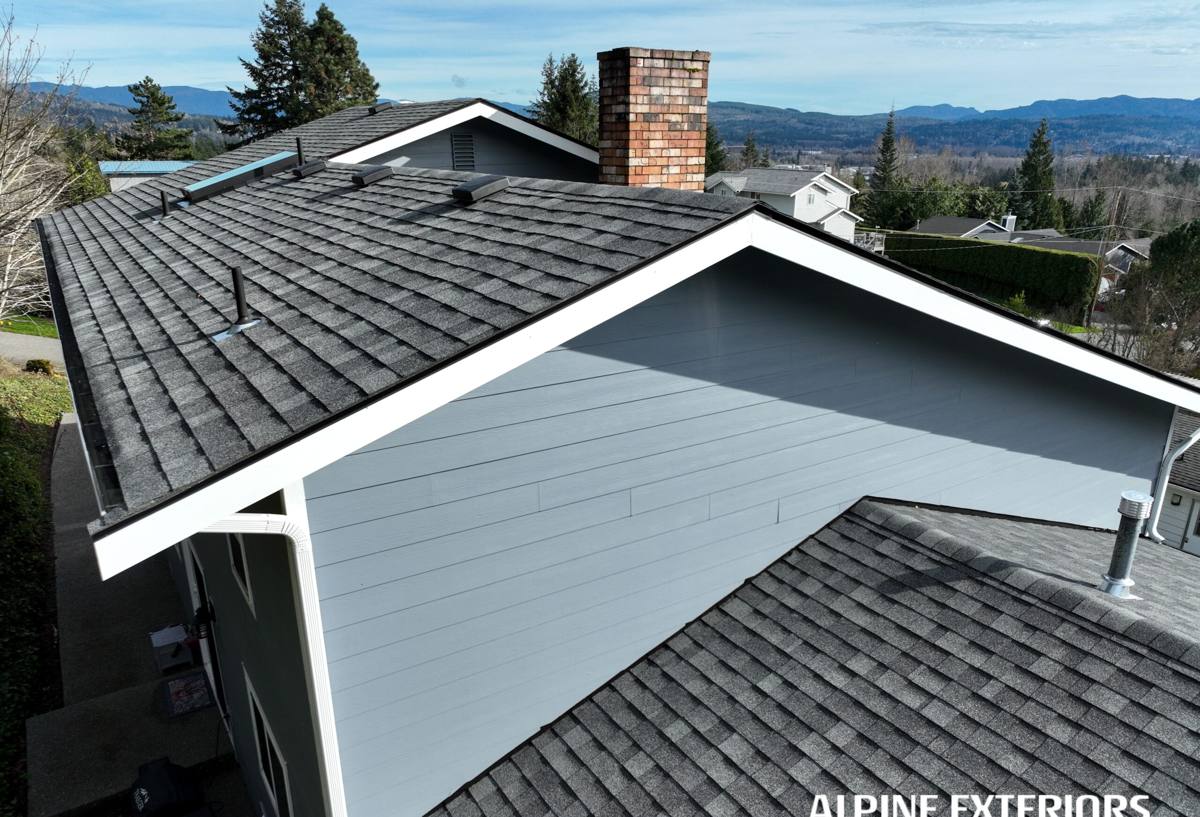
What Local Homes Actually Need From a New Roof
Moisture Management First
The single biggest threat to a roof in this part of Whatcom County isn't a single storm — it's sustained, low-grade moisture exposure over months. That means underlayment quality and coverage matter more here than in drier climates. A synthetic underlayment with good water-holdout, properly lapped and sealed at every penetration, buys the roof deck real protection during the long stretches of drizzle and fog that are normal for this area.
Wind and Rain Resistance
Storms off the Sound don't just bring rain straight down — they bring it sideways. That changes how shingles, starter strips, and ridge caps need to be fastened and sealed. Proper nail placement (not staples, and not high-nailing to save time) and factory sealant strips that are given the chance to bond correctly are what keep a roof watertight when wind is driving rain up under the shingle edge rather than just down the slope.
Moss and Organic Growth Control
Moss doesn't just sit on a roof looking bad — its root structure lifts shingle tabs and holds moisture against the roof deck, which accelerates rot and granule loss underneath it. A correct replacement addresses this at the install stage: proper ventilation to keep the deck drier, zinc or copper strips where appropriate, and shingle products with algae-resistant granules on north-facing or heavily shaded sections where moss tends to take hold first.
Salt Air and Metal Components
Flashing, fasteners, and any exposed metal on a roof near the water corrode faster than the same materials would inland. We pay attention to fastener and flashing material selection on Puget-area jobs specifically because we've seen what a few years of salt air does to the wrong grade of metal.
What a Correct Roof Replacement Involves
A roof replacement done right is a sequence, not a single step. Skipping or rushing any one of these is where most premature roof failures we get called out to inspect actually started.
- Tear-off and deck inspection. Old roofing is fully removed so the deck underneath can actually be inspected — not just glanced at through a layover.
- Deck repair. Any soft, rotted, or delaminated sheathing gets replaced before anything new goes down. Installing new roofing over a compromised deck just hides the problem for a while.
- Underlayment installation. A full synthetic or felt underlayment layer, properly lapped, with ice-and-water shield at eaves, valleys, and other vulnerable transitions.
- Flashing. New flashing at all penetrations, walls, and valleys — reused old flashing is one of the most common sources of leaks in "new" roofs.
- Ventilation check. Intake and exhaust ventilation are evaluated and corrected if needed, since poor attic ventilation traps moisture and shortens roof life regardless of what shingle is on top.
- Roofing material installation. Installed to manufacturer spec for nail pattern, exposure, and sealing — not accelerated to finish the job faster.
- Ridge, hip, and final detail work. The details most homeowners never think about are usually where leaks start.
- Cleanup and final walkthrough. Magnetic sweep for nails, debris removal, and a walkthrough so you know exactly what was done.
Choosing the Right Material for This Climate
There's no single "best" roofing material for every home — it depends on your roof's pitch, exposure, budget, and how much maintenance you're willing to stay on top of. Here's how the common options actually perform in this kind of coastal, wet, moss-prone climate.
| Material | Moisture & Moss Behavior | Typical Lifespan Here | Maintenance |
|---|---|---|---|
| Architectural asphalt shingle | Good with algae-resistant granules; needs proper ventilation to avoid trapping moisture | 20-30 years | Periodic moss/debris removal |
| Standing seam metal | Sheds water and moss very well; minimal flat surface for organic growth to establish | 40-50+ years | Low; occasional fastener check |
| Cedar shake | Attractive but absorbs moisture and is more susceptible to moss and rot in sustained damp | 20-25 years with upkeep | High; regular treatment needed |
| Composite/synthetic shingle | Good moisture resistance, consistent performance, resists organic growth | 30-50 years | Low to moderate |
We'll walk through these trade-offs honestly during an estimate rather than steering everyone toward one product. A steep, shaded, north-facing roof in a damp yard has different needs than an open, sun-exposed roof a few streets over, even within the same neighborhood.
Our Process for Puget-Area Replacements
Inspection and Honest Assessment
We start by actually getting on the roof, not just looking at it from the ground. That's the only way to catch early moss establishment, soft decking, or flashing wear before it becomes a bigger, more expensive problem — and it lets us give you a straight answer on whether you need a full replacement or whether targeted repair still makes sense.
Clear, Written Estimate
You get a written scope of work and price before anything is scheduled — no vague verbal quotes, no pressure to sign same-day.
Scheduling Around Whatcom County Weather
Roofing work here has to be scheduled with the region's rain patterns in mind. We plan tear-off and dry-in sequencing so your home isn't left exposed to an open deck if weather shifts mid-project.
Daily Communication During the Job
You'll know what's happening on your roof each day, not just at the start and end of the project.
Final Walkthrough and Warranty Paperwork
We walk the finished job with you, explain what was done, and make sure you have manufacturer and workmanship warranty documentation in hand.
Signs a Puget-Area Roof Needs Replacing, Not Repairing
- Granule loss heavy enough that shingles look patchy or bald in spots
- Persistent moss or algae staining that returns quickly after cleaning
- Shingle edges curling, cupping, or lifting, especially on shaded slopes
- Soft spots or noticeable sagging when walking the roof or attic
- Daylight visible through the roof deck from inside the attic
- Multiple recurring leaks in different locations rather than one isolated spot
- Roof is at or beyond its material's expected service life for this climate
- Flashing that's visibly corroded or separating from roof penetrations
One or two of these on their own might point to a repair. Several at once, especially combined with a roof that's already past the midpoint of its expected life, usually means replacement is the more cost-effective path.
What Drives the Cost of a Roof Replacement
Every roof is different, so we don't publish blanket pricing — but the main cost factors are consistent across Puget-area homes:
| Factor | Why It Matters |
|---|---|
| Roof size and pitch | More surface area and steeper pitches increase material and labor time |
| Deck condition | Rotted or soft sheathing found during tear-off adds repair cost |
| Material choice | Asphalt, metal, and composite options span a wide cost range |
| Number of layers being removed | Multiple existing layers take longer to tear off and dispose of |
| Roof complexity | Valleys, dormers, skylights, and chimneys all add flashing and labor detail |
| Ventilation upgrades needed | Correcting inadequate intake/exhaust venting adds scope but protects the new roof |
We'll break these down specifically for your roof during the estimate so you understand exactly what you're paying for and why, rather than getting a single lump-sum number with no explanation.
Why Local Experience in Puget Matters
A roofing crew that regularly works this specific area of Bellingham and Whatcom County has already seen how salt air, sideways rain, and long moss seasons affect roofs here — which means fewer surprises on your job and fewer callbacks down the road. We know which details tend to fail first in this climate because we've inspected and replaced enough roofs here to see the patterns. That's not something a crew that occasionally passes through the area picks up on a single job.
If your roof is showing wear, or you'd just like an honest opinion on whether repair or replacement makes more sense for your home, we're happy to take a look. Reach out for a free, no-pressure estimate using the form below.