 Bellingham Roofing
 Asphalt Shingle Roofing Built for Happy Valley's Weather
Happy Valley sits close enough to Bellingham Bay and the surrounding hills that its homes take on a specific combination of weather stress: salt-tinged marine air, long stretches of driving rain off the Sound, and shaded, tree-lined streets that keep roofs damp well after a storm has passed. That combination is exactly why asphalt shingle roofs in this neighborhood age differently than shingle roofs twenty miles inland. A roof that would hold up fine in a drier part of Whatcom County can wear out early here if it wasn't installed with this specific climate in mind.
Asphalt shingles remain one of the most practical roofing choices for Happy Valley homes when the underlying system is built correctly. They're not the issue when a roof fails early — poor ventilation, thin underlayment, or corner-cutting on flashing usually is. This page walks through what a shingle roof actually needs to perform well in this specific part of Bellingham, what a correct installation looks like, and how we approach the work.
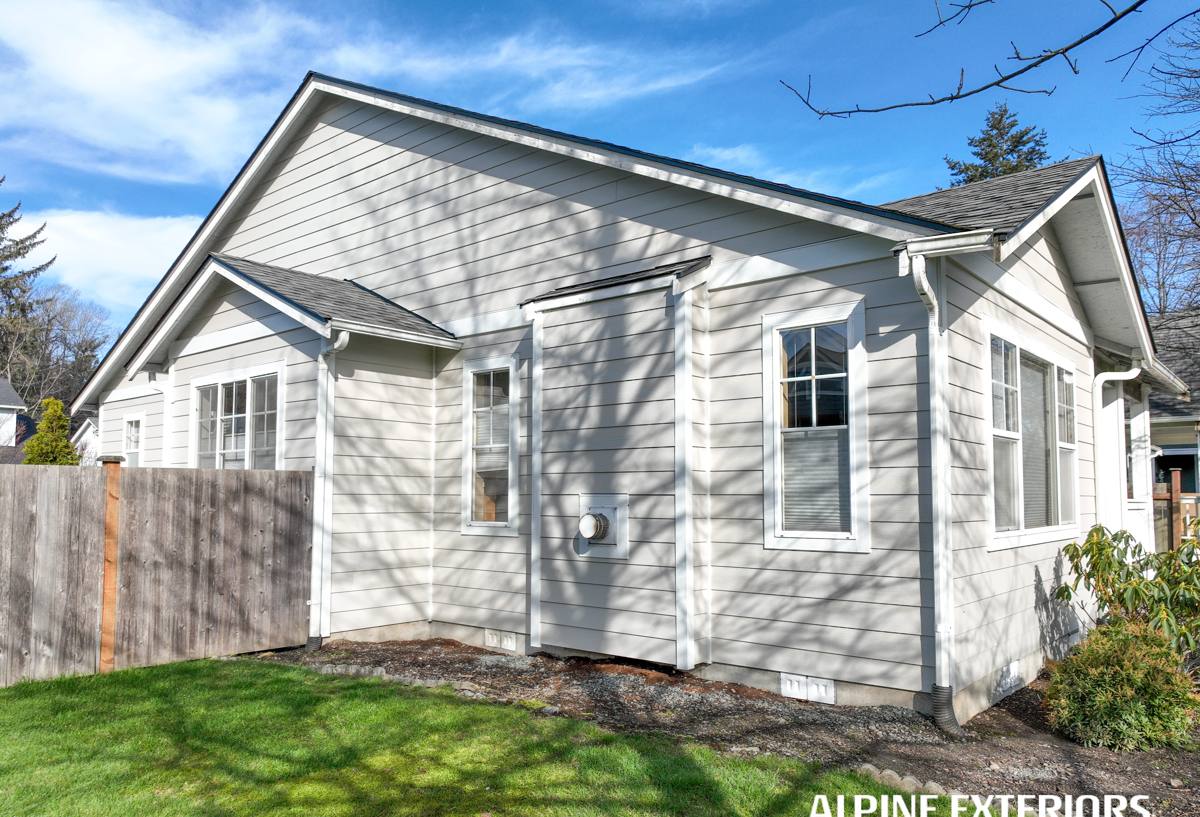
Why Happy Valley's Microclimate Is Harder on Roofs
Salt Air and Metal Fatigue
Proximity to the bay means airborne salt settles on exposed roofing components over time. Salt accelerates corrosion on exposed metal fasteners, drip edge, and flashing far faster than it degrades the shingles themselves. A roof detailed with the wrong-grade metal, or with fasteners that aren't corrosion-resistant, can develop rust streaks and weakened flashing seams years before the shingles are due for replacement.
Driving Rain and Wind-Driven Moisture
Bellingham's rain rarely falls straight down. Storms coming off the Sound push rain sideways against roof planes, valleys, and wall-to-roof transitions. That means standard nailing patterns and minimal underlayment coverage — which might pass in a calmer climate — aren't enough here. Every seam, valley, and penetration needs to be treated as a place water will actively be pushed into, not just a place water might pool.
Moss, Shade, and a Long Wet Season
Many streets in and around Happy Valley run under mature tree canopy, which is part of the neighborhood's character but also means roof sections stay shaded and damp for extended stretches, especially through fall, winter, and spring. That's ideal moss and algae growth conditions. Moss doesn't just look bad — its root structure lifts shingle edges, holds moisture against the roof deck, and shortens the life of the shingles it's growing on.
What a Correct Shingle Roof Needs Here
A roof built for Happy Valley conditions isn't a different product than a standard asphalt shingle roof — it's the same shingle system installed with more attention paid to the details that matter most in wet, salt-exposed, shaded environments.
- Synthetic underlayment with full coverage, not just minimum code compliance, to give a second line of defense against wind-driven rain
- Ice-and-water shield membrane at eaves, valleys, and any roof-to-wall transitions, since these are the areas most prone to wind-driven intrusion
- Corrosion-resistant flashing and fasteners suited to a marine-influenced air environment, not standard galvanized components
- Balanced intake and exhaust ventilation so moisture from inside the attic doesn't add to what the roof is already fighting from outside
- Shingle products with algae-resistant granules to slow moss and algae colonization in shaded sections
- Properly sealed and lapped valleys, since valleys concentrate more water volume than any other part of the roof plane
Diagnosing an Existing Roof Before Any Work Starts
Before we talk about repair versus replacement, we look at how the current roof is actually performing, not just how old it is. Age alone doesn't tell the whole story in a climate like this — a well-ventilated, well-flashed roof can outlast a poorly detailed one by a decade or more, even with the same shingle product and the same install date.
What We Look For
Our inspection covers the shingle field itself, but just as much attention goes to the details that tend to fail first in this climate: valley condition, flashing around chimneys and skylights, fastener corrosion, moss growth patterns, attic ventilation, and any signs of moisture intrusion at the deck level. Granule loss in gutters, curling or cupping shingles, and soft spots underfoot are all signals we walk homeowners through directly, in plain terms, with photos if useful.
Repair, Restoration, or Full Replacement
Not every roof in Happy Valley needs a full tear-off. The right call depends on the roof's age, how the deck underneath is holding up, and whether the damage is isolated or systemic.
| Situation | Typical Approach | What Makes It the Right Call |
|---|---|---|
| Isolated flashing or valley leak, roof under 12-15 years old | Targeted repair | Shingle field and deck are still sound; the failure is localized to a detail, not the material |
| Heavy moss coverage, shingles otherwise intact | Moss treatment and removal, ventilation review | Addresses the cause (moisture retention, shade, poor airflow) instead of just the symptom |
| Widespread granule loss, curling shingles, roof 20+ years old | Full replacement | Shingles are past their functional life; patching won't hold in this rainfall volume |
| Soft decking, visible sagging, interior water stains | Full replacement with deck repair | Water has already reached the structure; repair alone won't stop ongoing damage |
How We Approach an Installation
Deck Inspection and Prep
Once shingles and old underlayment are removed, we inspect the deck itself for soft spots, delamination, or rot, particularly near eaves and valleys where moisture has the most opportunity to work its way in over the years. Any compromised sheathing gets replaced before anything new goes down — installing new shingles over a weak deck just hides a problem that will resurface.
Underlayment and Water-Shedding Details
Given how much wind-driven rain this area sees, we treat underlayment coverage and ice-and-water shield placement as core to the job, not an upsell. Valleys, eaves, and any roof-to-wall intersections get membrane protection before the shingle field goes down.
Ventilation Balance
We check and, where needed, correct the balance between intake ventilation (usually at the soffits) and exhaust ventilation (ridge or roof vents). Poor balance traps moisture in the attic, which works against the roof from underneath even if everything above the deck is done right.
Shingle Installation and Flashing
Shingles go down with manufacturer-specified nailing patterns and exposure, and all flashing — step flashing at walls, counter-flashing at chimneys, and drip edge along eaves and rakes — is installed or replaced with corrosion-resistant materials suited to this air environment.
Final Walkthrough
We walk the finished roof and the surrounding property with the homeowner, cover the workmanship and manufacturer warranty terms in plain language, and make sure any questions about maintenance going forward are answered before we consider the job done.
Maintenance That Actually Matters in This Climate
A correctly installed shingle roof in Happy Valley still needs some seasonal attention, mostly centered on moss and drainage, since those two things do more damage here than almost anything else.
- Keep gutters clear, especially under overhanging trees, so water isn't backing up under the shingle edge
- Have moss growth addressed before it spreads across a full slope, not after — early treatment is far less invasive than removal once it's established
- Trim back tree limbs that keep sections of the roof in constant shade and drop debris onto the shingles
- Have flashing and valleys checked periodically, since these are the first places a marine climate causes trouble, well before the shingles themselves show wear
- Watch for granule buildup in gutters and downspouts, which can signal the shingle surface is starting to break down
Why Local Experience in This Specific Area Matters
A shingle roof installed by a crew that hasn't worked this specific stretch of Bellingham can still look fine on move-out day and still underperform within a few years, because the failure points here aren't obvious from a general roofing checklist. Knowing which streets sit under heavy tree canopy, how the bay's air affects fastener choice, and how hard driving rain actually hits certain roof orientations comes from doing the work in this neighborhood repeatedly, not from a generic install process. That local pattern recognition is what keeps a shingle roof performing for its full expected life here instead of needing early intervention.
We also stand behind the work with a straightforward workmanship warranty alongside the manufacturer's material warranty, and we're upfront about which is which so there's no confusion later about who covers what.
Getting Started
If you're dealing with moss buildup, a leak that keeps coming back, or a shingle roof that's simply reaching the end of its service life, we're happy to take a look and give you a straight answer about what it actually needs. We offer free, no-pressure estimates for Happy Valley homeowners — you can request one using the form below.